
UTV Tire Size Guide for Better Fit and Ride
Posted by Drew Cummings on Jun 26th 2026
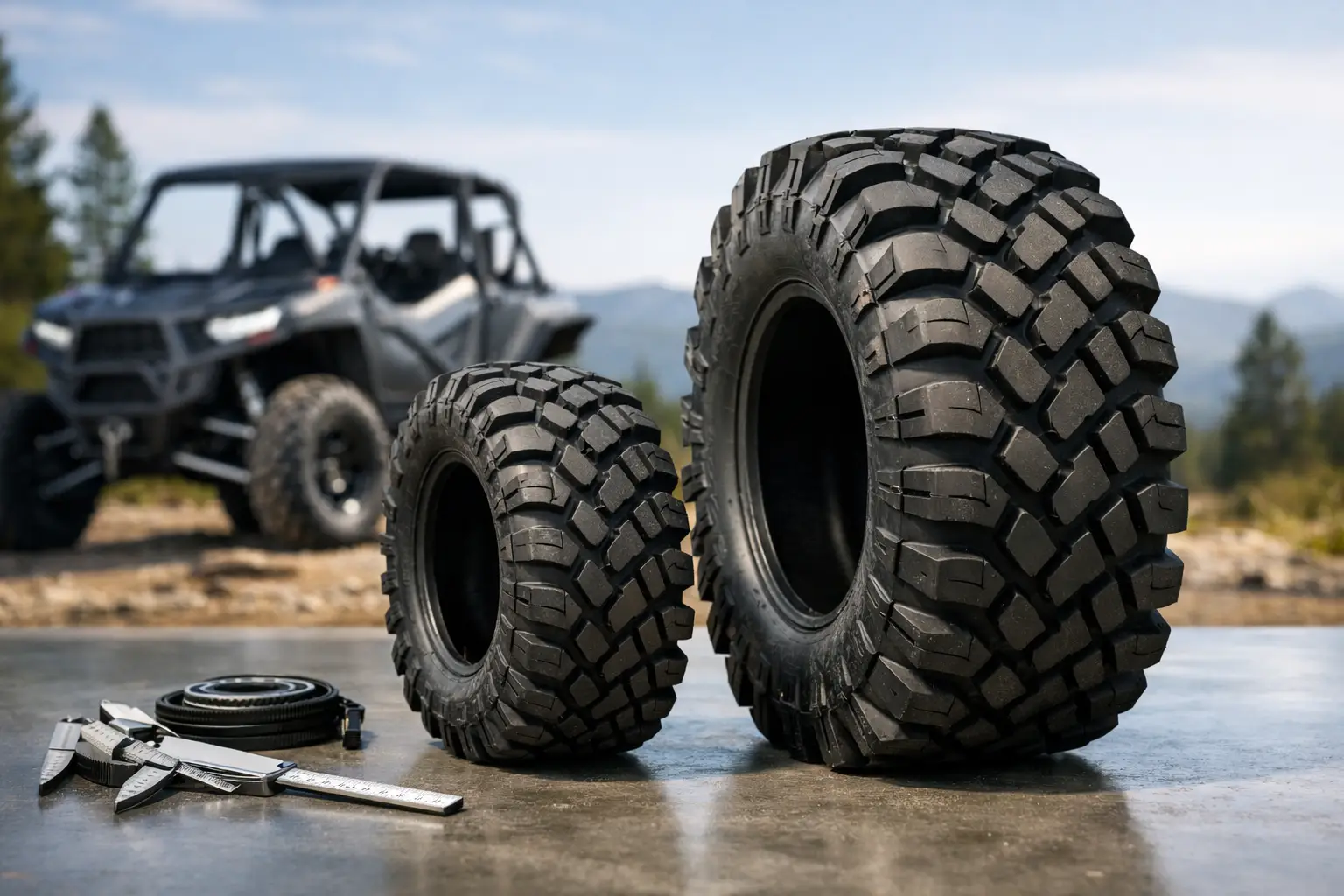
That new set of tires can fix a lot - ground clearance, traction, ride comfort, even the stance of your machine - but only if the size makes sense for how you ride. A good utv tire size guide is less about picking the biggest number that fits on the wheel and more about matching tire height, width, and wheel diameter to your UTV, your terrain, and the work you expect it to do.
Go too small and you leave clearance and traction on the table. Go too big and you can end up with rubbing, sluggish acceleration, heavier steering, or extra strain on clutching and suspension. The right setup is usually a balance, not an extreme.
How to read a UTV tire size guide
Most UTV tires are labeled in a format like 30x10-14. That means the tire is roughly 30 inches tall, 10 inches wide, and designed to mount on a 14-inch wheel. Once you know those three numbers, you can start making useful decisions.
The first number - overall tire height - changes the personality of the machine more than anything else. A taller tire adds ground clearance and rolls over rocks, roots, and ruts more easily. It also effectively raises your gearing, which can reduce low-end snap and make the engine work harder, especially on smaller-displacement machines or heavily loaded utility rigs.
The second number - width - affects flotation, side bite, steering feel, and mud performance. Wider tires can improve traction on loose surfaces and help the machine feel more planted. Narrower tires can cut through soft mud or snow better in some conditions and often steer more precisely on tight trails.
The third number - wheel diameter - matters because it determines what wheel the tire fits. It also changes sidewall height. A 30-inch tire on a 14-inch wheel has more sidewall than a 30-inch tire on a 15-inch wheel. More sidewall usually helps with ride compliance and impact absorption off-road, while a larger wheel can sharpen steering feel but gives the tire less cushion.
Start with stock size, then decide what needs to change
The smartest way to choose tires is to use your factory size as the baseline. From there, decide what problem you are trying to solve.
If your stock setup works fine but you want a little more clearance for trail riding, going up one size in height is often the cleanest move. If your machine came with 27-inch tires, stepping to a 28 or 29 may give you the extra room you want without creating clearance issues everywhere else.
If you ride rocky terrain and want better rollover, a taller tire is usually worth considering. If you use your UTV for ranch work, towing, or snow plowing, too much tire can hurt the low-speed control and torque you depend on. Bigger is not automatically better when the machine has a job to do.
Tire height: where most fitment problems begin
27-inch to 29-inch tires
This range works well for many stock and lightly modified UTVs. It keeps weight manageable, usually avoids major rubbing issues, and preserves the factory feel of the machine. For riders who mix trail use with utility work, this is often the sweet spot.
30-inch to 32-inch tires
This is a common upgrade zone for riders who want more clearance and a tougher trail setup. At this size, fitment starts depending more on the specific machine, wheel offset, suspension setup, and whether the machine is lifted or running aftermarket arms. Many UTVs can handle 30s with the right wheel setup, but 32s are where rubbing, clutching changes, and steering effort become much more real concerns.
33-inch and larger tires
These sizes are usually for purpose-built trail, rock, or mud setups, not casual bolt-on upgrades. At this point, you need to think beyond simple clearance. Portal gear lifts, suspension geometry, gearing corrections, stronger axles, and clutch tuning may all come into play. If you use your machine hard, that extra size can pay off, but it has a cost in drivability and wear if the rest of the build does not support it.
Width matters more than many buyers expect
A lot of riders focus on height and forget width until they have rubbing on control arms or fenders. Width changes both fitment and handling.
A 10-inch-wide tire is a versatile choice on many trail machines. It offers a good balance of traction, steering response, and clearance. Going wider can help in sand, loose dirt, and some mud conditions, but it can also increase steering effort and throw more stress on components.
For mud-specific riding, many riders run narrower front tires and wider rears or choose a setup that lets the tires cut down to firmer ground rather than float on top. For desert or hard-pack use, a wider contact patch may improve stability. Again, it depends on the terrain and how the machine is used.
Wheel size and sidewall trade-offs
A larger wheel can look good and open up some tire options, but off-road performance is usually better when you keep enough sidewall. That sidewall is what helps the tire flex over rocks and absorb trail chatter.
For many UTV owners, 14-inch wheels remain a practical choice because they leave room for a healthy sidewall while still accommodating a wide range of tire sizes. Fifteen-inch wheels are common too, especially when buyers want a certain look or need brake clearance on some builds. The trade-off is that as wheel diameter goes up, ride comfort and sidewall protection often go down.
What changes when you size up
A proper UTV tire size guide should not stop at fitment. Tire size changes performance.
Taller tires raise your final drive ratio. That can reduce acceleration, make the clutch work harder, and cost some low-speed pulling power. On a high-horsepower sport machine, that may be acceptable. On a mid-size or work-focused UTV, it can be noticeable right away.
Heavier and larger tires also affect braking, steering, and suspension response. The machine may feel slower to turn in, and unsprung weight can make the ride harsher over repeated bumps even if the extra sidewall helps on larger impacts. If you add aggressive tread and extra tire mass, those effects become more pronounced.
Fuel economy can drop as well, especially with large mud tires or sticky compounds. For riders who cover long trail miles or use their UTV around the property every day, that operating cost matters.
Clearance is more than just fender room
When riders ask whether a tire will fit, they often mean whether it clears the fender opening at ride height. That is only part of the answer.
You also need to check full steering lock, suspension compression, wheel offset, and inner clearance near A-arms, trailing arms, shocks, and sway bar links. A tire that looks fine in the garage can rub badly on the trail when the suspension cycles and the wheels are turned.
Mud buildup makes this worse. A size that barely clears in dry conditions may become a problem fast in sticky terrain. If your machine sees heavy mud or snow, leaving some extra room is usually smarter than chasing the absolute maximum fitment.
Picking tire size by riding style
If you trail ride in mixed conditions, modest upsizing is usually the safest move. One or two inches taller than stock often improves clearance without changing the machine too much.
If you ride rocks and technical terrain, taller tires with strong sidewalls can make a real difference. Just be honest about whether your clutching, gearing, and suspension are ready for them.
If you ride mud, size helps, but tread design often matters more than one extra inch of height. A well-matched mud tire in the right width can outperform an oversized tire that overloads the machine.
If your UTV is a work machine first, stick closer to stock unless you have a specific reason to change. Towing, hauling, and low-speed control usually benefit from keeping tire size sensible.
The best UTV tire size guide is machine-specific
There is no one-size answer across Polaris, Can-Am, Yamaha, Kawasaki, and Honda platforms because fitment changes by model, year, trim, suspension package, and wheel setup. A size that bolts onto one machine with no issues may require a lift, spacers, or clutch work on another.
That is why fitment-specific shopping matters. Before buying, confirm the tire size against your exact machine and your actual use case, not just what another rider made work on a different build. Side By Side Sports serves a lot of owners who are trying to avoid that guesswork, especially when they are pairing tires with wheels, lifts, portals, or suspension upgrades.
The best tire size is the one that fits cleanly, works with your terrain, and does not create new problems you did not have before. If you are torn between two sizes, the safer choice is usually the one that keeps your machine working hard and steering clean. A UTV should feel more capable after a tire upgrade, not more compromised.
Get the fit right first. The aggressive look is easy to spot, but the right size is what you notice every time the trail gets rough or the workday gets long.