
UTV Rear Cargo Box Buying Guide
Posted by Drew Cummings on Jun 26th 2026
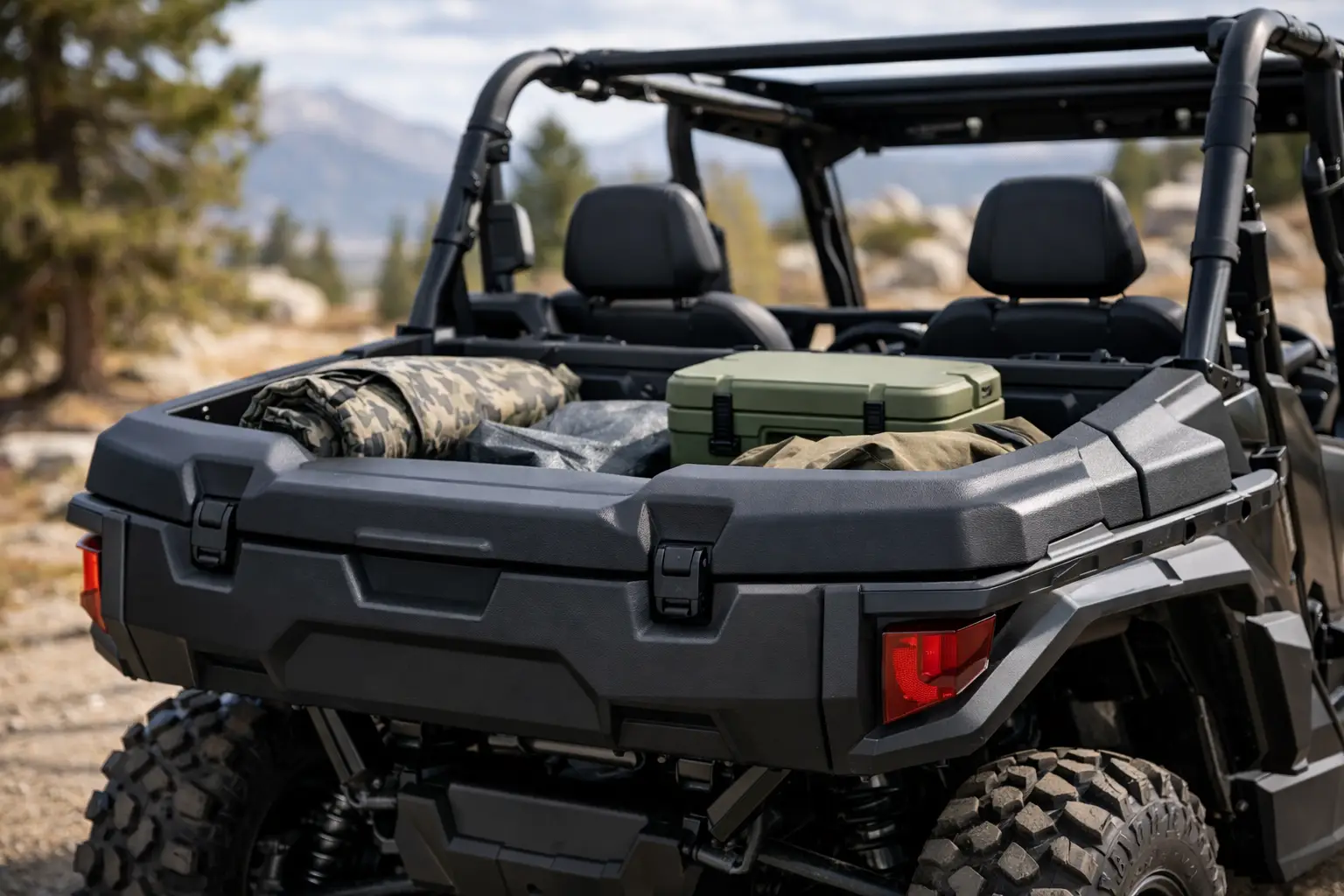
When your bed is full of tools, recovery gear, feed, or hunting equipment, loose cargo becomes a problem fast. A utv rear cargo box gives you a cleaner, more secure way to carry what matters without letting gear slide, rattle, or get coated in dust and mud by the end of the ride.
For most riders, this upgrade is less about adding storage and more about making the machine easier to use. The right box keeps essentials organized, protects expensive gear, and saves time when you are working property, running a long trail day, or setting up camp. But not every cargo box fits the same machine, and not every setup makes sense for the way you ride.
What a UTV rear cargo box actually solves
A lot of side-by-side owners start with soft bags, coolers, or generic totes strapped into the bed. That works for a while, but it usually creates a few predictable issues. Gear shifts around, straps loosen, and smaller items disappear under larger ones. If you are carrying tow straps, hand tools, first-aid supplies, ammo boxes, or chainsaw accessories, access matters just as much as storage volume.
A dedicated rear cargo box creates a fixed storage zone that is easier to load and easier to trust. It also helps separate clean gear from dirty gear. On a work machine, that might mean keeping hand tools and hardware dry while fencing supplies ride in the open bed. On a hunting rig, it might mean locking down calls, optics, gloves, and layered clothing while leaving room for larger field items elsewhere.
That said, bigger is not always better. A box that eats up too much bed space can make the machine less useful for hauling bulk items. The best choice usually comes down to your real cargo habits, not the biggest storage number on the product page.
Choosing the right UTV rear cargo box for your machine
Fitment comes first. That sounds obvious, but it is where buyers get tripped up most often. A box built for a Polaris Ranger may not sit correctly in a Can-Am Defender bed, and even within one brand, bed dimensions and attachment points can vary by generation and trim.
Model-specific fitment usually gives you the best result because the box is designed around the machine's bed shape, rail layout, or rear rack dimensions. That means better mounting, cleaner lid clearance, and fewer compromises with cargo access. Universal boxes can still work, especially for riders with simple storage needs, but they often require more measuring and more patience during installation.
You also want to think about how the machine is used during a normal week, not just your toughest day of the year. If your UTV spends most of its time doing ranch work, quick access and durability may matter more than total enclosure. If it is a dedicated trail or overland machine, weather resistance and secure latching may be the bigger priority.
Bed-mounted versus rack-style setups
Most rear cargo boxes fall into two broad categories. Bed-mounted units sit inside or across the cargo bed and are common on utility-focused side-by-sides. Rack-style boxes are more common when the machine has a rear rack platform or a layout designed around recreation and trail storage.
A bed-mounted box usually offers more capacity and better protection from cargo movement. It can also create a more factory-like storage solution when designed for a specific model. The trade-off is reduced open bed area. If you regularly haul fencing materials, firewood, bait tanks, or feed bags, you need to be realistic about how much floor space you can give up.
Rack-style boxes tend to preserve more of the machine's general cargo flexibility, but they usually hold less and may expose the box to more vibration depending on the mount design. They are often a strong fit for riders who carry lighter gear and want storage without turning the rear of the machine into a dedicated toolbox.
Material, sealing, and durability
Most UTV cargo boxes are built from molded polyethylene, aluminum, or a heavy-duty composite. For a lot of riders, molded plastic is the practical sweet spot. It resists rust, handles impacts well, and does not add as much weight as metal. A good one can take years of trail abuse, weather exposure, and rough loading without much complaint.
Aluminum boxes appeal to buyers who want a more rigid, work-truck feel. They can be a strong choice for jobsite tools and equipment, but they may transmit more noise and can show dents depending on wall thickness and use. They also tend to look more industrial, which some owners prefer and others do not.
Sealing matters, but expectations should stay realistic. Many cargo boxes are weather resistant, not fully waterproof. Dust, pressure washing, heavy rain, and repeated opening and closing all test the seal over time. If you carry electronics, paperwork, or other moisture-sensitive gear, it is smart to use internal pouches or smaller sealed containers inside the box.
Latch quality deserves close attention too. A cargo box is only as useful as its ability to stay shut on rough terrain. Weak latches lead to rattling lids, worn hinges, and eventually damaged cargo. If you ride rocky trails, washboard roads, or uneven pasture, this is not a detail to gloss over.
Size and layout matter more than raw volume
Storage capacity sounds simple until you start loading real gear. Two boxes with similar dimensions can feel completely different in use depending on lid opening, compartment layout, and internal access.
A wide single-compartment box works well for jackets, tools, tow ropes, and larger loose items. A divided layout can be better for riders who want organization built in, especially if they are carrying small equipment that gets lost in one big bin. Hunters, landowners, and recovery-minded riders often get more value from usable organization than from maximum empty space.
Height is another factor buyers sometimes miss. A taller box may hold more, but it can interfere with rear visibility, bed dumping, or access to other accessories. On some machines, lid clearance can also become an issue if you are running rear windows, cab enclosures, or bed-mounted tools nearby.
If your UTV has a dumping bed, verify that the box design and hardware work with that feature. Some setups are built to allow normal bed function, while others make dumping less convenient or require partial removal. If you use the dump bed often, that detail is worth checking before anything else.
Common use cases and what to prioritize
Work machines usually benefit from easy-clean surfaces, simple latches, and enough room for tools, gloves, hardware, and maintenance items. You do not always need a premium feature set, but you do need a box that can handle repetitive use and constant vibration.
For hunting setups, quiet operation matters. A box that rattles, flexes, or pops open under movement gets old fast. Weather resistance is also more important when you are carrying extra layers, optics, and small gear that needs to stay clean. A lower-profile box can be a smart move if you are trying to keep the rear of the machine less cluttered.
Trail riders and overland users usually care most about secure storage, efficient packing, and compatibility with other accessories. If your machine already carries a cooler, spare tire, fuel, or audio gear, every inch of rear space counts. In that case, a model-specific box often earns its price because it uses the available space more efficiently.
Installation and fitment details to check
Before buying, confirm the exact year, make, model, and submodel of your UTV. Bed dimensions, rail systems, and mounting locations can change even when the machine name stays the same. That is why fitment-specific shopping matters so much in this category.
Pay attention to mounting hardware, drilling requirements, and whether the box is intended for permanent or semi-removable installation. Some riders want a locked-in setup that stays put all season. Others want the option to remove the box quickly when it is time to haul larger cargo.
It is also worth checking whether the box interferes with rear seats on crew models, spare tire carriers, gun racks, or bed extenders. Accessories tend to stack up over time, and the cleanest build is the one planned as a system instead of one part at a time.
If you are shopping across brands and machine platforms, a catalog organized by make and model saves a lot of guesswork. That is one reason buyers come to specialists like Side By Side Sports instead of wasting time with generic listings that never make fitment fully clear.
When a rear cargo box is worth it
A UTV rear cargo box is worth the money when it solves a repeat problem, not when it just looks useful on paper. If you are constantly chasing gear around the bed, replacing mud-soaked equipment, or losing time digging through loose cargo, the upgrade pays for itself in convenience alone.
But if your machine is mainly used for hauling bulky loads and you rarely carry smaller gear, a fixed box may not be the best use of space. Some owners are better served by a smaller removable storage option or a bed layout built around totes and tie-downs. It depends on whether your UTV is acting more like a mobile toolbox or a compact hauler.
The best cargo setup is the one that matches how your machine works in real life. Choose a box that fits your exact model, leaves enough usable space for your normal jobs, and holds up when the trail gets rough. When storage stops being a daily frustration, every ride gets easier.