
9 Best UTV Hunting Accessories That Matter
Posted by Drew Cummings on Jun 25th 2026
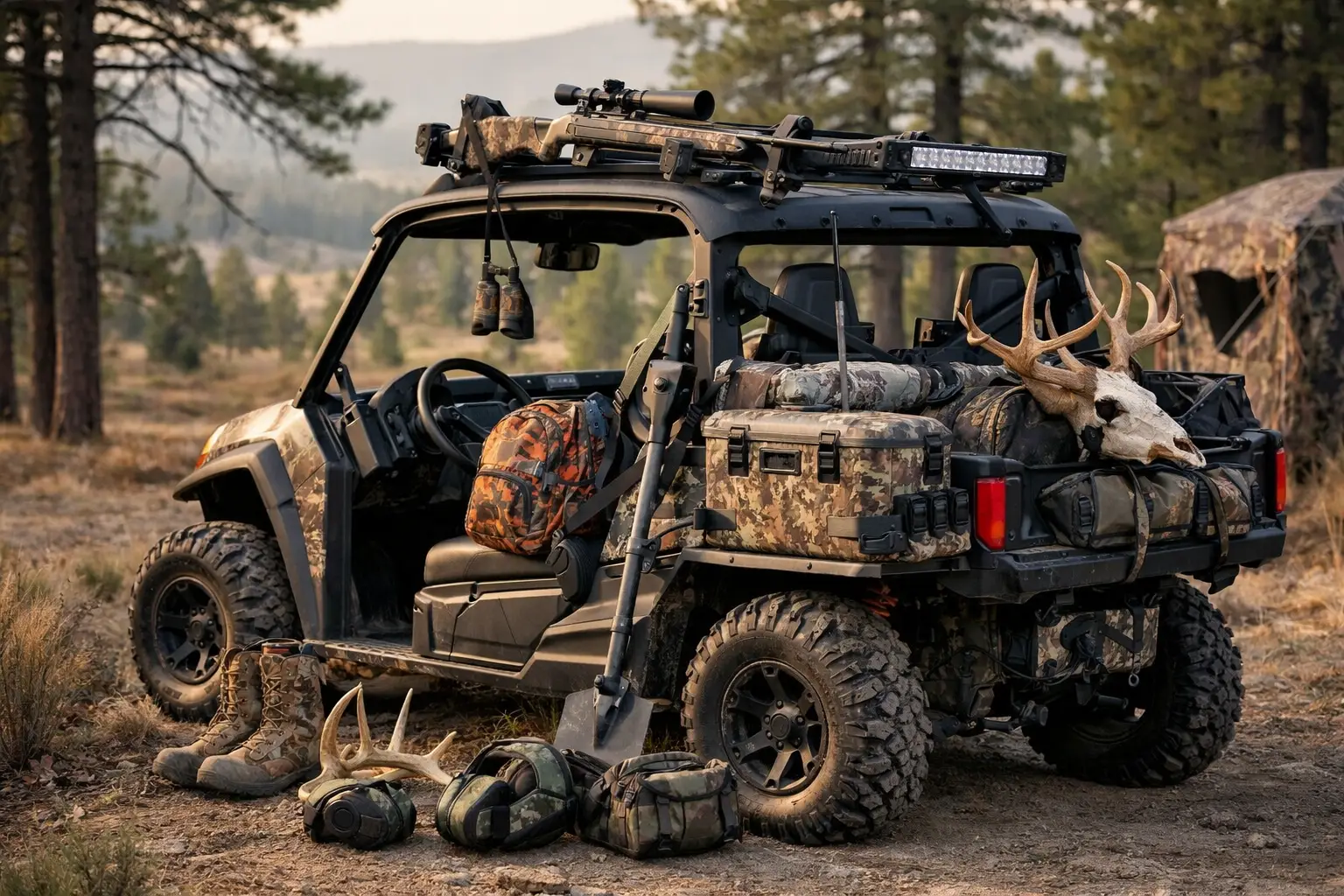
Cold starts before daylight expose every weak point in a hunting setup. The wrong storage rattles. Cheap lights wash out the trail. A cab with no weather protection turns a short ride into a long, miserable one. If you are sorting through the best UTV hunting accessories, the goal is not adding random gear. It is building a machine that carries more, stays quieter, protects your equipment, and keeps you moving when the conditions get rough.
For most hunters, the right accessory mix depends on terrain, season, and how the machine is actually used. A whitetail hunter slipping into a box blind has different needs than someone hauling decoys into flooded ground or dragging gear through mountain timber. Still, a few upgrade categories consistently earn their place because they improve access, reduce hassle, and hold up under real field use.
Best UTV hunting accessories for real use
The most useful hunting accessories do one of three things. They protect the machine, increase cargo and gun capacity, or make the ride quieter and more comfortable. If an upgrade does not help in one of those areas, it is usually optional.
A windshield is near the top of the list for a reason. In cold weather, it cuts the wind and keeps dust, mud, and brush off the driver and passenger. A full windshield is the better choice if you hunt late season, run long distances, or deal with rain and snow. A half windshield gives you more airflow and can be a better fit in warmer climates where fogging is a concern. Material matters too. Polycarbonate generally handles impacts better than acrylic, which matters when branches and trail debris are part of the ride.
A roof matters just as much as a windshield when weather turns. It keeps rain off your seat, limits glare, and gives the cab a more finished, functional feel for early morning setups. For hunters who spend hours on the machine across changing conditions, a hard roof usually makes more sense than a soft top. It is more stable, more durable, and better suited for year-round use.
Doors and rear panels are often overlooked until temperatures drop. Once you have a windshield up front, leaving the cab open on the sides and rear can create swirling dust in dry conditions and cold air recirculation in winter. Full doors and a rear windshield or back panel help complete the cab. They are not essential for every region, but for late fall and winter hunting they can make a major difference in comfort and fatigue.
Storage and hauling upgrades that pull their weight
A hunting machine needs organized cargo space, not just empty bed capacity. That is why rear cargo boxes continue to rank among the best UTV hunting accessories. A good box protects gear from dust, moisture, and impact while keeping items from sliding around on rough trails. Soft bags work for lighter use, but rigid storage is the better long-term choice if you carry ammunition, optics, tools, extra layers, or field dressing equipment.
Bed racks and gun racks are just as important, provided they match how you hunt. Overhead gun racks save space and keep firearms accessible, but they are not ideal for every cab layout or every rider. Rear bed-mounted racks can be better for larger rifles, bows, or situations where keeping the cab clear matters more. The key is retention. Rough ground exposes weak clamps and poor mounting systems fast.
Hunters who carry feed, blinds, cameras, or game recovery gear should also look hard at bed extenders and cargo baskets. These are practical upgrades when stock bed space is not enough, but they work best when paired with tie-down points and a layout that keeps weight balanced. Overloading one side of a UTV or stacking cargo too high can hurt stability, especially on uneven ground or off-camber trails.
If you hunt from a platform or use your machine as a mobile workhorse during season prep, a hitch-mounted cargo carrier or small trailer setup can also be worthwhile. That said, it depends on where you ride. Tight woods, creek crossings, and narrow access trails can make a trailer more trouble than help.
Protection matters more than most hunters expect
A lot of hunting access happens where trails are barely trails. Stumps, rocks, washouts, and hidden ruts can put a machine out of service quickly. That is why skid plates, bumpers, and rock sliders deserve serious consideration.
A quality skid plate protects vulnerable underbody components and gives you more confidence crossing rough ground. For hunters who ride on leased property, cutovers, or unmanaged land, this is not a cosmetic upgrade. It is insurance against damage that can end a trip before the day starts.
Front and rear bumpers add another layer of protection, especially in wooded terrain where brush, saplings, and uneven obstacles are common. They also give you stronger mounting options for other equipment. If you run a winch, a bumper designed for that load is worth having.
Fender flares can also make a noticeable difference. They help keep mud and water off the cab and reduce the amount of mess that ends up on clothing and gear. Not every rider needs them, but in wet country they earn their keep.
Recovery gear is not optional in hunting season
The further you go, the less acceptable it is to get stuck without a plan. A winch is one of the best UTV hunting accessories because it solves problems before they become long walks or lost hunting time. Mud, snow, deadfall, and steep banks can all stop a machine that looked perfectly capable ten minutes earlier.
A winch should be matched to the size and weight of the machine, and the mounting setup matters just as much as the pull rating. Synthetic rope is popular for good reason. It is lighter and easier to handle than steel cable, though it still needs proper care. Pair the winch with recovery straps, shackles, and gloves so it is useful when conditions go bad.
Tires belong in the recovery conversation too. Many stock tires are fine for general riding but not ideal for muddy access roads, soft field edges, or rocky climbs. A more aggressive tread can improve traction and reduce the odds of getting buried in the first place. The trade-off is that some mud-focused tires ride rougher and can be louder on hardpack. If your hunting routes include long trail miles and occasional mud, an all-terrain pattern is often the better balance.
Lighting and electrical upgrades for low-light access
Most hunting travel happens in the dark. Factory headlights are not always enough, especially on wooded trails, uneven ground, or during winter mornings when visibility is limited. Auxiliary lighting helps, but placement and beam pattern matter more than raw brightness.
A low-mounted light bar can improve trail visibility close to the machine, while pod lights aimed outward can help pick up turns, ditch edges, and obstacles. Too much poorly aimed light creates glare and eye fatigue, especially with dust, fog, or falling snow. The right setup improves usable visibility without turning the front of the machine into a wall of scattered light.
A second battery or power management solution can also make sense if you run multiple lights, a GPS, cab heater, or powered accessories. Hunters who spend long periods idling or making repeated short trips should pay attention to electrical load. Accessory demand adds up quickly in cold weather.
Comfort upgrades that keep you in the field longer
Comfort is easy to dismiss until bad weather or a long ride starts wearing you down. Heaters, seat covers, and better mirrors are not flashy upgrades, but they improve the experience in ways hunters notice fast.
A heater is one of the highest-value additions for enclosed or mostly enclosed cabs. It helps with cold starts, keeps hands functional, and can reduce windshield fogging when paired with the right cab setup. For hunters in northern states or anyone who runs late season, a heater moves from luxury to practical equipment very quickly.
Mirrors are another simple upgrade with real utility. Better rear and side visibility helps when backing around trees, positioning near stands, or maneuvering with cargo. It also reduces the need for extra movement and noise in the dark.
Seat covers and floor mats deserve mention because hunting gear is hard on interiors. Mud, blood, water, and heavy boots take a toll. Protective interior accessories make cleanup easier and help keep the machine serviceable through the season.
How to choose the best UTV hunting accessories for your machine
Start with your biggest problem, not the biggest catalog. If weather exposure ruins your rides, build the cab first with a windshield, roof, and the right enclosure pieces. If your issue is carrying rifles, packs, and recovery gear safely, focus on storage and rack systems. If access roads are rough and remote, protection and winch equipment should move to the top.
Fitment is where a lot of buyers waste time. Model-specific accessories usually install better, fit tighter, and create fewer problems than generic universal options. That matters with windshields, roofs, doors, bumpers, and storage systems where poor fit can lead to noise, leaks, vibration, or interference with other accessories. For hunters running Polaris, Can-Am, Yamaha, Kawasaki, or Honda machines, shopping by exact model saves time and avoids expensive guesswork.
It also helps to think in systems. A windshield works better with a roof. A winch works better with the right bumper and recovery kit. Cargo boxes work better when paired with tie-down solutions and bed organization. Building the machine around how you actually hunt is what separates useful upgrades from wasted money.
The best hunting setup is not the one with the most parts. It is the one that starts every cold morning with the gear you need, gets into tight country without drama, and gets you back out with less wear on the machine and less hassle on you. If an accessory helps do that, it belongs on the shortlist.
Explore our full collection of UTV accessories to outfit your machine for work or recreation.