
UTV Windshields: Choose the Right Trail Setup
Posted by Drew Cummings on Jul 13th 2026
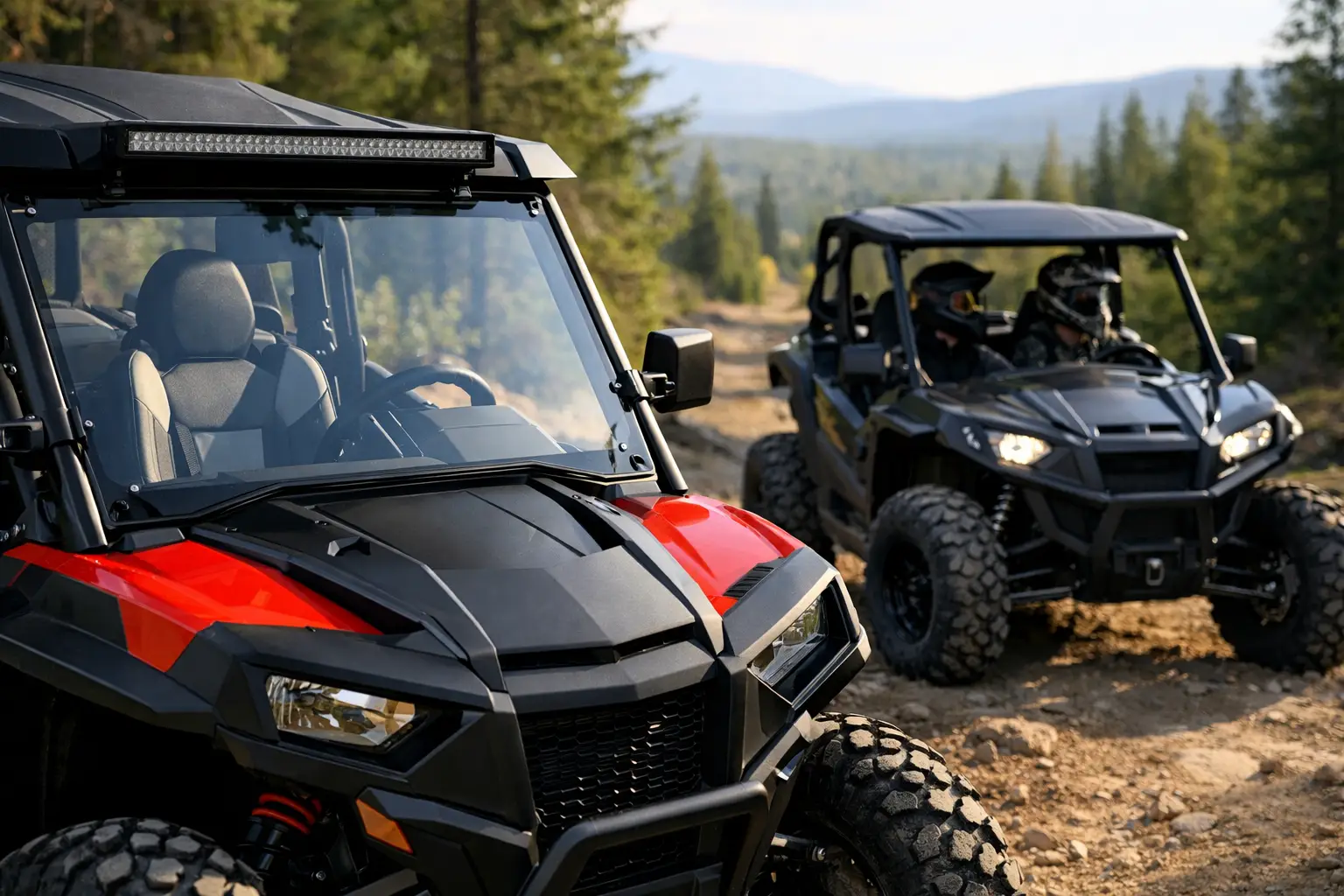
A windshield earns its place fast when the trail turns into a dust cloud, a cold morning run hits 40 mph, or rain starts blowing straight through the cab. The right UTV windshields setup makes a side-by-side more comfortable for long trail days, hunting trips, ranch work, and winter chores. The wrong one can create turbulence, limit airflow, or simply fail to fit the roof, doors, and mirrors already on your machine.
The best choice depends less on what looks good in a product photo and more on how, where, and when you ride. Start with your vehicle's exact year, make, model, and cab configuration. Then match the windshield style and material to your conditions.
Types of UTV Windshields and Where They Work
A full windshield provides the most complete front-cab coverage. It is a strong choice for riders who deal with cold weather, rain, mud, road spray, and dusty group rides. Full windshields are especially useful on utility machines used for feeding livestock, checking fence lines, plowing snow, or traveling between work areas. They also make a major difference when paired with a roof and rear panel, since that combination reduces the direct blast of air through the cab.
The trade-off is ventilation. A sealed full windshield can raise cab temperature on warm days and may cause more dust to swirl inside if the rear of the cab is open. For riders who use their UTV in changing conditions, a vented full windshield or a flip-up design often makes better sense.
A half windshield blocks the hard wind hitting your chest and face while leaving the upper cab open. It is a popular option for trail riders who want protection without feeling closed in. It also keeps airflow moving during hot weather. The downside is that a half windshield will not stop rain, fine dust, or cold air the way a full panel can.
Flip-up windshields offer a practical middle ground. Most use a full-height lower section with an upper panel that opens for airflow. Closed, they provide the coverage of a full windshield. Open, they can reduce heat buildup and help clear the cab on warmer days. A flip-up model costs more than a fixed panel and adds hinges, latches, and seals that need occasional inspection, but its versatility is hard to beat for year-round riders.
Fold-down windshields are another flexible option. They allow the upper section to fold forward or down when you want more air. The exact operation and available positions vary by vehicle and manufacturer, so verify that the design will clear your hood, roof, mirrors, and accessories.
A rear windshield is worth considering whenever you install a front windshield. Without one, low-pressure air behind the cab can pull dust forward from the bed and rear tires. A rear panel does not eliminate all dust, but it can make the cab noticeably more comfortable, particularly on dry trails and gravel roads.
Choose the Right Windshield Material
Windshield material affects clarity, scratch resistance, weight, price, and long-term durability. There is no single best material for every side-by-side.
Polycarbonate is the most common choice for off-road use. It is highly impact resistant and well suited for branches, roost, trail debris, and hard-working utility vehicles. Thickness matters. Thicker polycarbonate panels generally resist flexing better and feel more substantial at speed, though they can add weight. Hard-coated polycarbonate costs more, but the protective coating can significantly improve scratch resistance and help preserve visibility over time.
Standard polycarbonate remains a budget-friendly option, but it needs careful cleaning. Dry wiping a dusty panel can leave fine scratches quickly. If you ride wooded trails or regularly haul equipment near the cab, a hard-coated option is usually the better long-term buy.
Acrylic offers good optical clarity and can be less expensive, but it is more brittle than polycarbonate. It can work well for lighter-duty use, yet it is less forgiving when branches, rocks, or extreme temperatures enter the picture.
Glass windshields deliver excellent clarity and scratch resistance. Many include a wiper-ready frame, automotive-style seals, and a defrost-compatible design. For enclosed-cab machines, winter use, and frequent road travel where permitted, glass can be the premium solution. It is heavier, typically more expensive, and may require more involved installation than a molded polycarbonate windshield.
Ventilation Matters More Than Most Riders Expect
A windshield should not be selected by front coverage alone. Cab airflow changes with your roof, rear panel, doors, speed, and even how much gear is in the bed. A full windshield with no rear panel may create a noticeable dust draw. A full windshield with a roof, back panel, and doors can create an enclosed feel that is excellent in cold weather but uncomfortable in July.
For mixed-use machines, vents and opening panels add real value. A vent lets you bring in controlled air without exposing the entire cab. A flip-up windshield gives more airflow for slow technical trails and hot days. If you operate in winter, combine a full windshield with a roof, rear windshield, and heater designed for your exact machine. That setup does more for cab comfort than any single accessory alone.
Keep in mind that ventilation is not only about comfort. It also affects fogging. Cool, wet conditions can fog a fully enclosed cab, especially when doors and a rear panel are installed. Vents, a properly positioned heater, and a windshield designed for your cab configuration can help manage that issue.
Fitment Is the First Buying Decision
A windshield that is listed for a Polaris RZR may not fit every RZR. The same is true for Can-Am Maverick, Defender, Yamaha Wolverine, Kawasaki Teryx, Honda Pioneer, and other popular platforms. Model generation, cab style, factory trim, roof type, and accessory mounts can all affect compatibility.
Before ordering, confirm these details:
- The exact model name, model year, and whether your machine is a two-seat, four-seat, or crew configuration.
- Whether you have a factory, aftermarket, or no roof installed.
- Whether you run full doors, upper doors, mirrors, light bars, wipers, or cab enclosures.
- Whether the windshield requires drilling, uses tool-less clamps, or includes mounting hardware.
Model-specific UTV accessories are built around factory body lines, roll cages, and mounting points. That matters because a correctly matched panel seals better, vibrates less, and is less likely to interfere with other upgrades. Side By Side Sports organizes windshield options by vehicle fitment so you can narrow the search before comparing styles and materials.
Installation and Accessory Clearance
Most molded polycarbonate windshields install with clamps, straps, brackets, or rubber-coated mounting hardware. Follow the supplied instructions and avoid overtightening. Excessive clamp pressure can stress the panel, distort the fit, or create crack points around mounting holes.
Install on a clean machine so grit does not get trapped between the windshield, seals, and roll cage. Check the contact areas carefully, especially around the roof line and hood. A properly installed seal reduces rattles and helps keep water and dust out of the cab.
If you already have a roof, upper doors, side mirrors, or a front light bar, check clearance before making a final choice. Some windshields are made to work with specific roof families or have cutouts for mirror mounts. Others may require a different bracket or limit accessory placement. This is where exact fitment information saves time and prevents an otherwise avoidable return.
Keep Your Windshield Clear, Not Cloudy
Polycarbonate requires different care than automotive glass. Never use a dry rag to wipe off dust or mud. Rinse loose debris with water first, then use a cleaner approved for polycarbonate and a clean microfiber cloth. Avoid ammonia-based glass cleaners, abrasive pads, gasoline, and harsh solvents. They can haze, scratch, or damage the surface and protective coating.
Inspect clamps, latches, hinges, and seals through the season. Vibration from rough trails can loosen hardware over time. If a flip-up panel starts rattling or does not latch cleanly, address it early rather than forcing the mechanism. A small adjustment is easier than replacing worn components later.
The right windshield should suit the way your machine actually gets used. A hard-coated full panel may be the smart move for cold-weather utility work, while a half windshield keeps a weekend trail machine open and comfortable. Pick the fitment first, then choose the coverage and material that will still make sense after the trail gets dusty, the weather changes, and the ride runs longer than planned.