
UTV Winch Rope Versus Cable for Real Recovery
Posted by Drew Cummings on Oct 12th 2026
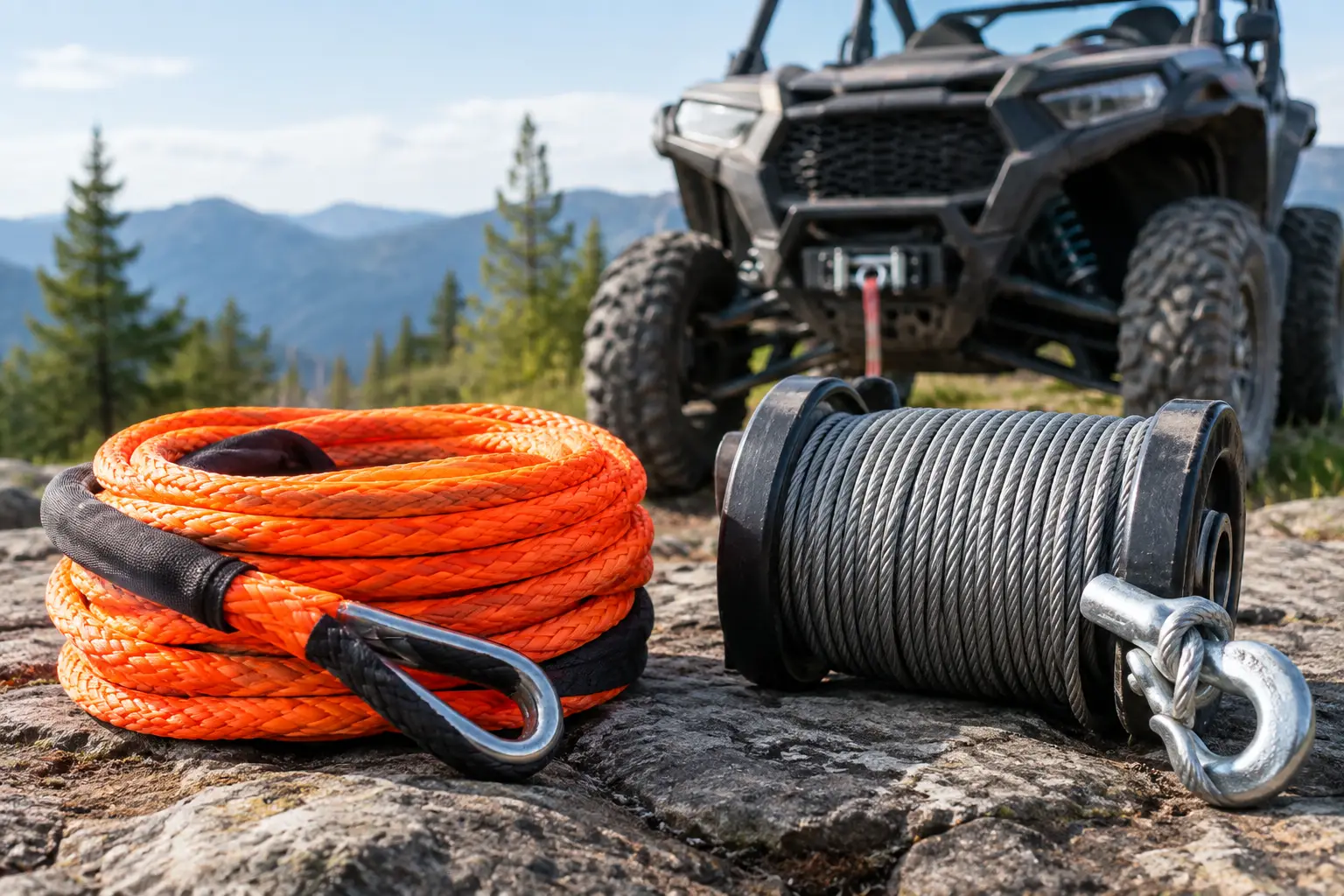
A winch is only as dependable as the line on its drum. When comparing UTV winch rope versus cable, the better choice is not always the one your riding buddy uses. It depends on where you ride, how often you recover vehicles, whether your machine works year-round, and how much maintenance you are willing to do after the mud dries.
Synthetic rope has become the preferred choice for many trail riders and recreational UTV owners. Steel cable remains a hard-working option for ranch use, plowing, and abrasive environments. Both can get a stuck side-by-side moving again, but they behave very differently when pulled tight, dragged across rough terrain, or left exposed to the weather.
UTV Winch Rope Versus Cable: The Core Difference
Synthetic winch rope is typically made from high-strength polyethylene fibers. It is light, flexible, easy to handle, and does not develop sharp broken strands. Steel winch cable is heavier and more resistant to abrasion, heat, and certain forms of job-site abuse, but it requires more care when it starts to kink, rust, or fray.
The biggest practical difference is safety during a failure. A loaded steel cable stores substantial energy. If it breaks, it can snap back violently. Synthetic rope stores far less kinetic energy and typically drops more quickly if it fails. That does not make rope risk-free. A damaged rope can still fail under load, and any winching operation needs a clear recovery area, proper rigging, gloves, and a line damper.
For most UTV trail recovery setups, synthetic rope is easier to live with. For demanding work where the line repeatedly sees gravel, sharp edges, heat, and constant use, cable still earns its place.
Why Many UTV Riders Choose Synthetic Rope
A synthetic line makes recovery work less of a chore. It is significantly lighter than cable, which matters when you are walking a line uphill to a tree, rock, or recovery anchor. It is also easier on your hands and less likely to damage body panels, bumpers, or other equipment if it brushes against them during a pull.
Rope also spools neatly when used correctly. It does not form the sharp kinks that can permanently weaken steel cable. If a rope gets muddy, you can rinse it, inspect it, allow it to dry, and put it back into service. A damaged outer section can sometimes be repaired with an approved splice or shortened, depending on the manufacturer’s instructions and the amount of rope remaining.
Synthetic rope is a strong fit for trail riders, hunters, overland-style UTV builds, and anyone who uses a winch primarily for occasional self-recovery. It is especially practical on lighter sport and recreation models where reducing front-end weight is a benefit.
There are trade-offs. Synthetic rope does not like abrasion. Dragging it across sharp rocks, metal edges, broken concrete, or rough tree bark can cut fibers quickly. Use an abrasion guard where the rope contacts an obstacle, and use a tree saver strap rather than wrapping the line around a tree. Rope can also degrade from UV exposure if it sits uncovered for long periods, so a quality winch cover is worthwhile for machines stored outside.
Synthetic Rope Needs a Hawse Fairlead
Synthetic rope should generally run through an aluminum hawse fairlead. Its smooth opening reduces abrasion as the line feeds in and out. A roller fairlead can have burrs, damaged rollers, or gaps that catch and wear rope fibers, particularly when pulling at an angle.
Before switching from cable to rope, inspect the fairlead and replace it if needed. Also check the winch drum for sharp edges, corrosion, or rough spots. A premium rope will not stay premium for long if it runs over damaged hardware.
Where Steel Cable Still Makes Sense
Steel cable is not outdated. It is simply better suited to certain jobs. If your UTV spends its time working around brush piles, rocky property, fence lines, construction material, or heavy equipment, cable’s resistance to abrasion can be a real advantage. It also handles heat better than synthetic rope.
Heat matters when a winch is used for repeated, long pulls. The winch drum can get hot during demanding operation, and steel cable is more tolerant of that heat. This is one reason cable remains common on work-focused machines, plow rigs, and utility side-by-sides that may pull frequently in a single day.
Steel cable is also less vulnerable to long-term sun exposure. A UTV that lives outdoors and works every season may benefit from cable’s weather tolerance, provided it is inspected and lubricated properly. For snow plowing, cable can be a sensible choice if the line is regularly exposed to road grit, packed snow, and repeated cycles of use.
The downside is handling. Cable is heavier, stiffer, and more likely to develop sharp burrs called fishhooks. Those broken wire strands can cut bare hands and catch on gloves. Once cable is kinked, crushed, or badly frayed, replacement is the smart move. Do not try to straighten a severe kink and assume the line is safe for another hard recovery.
Steel Cable Works Best With a Roller Fairlead
A roller fairlead supports steel cable as it changes direction during angled pulls. The rollers help reduce wear and prevent the cable from grinding against a fixed edge. Keep those rollers clean and turning freely. If they seize, wear unevenly, or develop damage, they can shorten cable life and create a weak point in your recovery system.
Cable also needs regular attention. Inspect it for rust, flattening, broken wires, and crushed sections. Re-spool it under light tension after use so loose wraps do not bury or pinch during the next pull. A neglected cable may look fine until it is loaded, which is the worst time to discover a problem.
Choose Based on How Your UTV Is Used
If your machine is primarily a weekend trail rig, synthetic rope is usually the practical upgrade. It is easier to carry, safer to handle, lighter on the front end, and well suited to the occasional muddy recovery. Riders who venture into remote terrain will appreciate how manageable it is when conditions are cold, wet, or uneven.
If your UTV is a working tool, consider the environment before converting. A ranch machine that frequently pulls logs, drags equipment, clears brush, or plows may be better served by steel cable. The same applies to a machine that faces repeated contact with sharp and abrasive material. Synthetic rope can still work in these applications, but it needs more protection and more frequent inspection.
There is also a middle-ground approach. Many work-oriented riders use synthetic rope successfully by adding a protective sleeve and keeping a close eye on the first several feet of line, where abrasion is most common. That approach makes sense when safety and handling are priorities but the machine still sees hard use.
Match the Line to the Winch and Vehicle
Do not select rope or cable by appearance alone. Your replacement line must match the winch manufacturer’s specifications for diameter, length, and rated capacity. A line that is too thick can reduce drum capacity or spool poorly. One that is too thin may not have sufficient strength for the winch’s rated pull.
Your recovery gear should also match the system. Use rated soft shackles or D-ring shackles, a recovery strap or tree saver, and a properly rated anchor point. Never hook the winch line back onto itself without a protective strap. That can damage either rope fibers or cable strands and creates an avoidable failure point.
Keep in mind that a winch’s advertised rating is measured on the first layer of line on the drum. Pulling power decreases as more layers build up. When possible, pull out enough line to work closer to the first layer, and avoid side-loading the drum with extreme angles. A snatch block can help redirect the pull and reduce stress on the winch when used correctly.
Inspection Is More Important Than Material
Rope and cable both need inspection before a recovery, not after something goes wrong. With rope, look for fuzzy areas, cuts, discoloration, melted fibers, embedded grit, and flattened sections. With cable, look for rust, broken strands, kinks, crushing, and uneven winding. Check the hook, hook strap, fairlead, mounting hardware, and electrical connections at the same time.
A winch line is not the place to stretch service life just to save a few dollars. If damage is substantial or you are unsure whether the line is safe, replace it. The cost of a new line is small compared with a damaged UTV, an interrupted workday, or an injury during recovery.
For most riders, synthetic rope is the better all-around choice. For machines that work in abrasive, high-use conditions, steel cable remains a dependable tool. Pick the line that fits your terrain and workload, then give it the inspection and recovery gear it deserves. When you are ready to outfit your specific machine, Side By Side Sports can help you narrow down compatible winch components before the next stuck situation becomes a long walk.