
UTV Tire Review: Choose the Right Tread
Posted by Drew Cummings on Sep 29th 2026
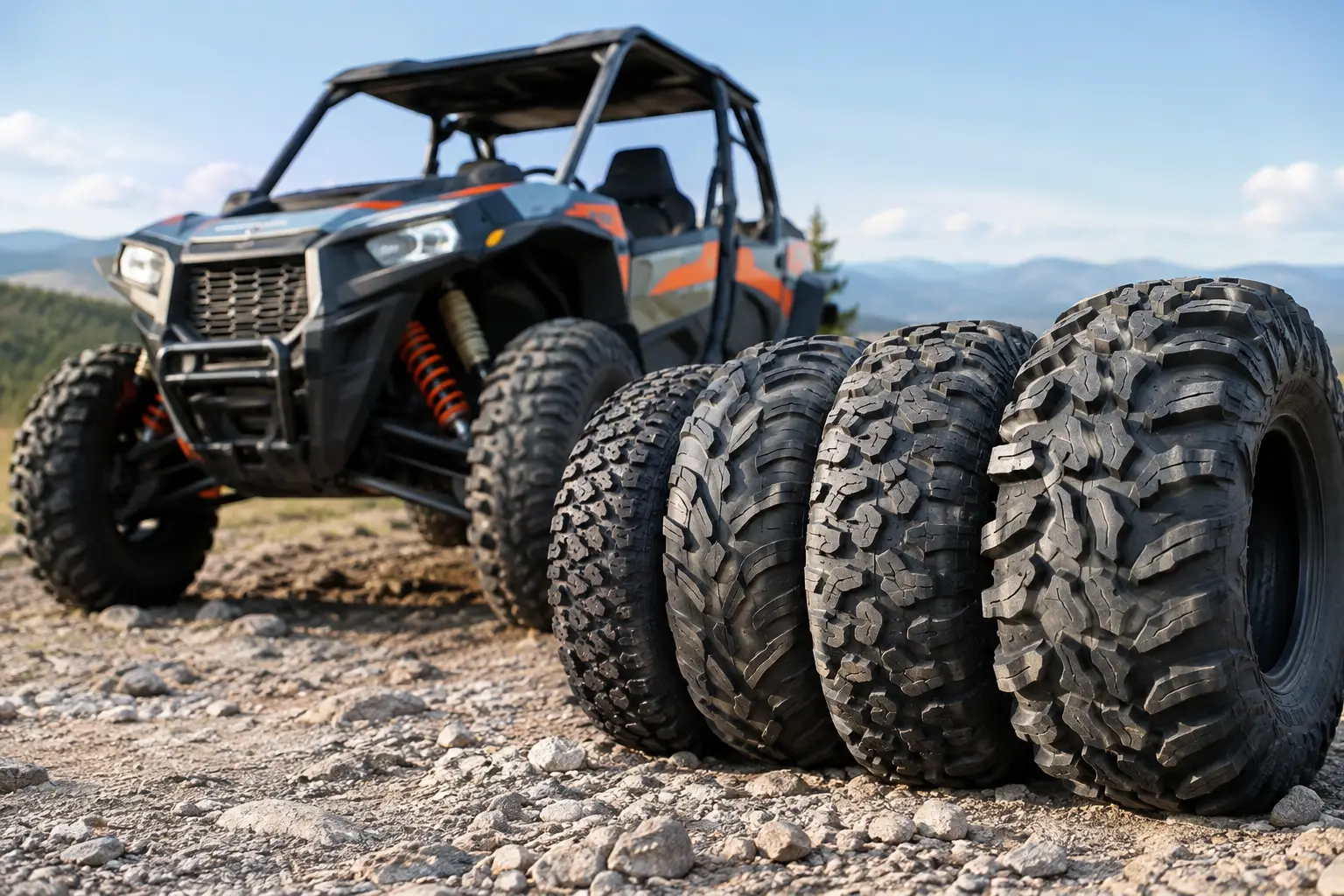
The wrong tire can make a capable side-by-side feel loose, harsh, underpowered, or constantly stuck. This UTV tire review focuses on what actually changes your ride: tread design, carcass strength, tire size, weight, and the terrain where your machine earns its keep. A mud tire that pulls hard in a swamp can be miserable on hardpack. A fast-rolling trail tire may be the wrong answer for a ranch machine crossing sharp rocks every day.
The best tire is not the most aggressive-looking option. It is the one matched to your UTV, your load, and the ground under it most often.
Start With Where You Ride and Work
Before comparing brands or lug patterns, be honest about your typical conditions. Most riders need a tire that handles their everyday terrain well, not one that only excels on the occasional extreme ride.
Hard-packed trails, gravel roads, and mixed recreational terrain call for an all-terrain tire with a closely spaced center tread and substantial shoulder lugs. This style tracks predictably, wears more evenly on firm surfaces, and usually produces less steering effort than a deep mud tire. It is a strong choice for many Polaris, Can-Am, Yamaha, Kawasaki, and Honda owners who split time between trail systems, property maintenance, and access roads.
Rocky trails require a different focus. Look for a durable radial tire with reinforced sidewalls, a flexible tread compound, and shoulder protection that resists cuts. On rocks, controlled compliance matters. A tire that conforms to uneven surfaces can find traction where a stiff, hard compound skips and slides. The trade-off is that heavier rock-focused tires can reduce acceleration and add strain to steering and suspension components.
Mud tires need open voids between the lugs so they can clear thick soil instead of packing solid. Taller, widely spaced lugs bite effectively in deep mud and soft ground, but they can wander on pavement, ride louder, and wear faster on hard surfaces. They also take more power to turn. If your UTV sees mudholes on every ride, that is a fair trade. If mud is only an occasional obstacle, a versatile all-terrain tire is often the better long-term buy.
Sand riders should prioritize flotation and forward drive. A paddle-style tire is purpose-built for dunes and loose sand, while a lighter all-terrain tire can handle occasional beach or desert use. Full paddle tires are highly specialized and generally make little sense for mixed trail riding.
UTV Tire Review: Tread Is Only One Part of the Decision
Tread gets the attention, but tire construction determines whether that tread survives your riding conditions. Ply rating is one of the first specifications to compare. Higher-ply tires generally offer stronger casings and better puncture resistance, particularly for rocky trails, ranch work, and loaded utility use. They can also be heavier and stiffer.
For casual trail riding on maintained routes, a lighter tire may improve ride quality and throttle response. For hunting properties with hidden stumps, farms with sharp debris, or rock-heavy terrain, additional sidewall protection can prevent a long recovery or a ruined weekend. There is no universal best ply rating because vehicle weight, cargo, speed, and terrain all matter.
Radial and bias-ply construction also affect the ride. Radial tires typically offer a smoother feel, a larger contact patch, and more consistent traction at speed. They are popular for trail riding, rock crawling, and longer mixed-terrain days. Bias-ply tires tend to have stiffer sidewalls and can be a practical choice for work machines or riders who value toughness at a lower cost. A premium radial is often worth considering for high-mileage recreational use, while a well-built bias tire can be a sensible tool for demanding property work.
Pay attention to the actual tire weight, not just the advertised size. Larger, heavier tires increase rotating mass, which can soften acceleration, extend braking distance, and put more load on belts, clutches, axles, and steering parts. That does not mean you should avoid heavy-duty tires. It means the tire upgrade should fit the rest of the build.
Get Tire Size Right Before You Order
A taller tire adds ground clearance and can improve obstacle rollover, but it changes gearing. Moving from a stock 27-inch tire to a 30-inch or 32-inch tire can noticeably reduce low-speed torque if the clutching is not adjusted for the increase. Depending on the machine and intended use, a clutch kit may help restore response and belt performance.
Width matters as well. A wider tire can improve stability and flotation in soft terrain, but it may increase steering effort and create clearance problems at full turn or full suspension compression. A narrow tire can cut through loose soil or snow more effectively, though it may give up flotation in sand and mud.
Check clearance at the front and rear, including the inner sidewall, suspension arms, fenders, brakes, and steering components. Do not assume a tire fits simply because another rider installed the same diameter. Wheel offset, lift height, suspension setup, and tire brand can all change the real-world fit.
Wheel diameter affects sidewall height. A 30-inch tire on a 14-inch wheel has more sidewall than the same tire on a 15-inch wheel. More sidewall can improve impact absorption and allow lower-pressure operation on rocks. A larger wheel may provide a more direct steering feel, but it leaves less sidewall cushion. For rugged terrain, sidewall is usually your friend.
Match Tire Pressure to the Job
Even the right tire performs poorly at the wrong pressure. Overinflation shrinks the contact patch, makes the ride harsher, and increases the chance of sliding across rocks or hardpack. Underinflation can improve traction and ride comfort, but it raises the risk of bead loss, sidewall damage, and heat buildup during faster riding.
Start with the vehicle and tire manufacturer guidance, then make modest adjustments based on load and terrain. A loaded work UTV often needs more pressure than an empty trail machine. Rocky, low-speed conditions may favor slightly lower pressure when the tire and wheel setup support it. Faster hardpack riding generally calls for enough pressure to keep the tire stable and protect the sidewall.
Check pressures cold, before the day heats up and before the tires have been driven. More importantly, check them consistently. A slow leak can change handling long before a tire looks obviously low.
Consider the Whole UTV Build
Tires are one of the most effective upgrades you can make, but they should work with the vehicle rather than overpower it. Larger tires may justify clutching changes, stronger axles, a lift kit, or upgraded steering components. If you add a heavy front bumper, winch, roof, cargo gear, and larger tires, suspension springs may need attention too.
For utility-focused owners, durability and predictable behavior usually matter more than maximum lug depth. For dedicated mud riders, deep self-cleaning tread may be the priority, with gearing and clutching planned around it. For trail riders, a quality radial all-terrain tire often delivers the most useful balance of traction, ride comfort, tread life, and steering control.
When shopping, start with your exact make, model, and year, then confirm wheel size, bolt pattern, offset, and available clearance. Fitment-specific guidance saves time and prevents the expensive mistake of mounting tires that rub on the first hard turn.
Side By Side Sports carries tire options for the way real UTVs are used, from daily property work to long trail weekends. Choose the tire for the terrain you see most, build around the size your machine can support, and keep a close eye on pressure once the wheels hit the ground. That is how a tire upgrade becomes dependable traction instead of an expensive compromise.