
UTV Tire Pressure Terrain Guide: What pressure should my tires be?
Posted by Drew Cummings on Sep 30th 2026
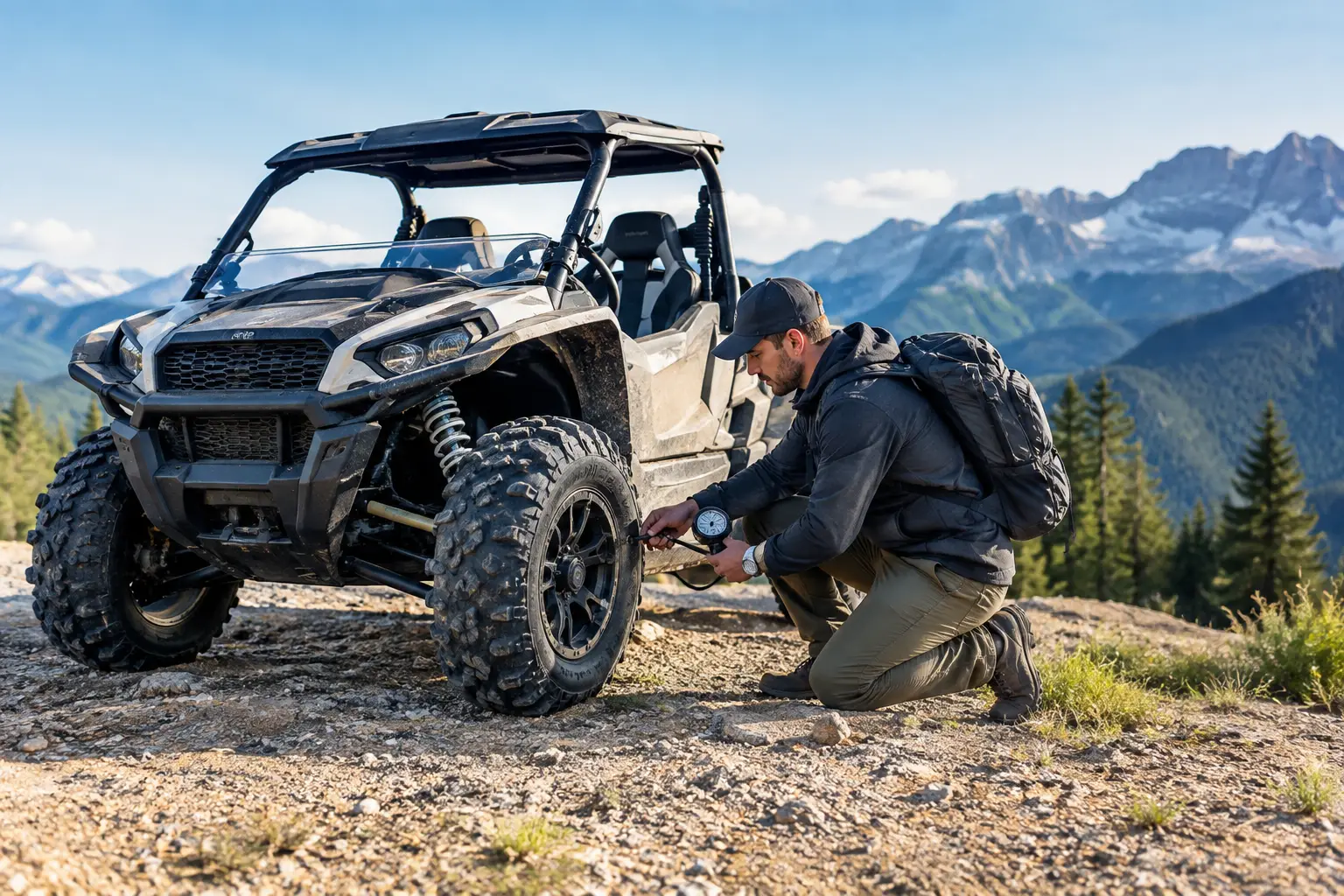
A few PSI can be the difference between a UTV that hooks up cleanly and one that skates across rocks, buries itself in sand, or pounds its occupants over every trail edge. This UTV tire pressure terrain guide gives you a practical way to adjust for changing ground conditions without guessing or sacrificing tire life.
The right number is not universal. Tire construction, wheel diameter, vehicle weight, cargo, passenger count, speed, and terrain all matter. Start with the tire manufacturer's and vehicle manufacturer's stated limits, then make small, controlled adjustments from there. Never exceed the tire or wheel's maximum pressure rating, and do not run pressure so low that the tire can unseat from the bead.
Start With a Reliable Baseline
For many stock or aftermarket UTV tire setups, a cold pressure in the high single digits to low teens is a sensible starting point. Your owner's manual, tire sidewall, and wheel specifications are the final authority, especially when your machine carries heavy loads or uses a non-stock tire size.
Check pressure cold, before the first trail mile. Tires heat up during use, and pressure rises with temperature. A reading taken after a fast road section or a hard climb is useful for understanding how your setup behaves, but it is not the number to use as your normal cold baseline.
If you changed from factory tires to heavier eight-ply radials, tall mud tires, beadlock wheels, or a larger wheel diameter, do not assume the factory recommendation still feels right. Those upgrades change sidewall stiffness, unsprung weight, and the tire's contact patch. They may also change how much pressure is needed to protect the wheel under load.
UTV Tire Pressure by Terrain
Hardpack, gravel, and general trail riding
Hardpack trails and gravel roads usually reward a middle-of-the-road setting. Too much pressure reduces the contact patch and can make the rear end feel loose on washboard or dry corners. Too little pressure creates excess sidewall flex, more heat, and a vague feel at higher trail speeds.
Keep pressures closer to your normal baseline when the day includes long stretches of hardpack, fast forest roads, or pavement connections. If the ride feels harsh and the tires are bouncing over small trail chop instead of tracking through it, lower pressure in small steps. Recheck steering response and tire temperatures before dropping further.
Rocks and technical terrain
Rocks demand traction, compliance, and sidewall protection at the same time. A modest reduction in pressure helps the tire conform around ledges and irregular surfaces, which improves grip and reduces the tendency to spin. It also softens impacts that can transfer directly into wheels, suspension components, and steering parts.
There is a limit. Low pressure lets the sidewall fold more aggressively against sharp edges, particularly on a loaded four-seat machine. That can increase the risk of pinching a tire, damaging a wheel, or rolling a non-beadlock tire off the rim. Riders who routinely crawl rock gardens should match their pressure strategy to their wheel setup, tire ply rating, vehicle weight, and pace. Beadlocks add security, but they are not permission to run any pressure you want.
Sand and dunes
Sand is where a larger footprint matters most. Lowering pressure moderately lets the tire float rather than cut down into loose sand, making it easier to maintain momentum and reducing wheelspin. This is especially useful with a loaded cargo bed, passengers, or a UTV running heavy all-terrain tires.
Avoid treating low PSI as a substitute for good driving. Smooth throttle, wide turns, and momentum still matter. If you are running extended dune loops at speed, too little pressure can generate heat and make the tire feel unstable in transitions. Increase pressure slightly if the machine feels squirmy, rolls excessively in turns, or starts wandering at speed.
Mud, ruts, and wet ground
Mud pressure depends on the kind of mud. In shallow, slick mud, a slightly softer tire can improve the contact patch and help the tread find edges. In deep, sticky mud, the tread pattern and tire diameter often matter more than a major pressure drop. A tall, open-lug mud tire needs enough shape to clean itself and keep driving forward.
Running extremely low pressure in mud can let the tire fold under torque, trap mud between the bead and rim, or make steering unpredictable in ruts. For most mud riding, make a small reduction from your trail baseline and evaluate traction. If your UTV is repeatedly bottoming its frame or dragging its skid plate, pressure is not the main problem. Ground clearance, tire choice, winch readiness, and route selection are.
Snow, ice, and frozen trails
On unpacked snow, a modest pressure reduction can help the tire spread out and stay on top of the surface. It also improves compliance over frozen ruts. On hard ice, however, lower pressure alone will not create dependable grip. Tire compound, siping, purpose-built snow traction products where legal, and cautious throttle control matter far more.
Cold weather changes pressure quickly. A machine that was set correctly in a warm garage may be noticeably lower after sitting outside overnight. Check cold PSI at the riding location, particularly before plowing, hauling, or heading into remote winter terrain.
Work, towing, and loaded utility use
A UTV used for ranch work, hunting camp, property maintenance, or snow plowing needs a different approach than a lightly loaded weekend trail machine. Extra passengers, tools, feed, a loaded bed, and trailer tongue weight all increase the load carried by the tires.
For work use, stay near the recommended baseline or move upward within the tire and vehicle limits when carrying consistent weight. The goal is to keep the tire stable, protect the sidewall, and prevent excessive heat buildup. Do not inflate past a stated maximum simply because the machine feels loaded. If capacity is the issue, verify the tire load rating, wheel rating, and vehicle payload specification.
Make Adjustments One Change at a Time
The most useful UTV tire pressure terrain guide is one you can apply consistently. Carry a quality low-pressure gauge and a compact compressor. Adjust pressure in small increments, then pay attention to steering effort, braking feel, ride quality, tire rollover in corners, and evidence of sidewall contact.
A tire that looks visibly flat is already too far for most riding situations. Watch for scuffing high on the sidewall, vague turn-in, a steering wheel that pulls after an impact, or a tire that feels unusually hot. Those are signs to stop and reassess rather than continuing to bleed air out for more traction.
Front and rear pressures do not always need to match. A front-heavy UTV, a machine with a cargo bed full of gear, or a vehicle with a front-mounted plow may benefit from a carefully tested front-to-rear difference. Keep changes conservative and record what works for your specific vehicle and tire package.
Equipment That Makes Pressure Changes Easier
Pressure adjustments are only useful if you can make them accurately and restore pressure before the drive home. Keep a dependable gauge, portable air compressor, valve core tool, and tire repair kit in the machine. For remote riding, add a full-size spare that matches the rolling diameter of your other tires and a recovery setup suited to the terrain.
Tire pressure also works with the rest of your build. Heavy-duty skid plates matter when low-pressure tires conform around rocks. A properly sized winch matters when sand or mud momentum runs out. Quality suspension components help the machine stay composed after you find the pressure that gives the tire a usable footprint.
Before your next ride, set a cold baseline, write it down, and make one measured adjustment when the terrain changes. That simple habit gives you better traction, more control, and a clearer read on what your UTV needs long before the trail turns difficult.