
UTV Snow Plow Guide for Smarter Setup
Posted by Drew Cummings on Jul 22nd 2026
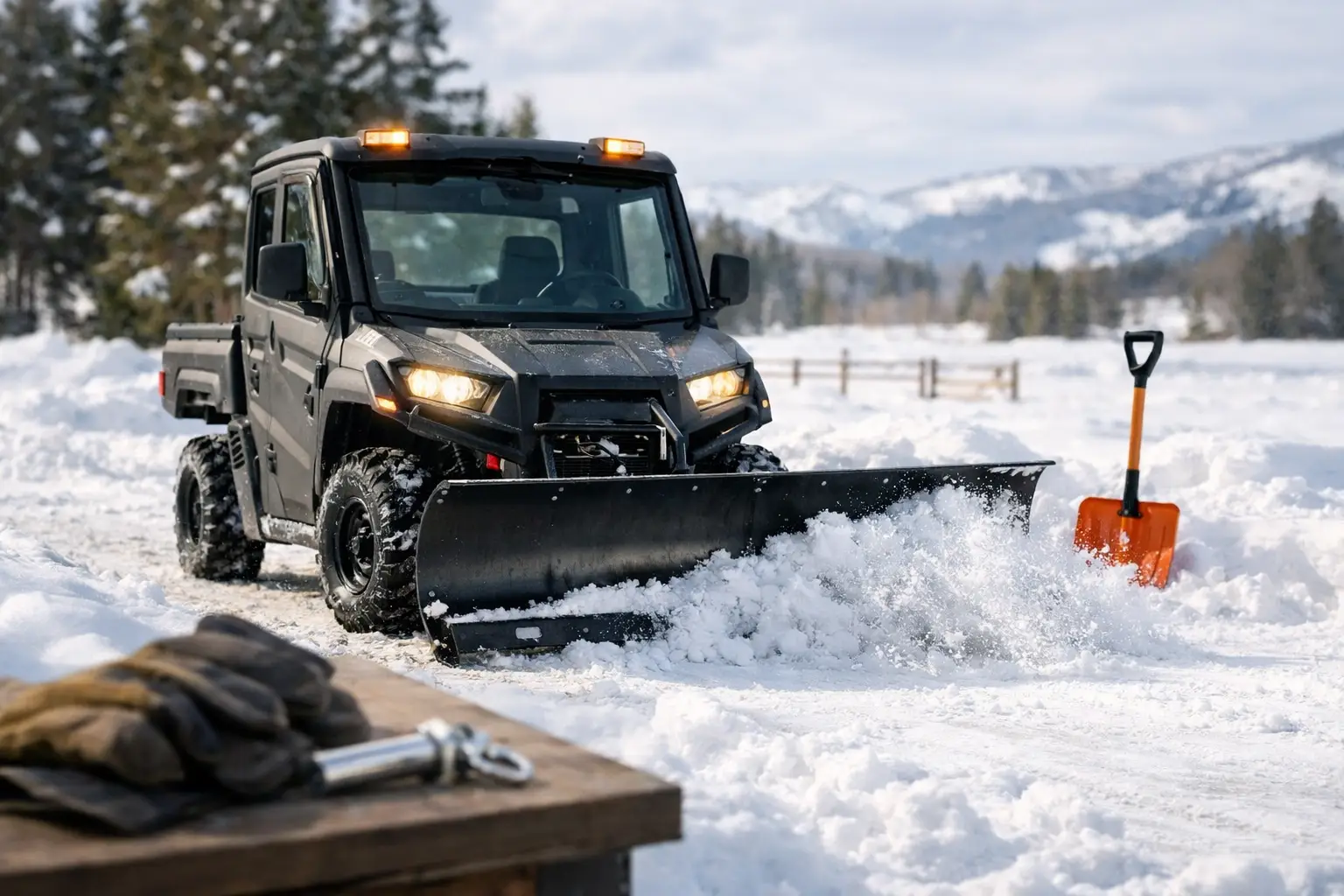
The first heavy snow of the season is where a bad plow setup shows itself fast. If your blade is too wide, your winch is undersized, or your tires can’t hold a line on packed snow, every pass takes longer than it should. This UTV snow plow guide is built for riders who want a setup that works the first time, whether you’re clearing a driveway, a ranch lane, or access roads around your property.
A UTV can be an excellent snow-moving machine, but only when the parts match the job. Blade width, lift system, mount design, tire choice, and cab protection all affect how well the machine pushes, stacks, and tracks in cold conditions. The right setup is not just about moving snow. It is about reducing wear on the vehicle and making winter work more predictable.
How to use this UTV snow plow guide
Start with your machine, then work outward. Fitment matters more than marketing claims, especially with plow systems. A mount that is built for your exact Polaris, Can-Am, Yamaha, Kawasaki, or Honda model will save time during installation and usually gives better ground clearance and push-frame alignment than a universal option.
Next, think honestly about where the plow will be used. A short residential driveway and a long gravel lane are not the same job. Wet snow, repeated storms, and uneven surfaces all change what works best. That is why there is no single perfect plow package for every UTV owner.
Choose the right blade width and shape
Blade width is usually the first decision, and it is one of the most important. Many owners assume wider is always better because it clears more with each pass. Sometimes that is true. But a blade that is too wide for the machine can overwhelm traction, strain the push tubes, and make angled passes less effective.
A good rule is to choose a blade wide enough to still cover your tire track when angled. If the blade becomes too narrow once it is turned, you leave snow behind and end up making extra cleanup passes. On the other hand, if your UTV is on the lighter side or you plow dense, wet snow, dropping down a size can actually improve real-world performance.
Blade shape matters too. Straight blades are common, proven, and practical for most property owners. They are easy to control and well suited to general driveway and lot clearing. Some blade designs roll snow better than others because of their curvature, which can help reduce spillover and improve efficiency. For repeated winter use, that difference becomes noticeable.
Mount systems and why fitment matters
The mount is not the flashy part, but it does a lot of the hard work. A model-specific front or mid-mount system affects approach angle, ground clearance, and how easily the plow can be attached or removed. If you use your UTV year-round, quick-connect designs are worth paying attention to because they make seasonal changeover much easier.
Mid-mount designs are common because they distribute pushing forces well and can offer solid control. The trade-off is reduced clearance under the machine when the plow system is installed. For some users, that is no big issue. For others who move between plowing and trail riding or need to cross uneven ground, mount placement becomes a bigger factor.
Fitment-specific hardware also tends to simplify installation. That matters when you want a setup that goes on cleanly, lines up correctly, and does not create avoidable headaches later. Side By Side Sports focuses heavily on model-specific organization for exactly this reason. When you shop by machine first, you cut down the risk of ordering parts that almost fit but do not perform the way they should.
Winch or manual lift?
Most UTV owners will be better served by a winch-operated plow lift. It gives you easier blade control from the seat, helps speed up directional changes, and becomes especially useful when you are making repeated passes in bad weather. For regular plowing, convenience quickly turns into productivity.
A manual lift can still make sense for lighter-duty use or lower-cost setups. If you only clear a small space once in a while, it may do the job fine. But for bigger properties, frequent snowfall, or long sessions, a winch setup is usually the better call.
If you use a winch for plowing, pay attention to rope or cable condition, fairlead alignment, and battery health. Plow work creates lots of short lift cycles. That can expose weak electrical systems fast, especially in cold weather. A solid battery and clean electrical connections can be the difference between finishing the job and stopping halfway through a storm.
Traction is what makes a plow setup work
A blade can only push as well as the machine can grip. Tires matter more than many owners expect, particularly on packed snow and icy surfaces. An aggressive tread can help, but there is a balance. Some mud-focused tires work great in soft terrain and feel less predictable on winter surfaces than a tire built with more controlled lug spacing.
Tire chains can make a major difference if you are working on steep grades or hard-packed snow. They are not always necessary, and they are not ideal for every surface, but when traction is the limiting factor, they can change the machine completely. Just make sure you have the right clearance for your specific UTV and tire size.
Added weight can help too, especially over the rear axle where it improves bite. Like every other part of plow setup, there is a trade-off. Too much weight can affect handling, stress components, and make transport less convenient. The goal is balanced traction, not turning your UTV into a tank.
Cab comfort and visibility are part of the plow package
If you plow more than once or twice a season, cab protection stops being a luxury. A windshield, roof, and doors can make cold-weather work far more manageable. Add a heater in enclosed applications and the machine becomes a tool you can actually stay in for the duration of the job.
Visibility is just as important as comfort. Snow dust, wind, and low-light conditions can make it harder to judge blade edges and obstacle clearance. Good lighting helps, especially if you plow before work or after dark. A clear windshield and dependable wiper setup matter more than people realize when snow starts sticking and freezing during a run.
Match the setup to the surface you plow
Driveway material changes how aggressively you should plow. On paved surfaces, it is easier to scrape closer and maintain a clean finish. On gravel, the wrong blade height or cutting edge angle can turn snow removal into stone removal.
If you plow gravel, it often helps to leave a light base early in the season once the ground freezes. That gives you a more stable surface for later storms. Shoes or skid adjustments can also help keep the cutting edge from digging in too aggressively. It is a small setup detail that can save a lot of cleanup later.
Common mistakes this UTV snow plow guide can help you avoid
The biggest mistake is buying around price alone instead of compatibility and intended use. A cheaper blade or mount is not a bargain if it fits poorly, clears badly, or wears out after one rough season. Snow plowing puts steady force into the front of the machine, so weak points show up fast.
Another common mistake is ignoring the rest of the vehicle. Owners will spend time choosing a blade and forget about battery condition, tire traction, or cab protection. Then the plow gets blamed for problems that start elsewhere. A plow system works best when the whole UTV is prepared for winter duty.
Last, do not size your setup only for the average snowfall if your property gets occasional heavy storms. If your area sees wet, deep snow a few times each winter, build with that in mind. It is better to have a setup that feels slightly overprepared on easy days than one that struggles when conditions get serious.
What a smart plow setup looks like
For most riders, the best setup is not the most aggressive one on paper. It is a properly fitted blade, a dependable mount, a winch that lifts consistently, tires that can hold traction, and enough cab protection to keep you working comfortably. That combination usually outperforms a bigger blade on a poorly prepared machine.
If you use your UTV for both work and recreation, think about seasonal flexibility too. The easier it is to install, remove, and maintain your plow system, the more likely you are to keep the machine ready without turning winter prep into a project of its own.
Snow plowing with a UTV should feel controlled, not improvised. Get the fitment right, build around your actual terrain, and choose components that support the way you use your machine. When the next storm hits, the best setup is the one that lets you get out, clear the path, and get on with the rest of your day.