
UTV Recovery Gear Checklist for Real Trail Use
Posted by Drew Cummings on Aug 20th 2026
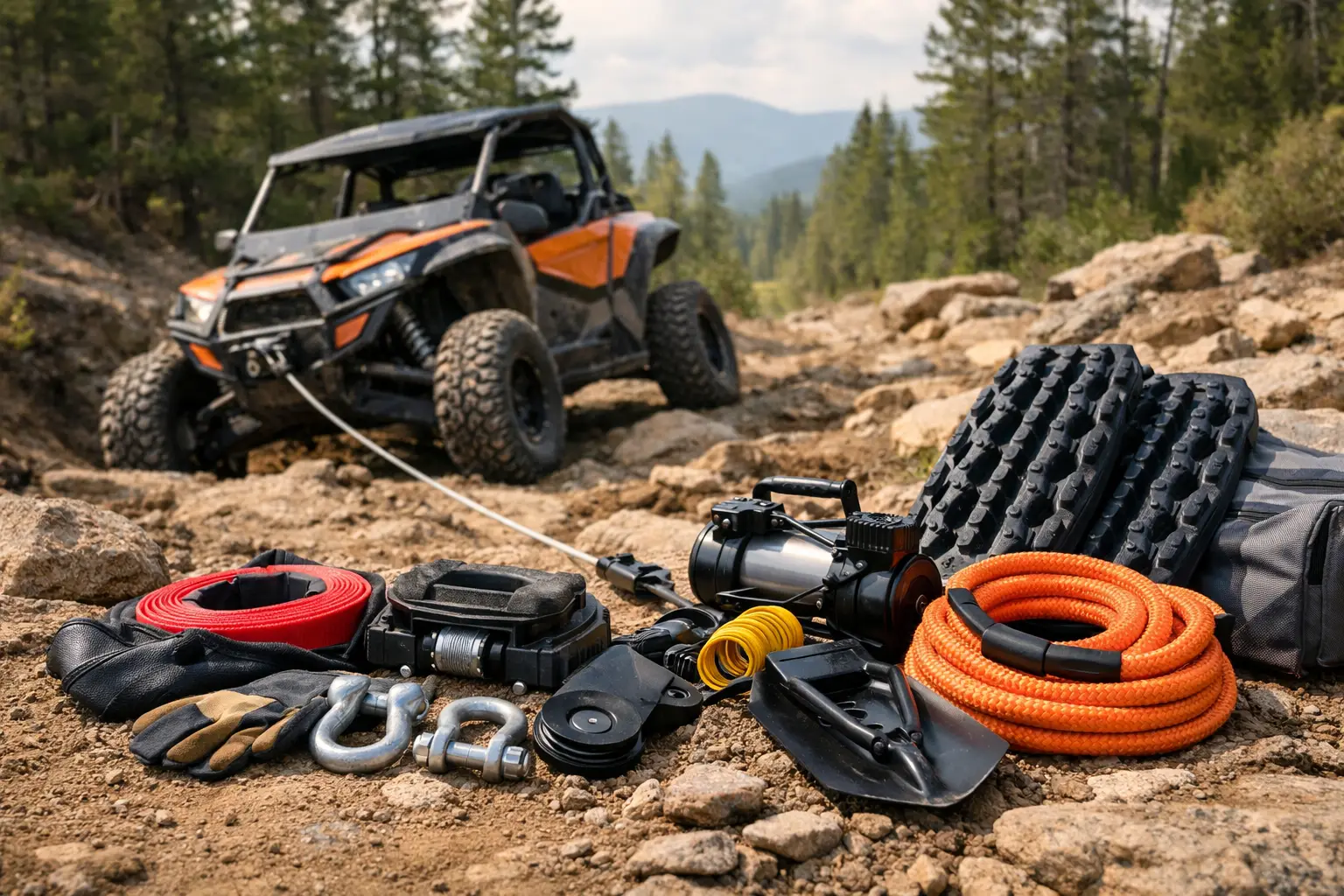
A buried UTV can turn a good trail day into a long walk faster than most riders expect. This UTV recovery gear checklist is built for the situations that actually stop side-by-sides: deep mud, wet snow, off-camber ruts, loose rock, downed trees, and work trails with no second machine nearby. The goal is not to carry every recovery product available. It is to carry properly rated gear that fits your machine, your terrain, and the way you ride.
A recovery kit is only as useful as its attachment points and the person using it. Before loading accessories into a storage bag, make sure your UTV has a quality front bumper or winch mount, accessible recovery points, and a winch installation that is rated for the vehicle. A strong strap cannot compensate for a weak bumper tab or an improvised hook connection.
Start With a Winch You Can Trust
For most UTV owners, the winch is the center of a recovery setup. It gives you a controlled pull when there is no second vehicle available, and it is useful for more than getting unstuck. A properly equipped winch can help move fallen limbs, reposition a machine on a slope, or pull a loaded UTV through a muddy crossing.
Winch capacity should match the size and use of your side-by-side. Many recreational two-seat models are well served by a 3,500- to 4,500-pound winch, while heavier four-seat machines, cab-equipped utility models, and UTVs carrying work equipment may justify a 4,500- to 6,000-pound unit. Vehicle weight is only part of the equation. Mud suction, steep grades, snow, cargo, and rolling resistance can multiply the force required to move the machine.
Synthetic winch rope is a popular choice because it is light, easy to handle, and less punishing if it fails under tension. It does require protection from abrasion and heat. Steel cable tolerates rough contact well but can develop sharp broken strands and stores more energy when loaded. Either option needs regular inspection. Replace frayed synthetic rope, kinked cable, damaged hooks, and worn fairleads before they become a recovery problem.
A wireless remote is convenient, but a wired remote belongs in the kit as a backup. Remote batteries die, electronics fail, and muddy gloves do not improve fine button work. Keep your winch controller protected from water and confirm the winch operates before leaving the driveway.
The Core UTV Recovery Gear Checklist
The gear below covers most trail, ranch, hunting, and overland recoveries without filling every storage compartment. Buy recovery equipment with clear working load limits, not generic hardware-store substitutes with vague strength claims.
- Recovery strap: Carry a wide, low-stretch tow strap with reinforced loops. It is designed for steady pulling between two vehicles. Do not use a towing strap as a kinetic recovery rope.
- Kinetic recovery rope: This elastic rope can help free a UTV that is deeply bogged when another vehicle has room to make a controlled pull. It stores energy, so it requires more training, more space, and careful selection of rated recovery points.
- Soft shackles or rated D-ring shackles: These connect straps, ropes, and winch lines to recovery points. Soft shackles are light and easy to store. Metal shackles are durable but should be inspected for bent pins, thread damage, or excessive wear.
- Snatch block: A snatch block changes the direction of a winch pull or creates a double-line pull for more mechanical advantage. It is one of the most useful tools for a solo rider in deep mud or on steep ground.
- Tree saver strap: A wide tree strap protects bark and gives the winch a secure anchor point. Never wrap winch rope, cable, or a narrow strap directly around a tree.
- Winch line damper: Place it over a tensioned winch line or recovery strap to help reduce recoil if a component fails. A heavy jacket can work in a pinch, but a purpose-built damper is easier to carry and use.
- Recovery gloves: Leather or heavy-duty synthetic gloves protect hands from wire strands, sharp rocks, hot components, and muddy rope. They also improve grip when handling a wet line.
- Compact shovel and traction boards: A shovel removes mud, snow, and rocks from around tires. Traction boards give tires a surface to climb onto when a winch anchor is unavailable or a short self-recovery is all that is needed.
This list is the starting point, not a fixed rule. Riders in sandy country may prioritize traction boards and a shovel. Mud riders often carry longer straps, extra soft shackles, and more winch rigging. Snow riders need gear that remains accessible when storage compartments are packed with cold-weather equipment.
Match Recovery Gear to Your UTV and Terrain
Fitment matters as much in recovery equipment as it does with a roof, windshield, or skid plate. Your Polaris RZR, Can-Am Maverick, Yamaha Wolverine, Kawasaki Ridge, Honda Pioneer, or other UTV needs recovery points designed to handle a straight, controlled load. Factory tie-down points are not automatically recovery points. Check the owner documentation and inspect the mounting structure before assuming an attachment location is safe.
Front and rear bumpers are often upgraded for protection, but not every bumper includes rated recovery mounts. If you plan to use a receiver-mounted recovery shackle, confirm the receiver and hitch hardware are in good condition and that the pull will remain as straight as possible. Side loading a hitch pin, shackle, or winch hook adds risk quickly.
Terrain changes the gear selection. Rock trails call for a compact kit that stays protected from sharp edges, plus a snatch block for angled pulls around obstacles. Mud calls for longer reach and more attention to anchor points, since the nearest tree may be well outside winch-line range. For snow, carry a shovel where you can reach it without unloading the entire cargo area. A UTV stuck on packed snow may need only a little tire clearance and traction material, while a machine bellied out in wet spring snow can require a full winch recovery.
If you ride alone, build around self-recovery first. That means a dependable winch, tree saver, snatch block, soft shackles, shovel, and traction boards. If you commonly ride in a group, add tow straps and make sure everyone understands which points on each machine are safe to pull from.
Use Recovery Gear Without Creating a Bigger Problem
The safest recovery begins with a pause. Shut off the throttle, get everyone out of the danger area, and look at why the UTV stopped moving. Spinning tires usually digs the machine deeper, damages the trail, and makes a simple recovery harder.
Clear packed mud, snow, or rocks from in front of the tires. Reduce the load if cargo can be safely removed. Then choose the least aggressive solution. Traction boards, a shovel, and a gentle reverse may be enough. A winch pull should be slow and controlled, with the line as straight as the situation allows.
Keep bystanders well away from any loaded line. Nobody should stand between the UTV and the anchor point, straddle a strap, or lean over a tensioned winch rope. Use a line damper, communicate clearly with the driver, and stop immediately if an anchor shifts, a shackle twists, or the line begins rubbing a sharp edge.
Avoid using a trailer ball as a recovery point. It can fail under recovery loads and become a dangerous projectile. Also avoid connecting metal components in ways that create a chain of hard projectiles. When possible, use soft shackles and rated recovery gear matched to the load.
Store It Where You Can Reach It
Recovery gear buried under a cooler, tool bag, and hunting equipment is not ready when the machine is leaning in a rut. Use a dedicated recovery bag or sealed storage box and keep the winch remote, gloves, shackles, and tree saver together. Mount the shovel and traction boards where they are secure but immediately accessible.
After every muddy or wet ride, pull the gear out to dry. Rinse grit from straps and soft shackles, inspect synthetic rope for abrasion, and remove dirt from snatch block pulleys. Recovery equipment lasts longer when it is cleaned and stored dry, and a quick inspection gives you a chance to replace damaged pieces before the next trip.
Side By Side Sports makes it easier to build a recovery setup around your specific make and model, from winches and bumpers to storage and vehicle protection. Start with the equipment that solves your most likely problem, then add capability as your terrain and riding plans demand it.
The best time to learn your recovery kit is in the garage or on level ground, not when daylight is fading and your UTV is sitting on the frame. Practice rigging a straight winch pull, identify your approved recovery points, and pack every component back in the same place. When the trail turns difficult, that preparation is what gets you moving again.