
UTV Portal Gear Guide for Trails, Work, and Recovery
Posted by Drew Cummings on Aug 12th 2026
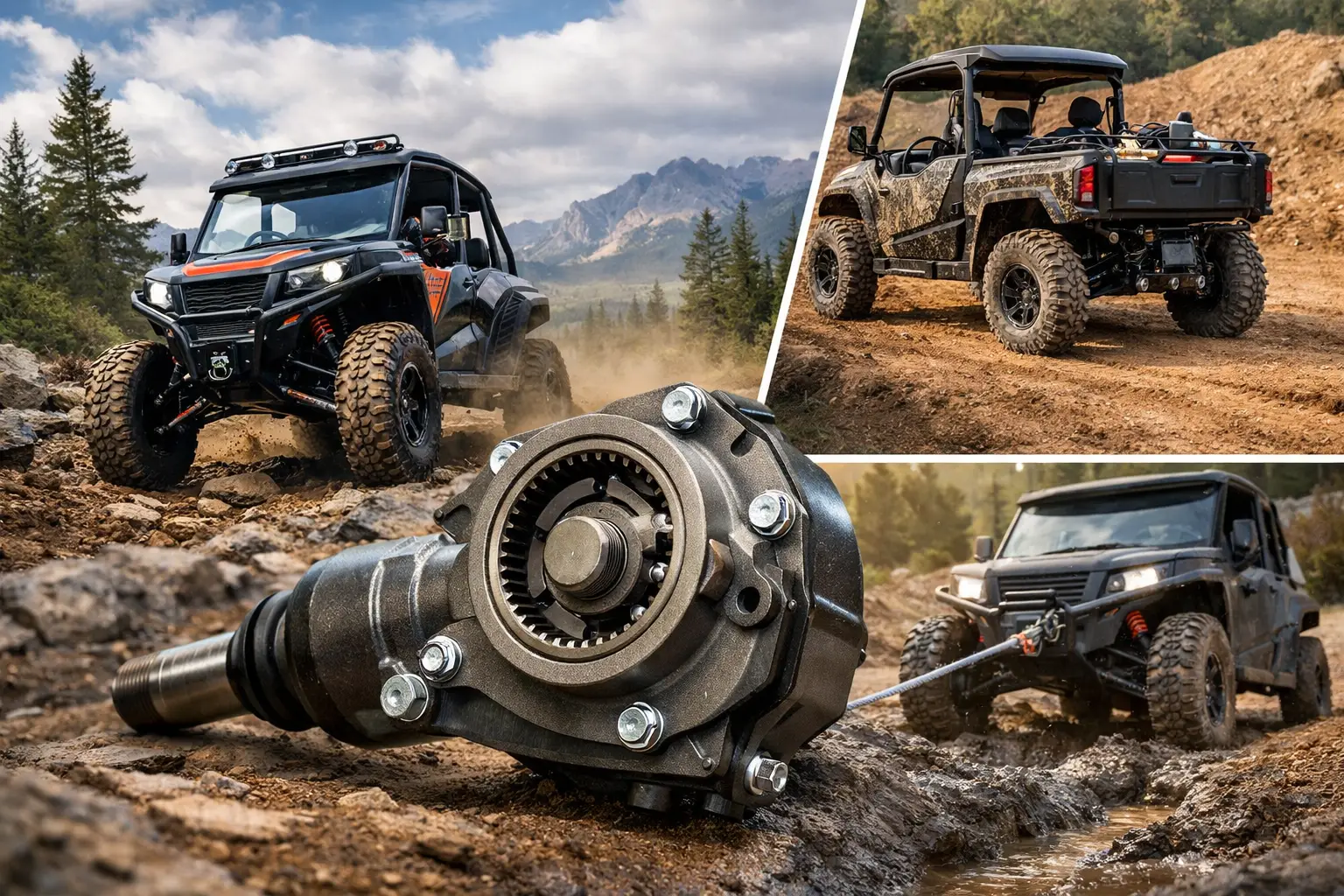
A portal gear lift can turn a capable side-by-side into a machine built for deeper ruts, bigger rocks, mud holes, and oversized tires. But portals are not a bolt-on shortcut to better performance in every situation. They change clearance, final drive ratio, steering feel, axle angles, brake load, and the way your UTV carries weight. This UTV portal gear guide covers what to consider before choosing a setup for your Polaris, Can-Am, Yamaha, Kawasaki, or Honda.
What Portal Gears Actually Change
Traditional lift kits raise the chassis by changing suspension geometry. Portal gear boxes mount at the wheel hubs and move the axle centerline higher relative to the wheel center. That creates true ground clearance at the differential, which is the point that usually gets hung up on rocks, roots, and deep trail ruts.
A 4-inch portal setup generally provides roughly 4 inches of clearance at the hubs, not merely additional room under the body panels. That is the primary reason portal systems are popular with mud riders, hunters traveling rough lease roads, and riders building dedicated rock or overland machines.
Portals also introduce gear reduction at each wheel. That reduction helps return torque lost when you install taller, heavier tires. A machine running 35-inch mud tires without the right gearing can feel sluggish off the line, work its belt harder, and strain the clutch system. The correct portal ratio can bring back low-speed pulling power while reducing stress on the factory drivetrain.
The trade-off is that portal gear boxes add unsprung weight at all four corners. Your suspension, steering components, brakes, and wheel bearings have more work to do. They also raise the vehicle's center of gravity, so a portal-equipped UTV should be driven with more care on off-camber trails and at speed.
Choosing a Portal Ratio for Your UTV
Portal ratio is one of the most important decisions in any portal build. It should match tire size, terrain, engine output, and the way you actually use the machine.
Lower reduction for moderate tire upgrades
A lower reduction ratio, often around 15%, is usually a practical fit for riders moving up one tire size while keeping a versatile trail and work machine. It helps recover some torque without dramatically reducing top speed. This can make sense for a UTV that still sees maintained trails, ranch chores, hunting access roads, and occasional mud.
If you are running 30- or 32-inch all-terrain tires, a moderate reduction is often enough. It preserves a more familiar driving feel while providing the clearance benefit that made portals attractive in the first place.
Deeper reduction for big tires and slow terrain
A deeper ratio, such as 30% or more, is built for larger tires and tougher conditions. Riders running 35-inch or larger mud tires, loaded recovery gear, or steep rocky terrain will usually benefit from lower gearing. The machine can crawl with more control, maintain belt-friendly RPM, and pull through resistance without constantly fighting the clutch.
The cost is lower top speed. That may not matter to a rider who spends most weekends in mud parks or crawling tight forest trails. It can matter a lot if your usual ride includes long, fast gravel roads. Be honest about where the machine spends its hours, not just where you hope to take it once a year.
Start With Tire Size and Real Terrain
Portal gears and tire size need to be planned together. Installing portals simply because you want clearance, then adding the largest tire that physically fits, is how many builds become expensive troubleshooting projects.
Tire diameter affects more than clearance. Larger tires are heavier, require more torque to turn, and can contact suspension components, doors, fenders, or steering hardware at full lock and full compression. Tire width matters too. A wide wheel and aggressive offset can increase steering effort and place extra leverage on wheel bearings and ball joints.
For a technical trail setup, a narrower tire with a strong sidewall may be more useful than an extremely wide tire. It can fit between rocks, track predictably, and reduce scrub radius. For mud, flotation and paddle-like tread may matter more, although the added rotating weight should push you toward a portal ratio with sufficient reduction.
Before ordering parts, verify these points for your exact year, make, model, trim, and current suspension setup:
- Maximum tire size recommended for the portal system and vehicle
- Wheel bolt pattern, center bore, and backspacing requirements
- Brake clearance and whether aftermarket wheels are required
- CV axle, tie rod, ball joint, and control arm condition
- Fender trimming, clutch tuning, or steering-stop needs
Fitment is not a detail to handle after the purchase. It is the foundation of a portal build. Model-specific compatibility matters because suspension geometry, brake packages, wheel offsets, and factory axle design can vary even between similar UTV models.
Supporting Upgrades Worth Planning For
A portal system should be treated as part of a complete vehicle setup. You do not need to replace every component at once, but you should inspect the parts that will experience additional load.
Steering and suspension
The added leverage from bigger tires and heavier hubs can expose worn tie rods, ball joints, bushings, and steering rack components. Replace questionable parts before installation. Heavy-duty tie rods and reinforced control arms can be a smart investment for hard-use machines, especially those operating in rocks, mud, or deep ruts.
Suspension spring rate and shock tuning deserve attention as well. Extra unsprung weight can change how the UTV reacts to repeated bumps. If the machine feels harsh, underdamped, or unsettled after the install, the issue may not be the portals themselves. It may be a suspension setup that no longer matches the vehicle's weight and intended use.
Brakes and wheels
Larger tires require more braking force, while deeper mud and water create additional demands on the braking system. Make sure pads, rotors, brake fluid, and calipers are in good condition before your first ride. Some portal systems offer upgraded brake options or require wheels with specific clearance. Confirm that information early rather than assuming your current wheels will work.
Choose wheels for the actual portal fitment, not just appearance. Correct offset helps control steering load and prevents tire contact. A wheel that pushes the tire too far outward may look aggressive, but it can make the UTV harder to steer and increase stress across the front end.
Protection and recovery equipment
More clearance encourages riders to take harder lines. That makes protection and recovery equipment even more useful. Skid plates protect the undercarriage that portals cannot protect. Front bumpers, rock sliders, and A-arm guards can keep one bad impact from ending a ride.
A properly rated winch, recovery rope, soft shackles, and a secure recovery point are practical equipment for any portal-equipped UTV. In mud or rough backcountry, clearance helps you reach farther, but it does not guarantee you will not get stuck.
Maintenance Is Part of Portal Ownership
Portal gears need regular attention. Follow the manufacturer's break-in procedure, fluid type, fluid capacity, and service intervals. Check the gear boxes for leaks, inspect mounting hardware, and pay attention to unusual noise or vibration after hard rides.
Water crossings deserve extra caution. Quality portal systems are designed for harsh conditions, but deep water can still challenge seals and breathers. After extended mud riding or water exposure, inspect the gear oil for contamination. Milky fluid is a warning sign that water has entered the housing and should be addressed quickly.
It also pays to check wheel bearings, lug torque, brake lines, CV boots, and steering hardware more often than you did with a stock machine. A portal build is capable of handling tougher terrain, but that capability works best when the machine is inspected like the hard-use equipment it has become.
When Portals Are the Right Move
Portal gears make the most sense when ground clearance is the limitation you keep running into. If differential drag, deep ruts, large tire requirements, and low-speed torque are regular problems, portals offer a meaningful mechanical advantage that a standard lift kit cannot duplicate.
They may be unnecessary for a rider who primarily runs smooth trails, does light property work, and values factory-like handling at higher speeds. In that case, quality tires, skid protection, a modest lift, and recovery gear may deliver better value with fewer changes to the vehicle.
For a build that needs serious clearance and controlled pulling power, start with exact fitment, choose a ratio that supports your tire size, and strengthen the components that will carry the added load. The best portal setup is not the tallest one on the trail. It is the one that lets your UTV work harder, travel farther, and get home reliably.