
UTV Plow Mount Guide for Your Side-by-Side
Posted by Drew Cummings on Aug 21st 2026
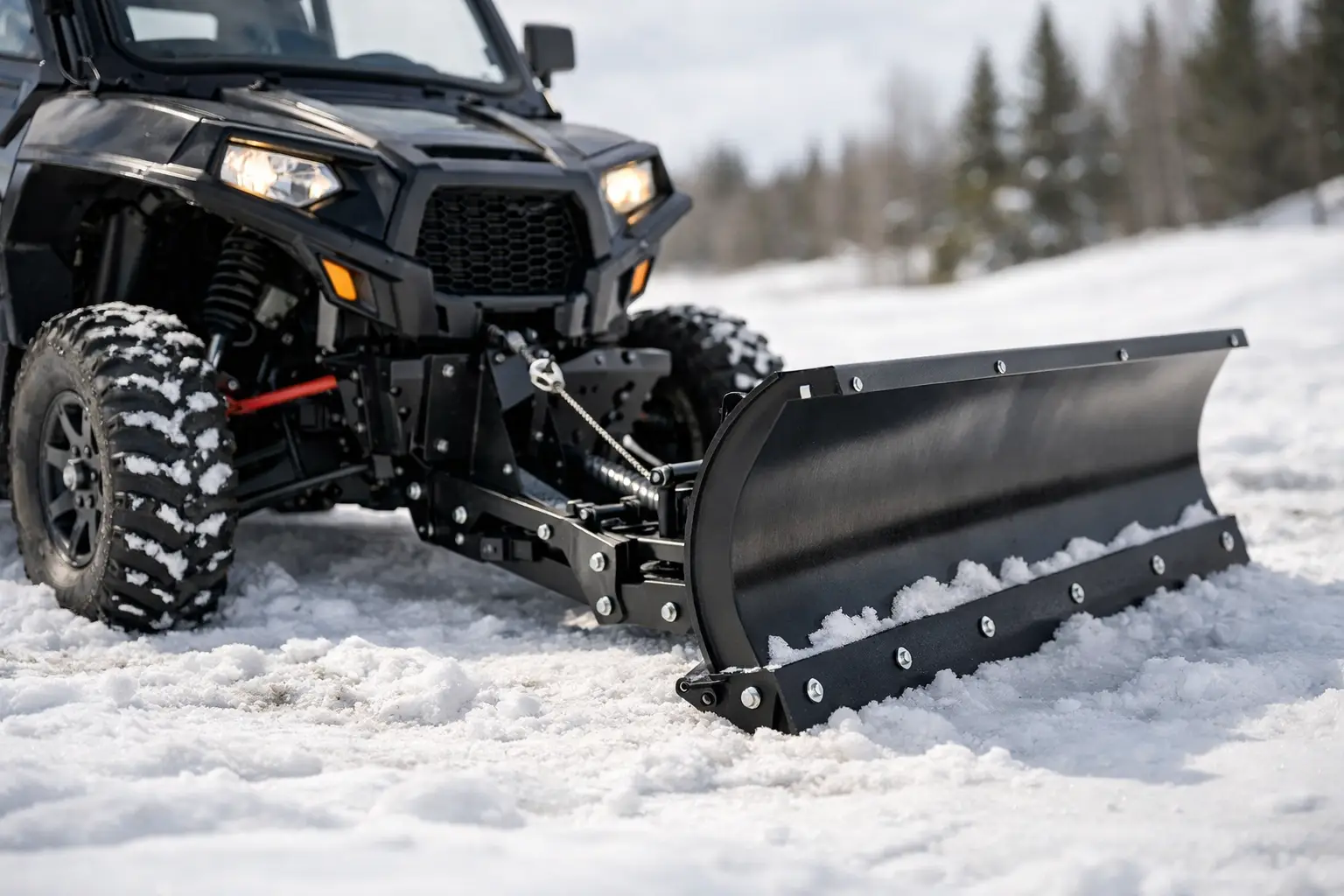
A plow can turn a side-by-side into one of the most useful machines on the property, but the blade gets all the attention while the mount does the real work. This UTV plow mount guide covers what has to match before you buy: your exact vehicle, the plow system, the lift method, and the kind of snow you expect to move.
A mount that looks close is not close enough. It needs to place the push tube at the right height, transfer force into the intended chassis points, clear suspension and steering components, and allow the plow to attach and release without a fight. Get that foundation right and you will spend winter clearing driveways, lanes, and trails instead of modifying parts in the cold.
Start With Exact Vehicle Fitment
The first rule is simple: shop by make, model, model year, and trim. A Polaris Ranger and a Polaris RZR may share a brand name, but their frames, front-end geometry, ground clearance, and mounting locations can be completely different. The same is true within a model family. A mid-size UTV, full-size crew model, and special-edition trim can require different hardware even when the bodywork appears similar.
Verify the machine exactly as it is titled or listed on the manufacturer identification label. Pay attention to details such as two-seat versus crew cab, standard versus high-clearance suspension, and whether the vehicle has factory-installed accessories near the front frame. If an aftermarket bumper, skid plate, winch mount, lift kit, or long-travel suspension is already installed, check that it will coexist with the plow mount.
Model-specific mounts are built around factory frame points. That matters because plowing puts repeated forward and side loads into the chassis. A universal mount may sound flexible, but it often means drilling, shimming, reduced ground clearance, or a push tube sitting at the wrong angle. For a working UTV, vehicle-specific fitment is the better place to start.
Choose the Right UTV Plow Mount Style
Most UTV plow mounts fall into two practical categories: front-mounted systems and mid-mount systems. Neither is automatically better. The right choice depends on your machine, your plow manufacturer, and how you use the vehicle outside winter.
Front mounts
A front mount attaches near the front bumper or lower frame area. These systems are usually easy to access and can make blade connection quick, especially with quick-connect push tubes. They are a practical option when you want to install and remove the blade frequently or when the UTV is used for several jobs in the same day.
The trade-off is that a front-mounted setup can affect approach angle and may conflict with certain bumpers, winch plates, or grille guards. Confirm that the mount has adequate protection from brush, rocks, and frozen snowbanks if your property includes rough terrain.
Mid mounts
A mid-mount system attaches farther back under the chassis and commonly uses a longer push tube. By spreading plowing force closer to the middle of the vehicle, it can provide a stable working setup and keep the blade geometry consistent as you push. Many owners also like that the front end remains less crowded when the plow is removed.
The trade-off is installation effort. Mid mounts can require more underbody access, and the hardware may remain below the frame during riding season. On a trail machine, inspect how much clearance the mount takes away and whether it could catch on rocks, ruts, or obstacles.
Match the Mount to the Plow System
Do not assume a mount from one brand will work with another brand's push tube or blade. Plow systems are designed as connected components. The mount, push tube, blade, lift bracket, wear bar, trip mechanism, and hardware all need to work together.
Some manufacturers offer multiple generations of mounts and push tubes. A used blade may be a good value, but only if you can identify its series and find the correct vehicle mount for it. Before ordering, confirm the blade width, push tube style, attachment points, and whether the system uses a manual lift, winch lift, or actuator lift.
Blade width matters here, too. A wider blade covers more ground, but it creates more load when angled and can be harder on a smaller machine in deep or wet snow. Your blade should remain wider than the UTV's tire track when angled, but bigger is not always better. A compact UTV used on a narrow driveway may perform better with a manageable blade than an oversized setup that limits maneuverability.
Check Winch and Lift Compatibility
Many UTV plows use the vehicle's winch to raise and lower the blade. That makes winch position and capacity part of the mount decision. The winch line needs a clean, direct path to the plow lift point. Poor line routing can cause cable wear, uneven lifting, or interference with the bumper and fairlead.
A winch-mounted plow system should use a roller fairlead when recommended by the plow manufacturer, particularly with steel cable. Synthetic rope has its own requirements, so follow the winch and plow instructions rather than mixing components based on appearance. A dedicated plow lift strap or pulley kit can also reduce stress on the line and improve lift height.
If your UTV has a front receiver, aftermarket bumper, or winch relocation bracket, verify clearance with the plow mount before installation. This is one of the most common fitment problems because several useful front-end accessories compete for the same space.
Pay Attention to Mount Height and Ground Clearance
Push tube angle is not just an installation detail. It affects how the blade rides, scrapes, and transfers force while plowing. If the mount is too high or too low for the push tube, the blade can dig in aggressively, ride over packed snow, or place unnecessary stress on the mounting hardware.
A suspension lift can change this geometry. Small lifts may still work with a standard mount, while larger lifts may need a lift-specific mount, push tube extension, or other approved correction. Never assume that a UTV with a lift is compatible just because the mount bolts to the frame.
Ground clearance is the other side of the equation. A mount that hangs low can be acceptable on a ranch machine that stays on maintained lanes. It may be a poor match for a hunting rig or trail UTV that crosses rocks, frozen ruts, and creek approaches all winter. Decide whether the machine is primarily a snow tool or still needs to travel hard after the blade comes off.
Install for Serviceability, Not Just Fit
A plow mount should be secure, but it should also be serviceable. Install it on clean mounting surfaces, use the specified hardware, and torque fasteners to the manufacturer's instructions. Do not substitute random bolts from the shop bin. Plow hardware is selected for length, thread engagement, and load handling.
After the first few hours of plowing, recheck every accessible fastener. Snow vibration, repeated impacts, and freeze-thaw cycles can reveal loose hardware that was not obvious during installation. Inspect the mount throughout the season for bent tabs, cracked welds, damaged pins, worn bushings, and missing retaining clips.
Grease pivot points if your system calls for it. Keep the attachment pins free of ice and packed snow. A little preventive attention makes quick-connect hardware actually quick when a storm rolls in.
Buy for the Work You Actually Do
A homeowner clearing a short paved drive has different needs than a landowner opening a long gravel lane or a crew maintaining several properties. Wet, heavy snow calls for a conservative approach to blade width and speed. Gravel calls for properly adjusted skid shoes so you are moving snow rather than collecting the driveway. Tight trails and gates reward a narrower blade and fast attachment system.
Think about where the UTV spends the other three seasons as well. If you run bumpers, skid plates, and winch accessories for trail riding or hunting, choose a plow mount built to coexist with those upgrades whenever possible. The best setup is not the one with the biggest blade. It is the one that fits your exact machine, installs cleanly, and works without forcing compromises you will regret in January.
Side By Side Sports makes it easier to narrow the field by shopping plow mounts around the make and model you actually own. When fitment details are unclear, confirm the vehicle year, trim, existing front-end accessories, and plow system before ordering. That short check is what turns a pile of winter parts into a dependable snow-clearing tool.