
UTV Overheating Causes and What to Check First
Posted by Drew Cummings on Oct 19th 2026
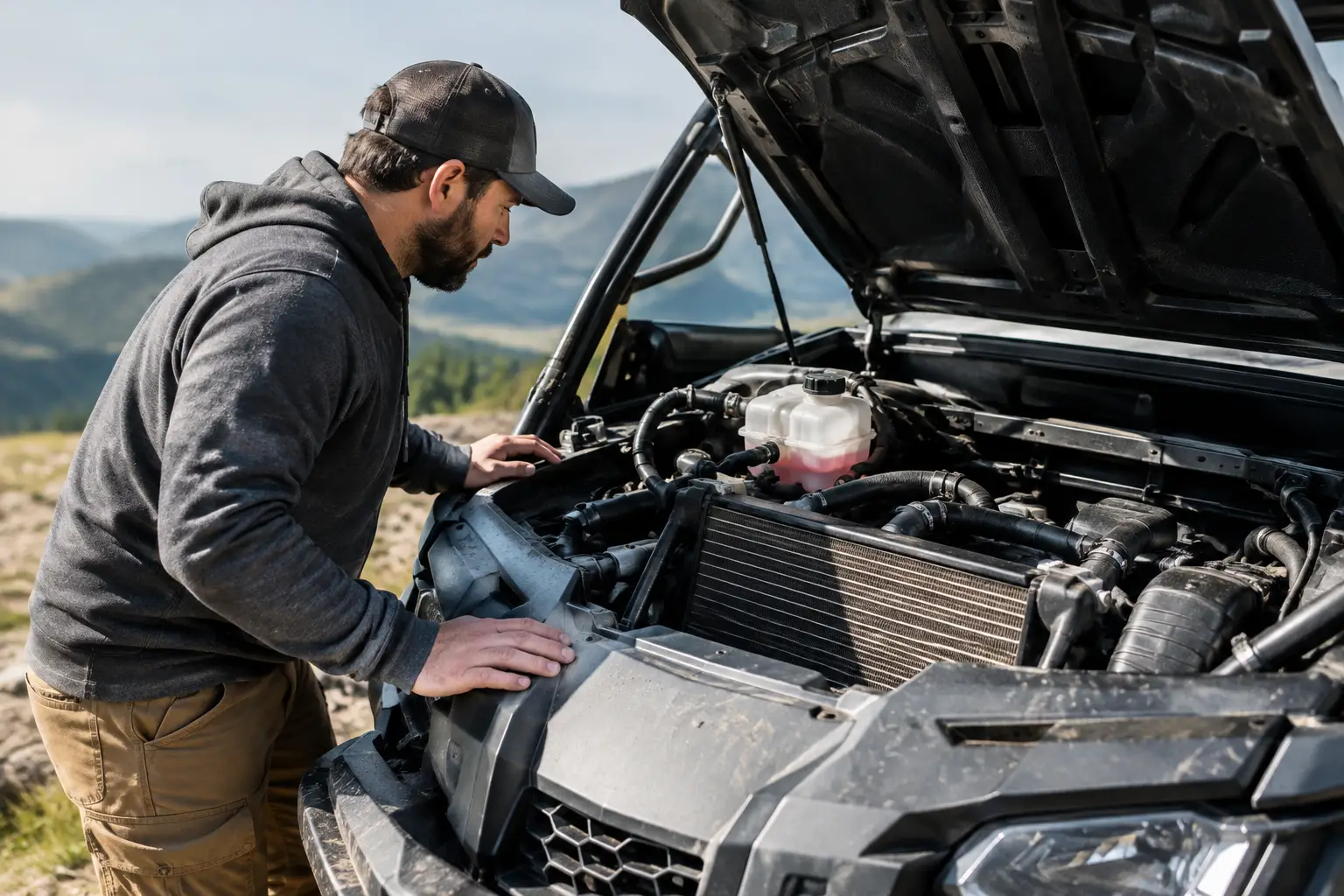
A temperature light halfway through a hard climb is not a warning to ignore until you reach camp. UTV overheating causes range from a radiator packed with mud to a failed water pump, and the right next move depends on whether the machine is losing coolant, lacking airflow, or working harder than its cooling system can handle. Catch the pattern early, and you may avoid turning a simple repair into an engine rebuild.
Most side-by-sides run hot only after something changes: the riding conditions, the accessory load, the maintenance interval, or a cooling-system component. Start by parking safely, shutting the engine down, and letting it cool completely. Never remove a hot radiator cap. Pressurized coolant can cause serious burns, and checking the system cold gives you a more useful answer anyway.
UTV Overheating Causes That Show Up Most Often
A clogged radiator or blocked airflow
Radiator blockage is one of the most common causes, especially on Polaris, Can-Am, Yamaha, Kawasaki, and Honda machines used in mud, dust, brush, or snow. The radiator needs clean air passing through its fins. Mud dries into a solid layer, fine dust fills the spaces between fins, and seeds or grass can build up behind a front grille or on an accessory-mounted light bar.
Look through the radiator from both sides. A radiator can appear clean from the front while debris is trapped on the rear side, against the fan shroud. Use low-pressure water and a soft stream from the back outward when possible. High-pressure washing can fold the thin fins over and reduce airflow further.
A front-mounted radiator relocation kit can be a worthwhile upgrade for riders who regularly cross mud or deep water. It does not replace routine cleaning, but it can move the radiator out of the worst spray zone and make trail-side inspection easier. Make sure any relocation setup is designed for the exact make, model, and year of your UTV so hose routing, mounts, and airflow remain correct.
Low coolant, leaks, or trapped air
Low coolant reduces the system's ability to carry heat away from the engine. Check the overflow reservoir and, once the vehicle is completely cool, the radiator itself if your model provides access. A reservoir at the proper level does not always prove the radiator is full, particularly after a repair or a slow leak.
Inspect radiator hoses, clamps, the radiator core, water-pump weep hole, thermostat housing, and coolant connections for wet spots, dried residue, or a sweet coolant smell. Small leaks can be hard to spot because coolant may evaporate on hot engine parts before it drips to the ground.
Air trapped in the cooling system can create the same symptoms as low coolant. This often happens after hose replacement, radiator service, or a coolant flush that was not properly bled. Follow the service manual's filling and bleeding procedure for your specific machine. Guessing at coolant type or mixing incompatible formulas can also create corrosion, sludge, or reduced cooling performance over time.
Cooling fan failure
At low speed, the electric fan does much of the work. If your UTV overheats while crawling through rocks, idling during chores, plowing snow, or navigating tight timber but cools down once you pick up speed, inspect the fan system first.
With the engine at operating temperature, verify that the fan comes on when it should. If it does not, check the fuse, relay, wiring connections, fan connector, and fan motor. A damaged blade, loose shroud, or fan turning in the wrong direction after repair can also cut airflow. On some models, a faulty temperature sensor or fan switch may prevent the fan from receiving the signal to run.
Do not assume a fan that spins is moving enough air. A weak motor can turn slowly, especially when hot. If the fan sounds strained, cycles inconsistently, or stops after a few minutes, test it before the next long ride.
Thermostat, water pump, or belt-driven cooling issues
Once the radiator, coolant level, and fan check out, move deeper into the system. A thermostat stuck closed restricts coolant flow to the radiator. A failing water pump may circulate coolant poorly because of damaged impeller blades, a worn shaft, or a slipping drive arrangement on applications that use one. Either issue can cause fast temperature increases under load.
Signs can vary. A stuck thermostat may leave the radiator and upper hose relatively cool while the engine temperature climbs. A water-pump problem may come with a leak at the weep hole, bearing noise, or inconsistent heater output on enclosed-cab machines equipped with heaters. These are jobs where the service manual, correct replacement parts, and model-specific torque specs matter.
Heavy loads, low range misuse, and accessory demands
Not every overheating issue begins with a failed part. A loaded UTV pulling a trailer uphill in high range can build heat quickly. So can deep sand, tall tires, aggressive mud tires, high-elevation riding, and slow technical terrain on a hot day. The engine, transmission, belt system, and cooling system all work harder when gearing and load do not match the conditions.
Use low range for slow, high-torque work such as plowing, hauling, crawling, and steep climbs. It helps control heat in the belt and drivetrain while keeping the engine in a more effective operating range. If larger tires were installed without accounting for gearing, the added rotating weight and taller effective ratio can make the machine feel sluggish and increase stress under load.
Accessories matter too. Cab enclosures, roofs, windshields, winches, light systems, and audio equipment are useful upgrades, but poor installation can affect cooling or electrical capacity. Check that added wiring is fused correctly and does not interfere with fan circuits. Confirm that aftermarket bumpers, grilles, light mounts, or storage boxes are not blocking the radiator's air path.
How to Diagnose an Overheating UTV Without Guesswork
The conditions around the problem are often more useful than the warning light itself. Before replacing parts, note when the temperature rises. Does it overheat only at idle? Only in mud? Only while towing? Does coolant disappear? Does the fan run? Is there steam, a coolant smell, or a visible leak?
Work through the basics in a logical order:
- Clean and inspect the radiator, grille, fan shroud, and air passages.
- Check coolant level and look for leaks after the machine has cooled completely.
- Confirm the cooling fan, fuse, relay, wiring, and temperature trigger are working.
- Inspect hoses for soft spots, collapse, cracks, or loose clamps.
- Review recent repairs, tire changes, accessory installs, and the way the UTV was being operated.
This order prevents expensive parts swapping. A new thermostat will not fix a radiator packed with clay, and a larger fan will not solve an air pocket or a failing water pump.
If the engine has overheated severely, avoid repeatedly running it until it reaches the red zone. Continuing to operate an overheating UTV can warp cylinder heads, damage head gaskets, degrade oil, and shorten engine life. Milky oil, persistent white exhaust smoke, bubbling coolant, or unexplained coolant loss after repairs are reasons to stop and have the machine properly diagnosed.
Cooling Upgrades That Fit the Way You Ride
A stock cooling system in good condition is enough for many riders. But machines used for summer desert trails, mud riding, ranch work, snow plowing, towing, or heavily loaded overlanding may benefit from purpose-built cooling protection. The best upgrade depends on the actual cause, not just the highest temperature you have seen.
For mud riders, a radiator relocation kit and easy-to-clean screen may offer the biggest gain. For slow technical riders, a high-output fan or improved fan shroud can help if the stock fan is the limiting factor. For utility work, a proper belt-maintenance routine, low-range operation, and a clean radiator may matter more than adding parts. Larger-capacity radiators and upgraded hoses can make sense for modified engines or sustained high-load use, but they should be selected for your exact platform.
Fitment is not a minor detail. Cooling components vary by model year, engine package, cab configuration, and factory accessory layout. Side By Side Sports organizes UTV parts by vehicle so riders can narrow the search to upgrades designed to mount correctly and work with the machine they actually own.
The best habit is simple: inspect the radiator and coolant level before a demanding ride, then pay attention to changes in fan behavior or operating temperature. A clean, properly functioning cooling system gives your UTV a better chance of finishing the trail, the workday, or the trip back to camp without turning a warning light into a major repair.