
UTV Half Windshield vs Full Windshield
Posted by Drew Cummings on Jun 29th 2026
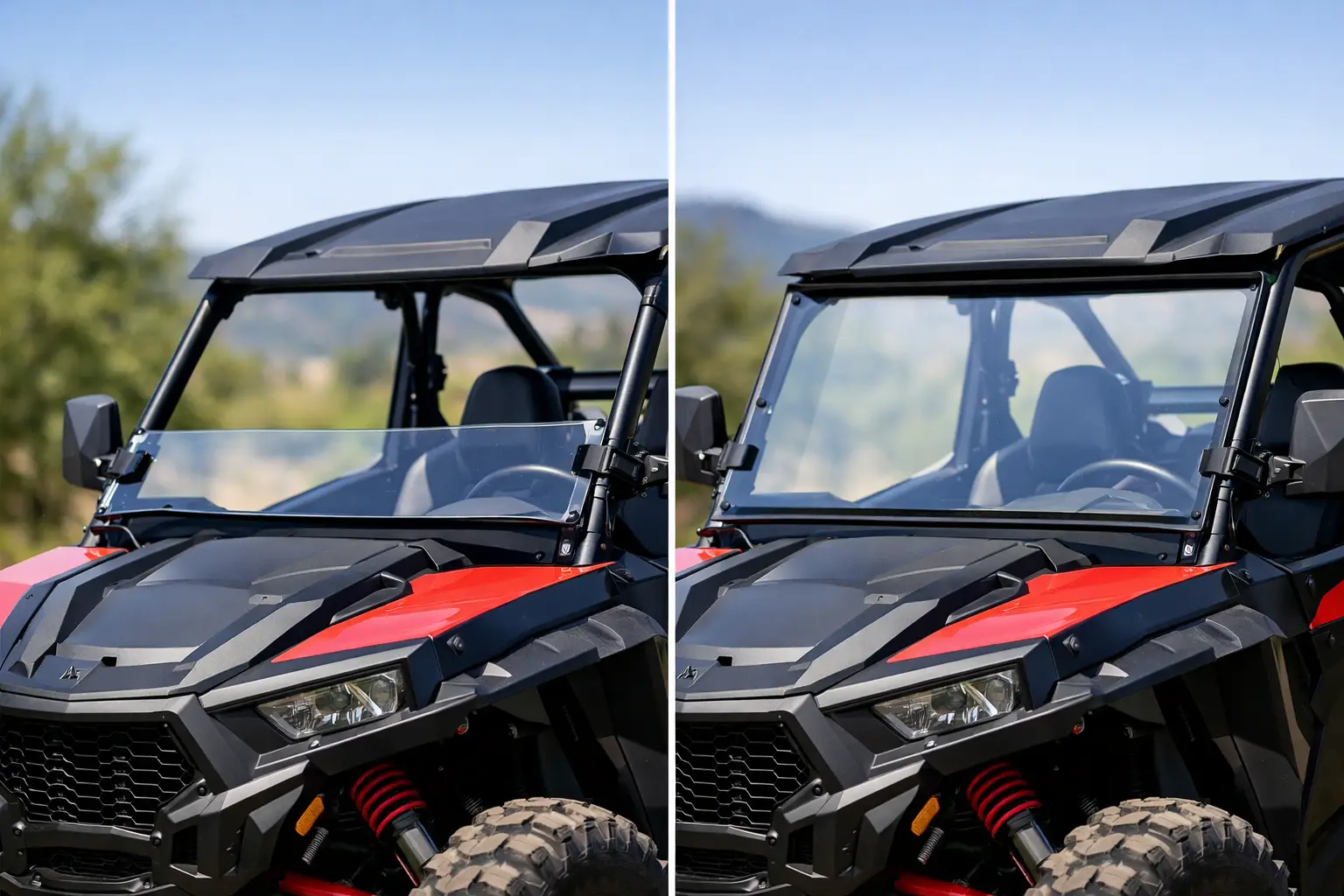
If you have ever come off a trail with dust in your teeth or rain pooling on the dash, you already know the utv half windshield vs full windshield question is not a minor accessory choice. It changes how your machine feels in heat, cold, mud, and long hours behind the wheel. The right answer depends less on looks and more on where you ride, how fast you ride, and what kind of comfort or protection you expect from your cab.
UTV half windshield vs full windshield: what really changes
A half windshield covers the lower portion of the front opening and leaves the upper section open. A full windshield seals the entire front opening from hood to roof line. That simple difference affects airflow, dust management, weather protection, cab pressure, and even how much you enjoy driving the machine on a given day.
A half windshield is usually the better pick for riders who want to keep air moving through the cab. It takes the hard hit out of direct wind while still letting the upper opening vent naturally. On warm trails, dunes, and summer work routes, that airflow matters. You get less chest-level blast without turning the cab into a heat trap.
A full windshield is built for more complete protection. It blocks wind, rain, sleet, mud splash, and flying debris much better than a half windshield. If your machine sees cold-weather riding, hunting season, farm use in rough weather, or long trail miles at speed, a full windshield usually delivers the comfort upgrade people are actually after.
Airflow and cab comfort
Airflow is where the choice becomes obvious for most riders.
A half windshield lets enough air pass through the upper cab opening that you avoid the stuffy feel many riders dislike in warm weather. That is why half windshields stay popular with trail riders in southern states and with owners who use their UTV for property work during spring and summer. You still get some protection from branches, roost, and direct wind, but the cabin stays open and breathable.
A full windshield reduces that open-air feel. In cool weather, that is a major advantage. In hot weather, it can become a drawback unless the windshield includes vents or you run other cab components that help manage airflow. Without a rear panel or roof, some full windshield setups can also create swirling air inside the cab. Riders often describe it as backdraft or dust pull. So while a full windshield blocks the wind from the front, the total cab setup still matters.
If your main complaint is wind fatigue across your chest and face, a half windshield may fix enough of the problem without changing the character of the machine. If your main complaint is exposure to cold air, rain, and trail spray, a full windshield is the stronger answer.
Dust control is not as simple as it sounds
Many buyers assume a full windshield automatically means less dust. Sometimes it does. Sometimes it makes cab dust worse if the rest of the machine is left open.
A half windshield often allows airflow to move through the cab more naturally, which can reduce the vacuum effect that pulls dust in from behind and underneath. On dry trails, that can make the cab feel cleaner than some riders expect.
A full windshield blocks direct dust from the front, but if you do not have a rear windshield or back panel, the pressure difference can pull dust into the cab from the rear. This is one of the biggest fitment and setup mistakes riders make. They add a full front windshield for protection, then wonder why trail dust rolls in from behind.
If dust control is your top priority, think in terms of the whole cab, not just the front shield. A full windshield works best when paired correctly with your roof, rear panel, and sometimes doors. A half windshield can actually be the more comfortable standalone option in dry climates because it avoids some of that negative pressure.
Rain, mud, and cold-weather riding
This is the category where the full windshield pulls ahead fast.
A half windshield helps with low spray and cuts some wind, but it still leaves your upper body exposed. In a light drizzle, that may be tolerable. In a cold rain, muddy trail conditions, or late-season hunting ride, it is not much protection. Water will still hit your face and chest, and cold air will still move through the upper opening.
A full windshield gives you real front-end weather protection. That matters for utility riders, ranch owners, hunters, and anyone using a UTV as a work machine instead of a fair-weather toy. Add a roof and the machine starts to feel much more usable in rough conditions. Add a heater and a full windshield becomes almost mandatory if you want to keep warm air in the cab where it belongs.
For snow plowing, winter trail riding, and early morning chores, a full windshield is usually the practical choice. A half windshield is better thought of as a comfort and airflow accessory, not a true weather barrier.
Visibility and maintenance
Visibility matters just as much as coverage.
A half windshield has one major advantage here - you are mostly looking over it, not through it. That means less concern about scratches, glare, wiper coverage, or mud smearing across your line of sight. For riders who spend time in brushy terrain or who do not want the upkeep of a full panel, this is a real benefit.
A full windshield gives more protection, but you are depending on that surface for clear vision. Material quality matters. Hard-coated polycarbonate tends to hold up better than lower-grade plastics, especially if you ride in dusty conditions and clean your windshield often. Glass offers excellent clarity and scratch resistance, but it is heavier and not the right fit for every rider or machine.
If you choose full coverage, think about practical features. Vents help regulate airflow. A wiper can be a huge upgrade in wet climates. Scratch resistance is worth paying for if you ride often. On a machine that sees regular trail use, poor visibility becomes a safety issue, not just an annoyance.
When a half windshield makes more sense
A half windshield is a strong choice if you mostly ride in warm weather, prefer an open-cab feel, and want to reduce direct wind without sealing off the machine. It also makes sense for riders who spend time on dusty trails and do not want to create rear dust suction with a full front panel.
It is often the better fit for casual trail riding, dune riding, and farm or property use where ventilation matters more than full weather protection. If you trailer your UTV to ride in fair conditions and head home when the weather turns, a half windshield may be all you need.
It is also a simpler choice for riders who value low maintenance. Since you are usually looking over the panel, light scratches and dirt are less likely to affect your visibility.
When a full windshield is worth it
A full windshield is the right move if you ride year-round, deal with cold mornings, run in rain or mud, or use your machine for work that cannot wait on good weather. It is also a better fit for hunters, overlanders, and utility riders who spend long hours in the seat and want less fatigue from wind and debris.
If you already plan to add a roof, rear panel, doors, or heater, a full windshield usually fits that setup better. It becomes part of a complete cab system instead of a standalone accessory. That is where the comfort gains become much more noticeable.
For many owners, the real question is not whether a full windshield offers more protection. It does. The question is whether that added protection matches the way the machine is actually used.
Fitment matters more than most buyers think
No matter which style you choose, model-specific fitment should be non-negotiable. A windshield needs to match your machine correctly around the cage, hood line, and accessory setup. Poor fit leads to rattles, gaps, water intrusion, and wasted money.
That is especially true if you have a Polaris, Can-Am, Yamaha, Kawasaki, or Honda with existing cab accessories. Roof design, mirror placement, upper doors, lower doors, and even light bars can affect windshield compatibility. This is where buying from a UTV-focused source matters. Side By Side Sports built its catalog around fitment and use case for exactly this reason.
The better choice depends on how you ride
For hot-weather trail riders who want airflow and less wind blast, a half windshield is often the smarter buy. For cold-weather users, work-focused owners, and riders building out a more complete cab, a full windshield usually delivers better long-term value.
If you are stuck between the two, start with the condition you deal with most. Heat points toward half. Cold, mud, and rain point toward full. Dust can go either way depending on your rear cab setup. The best windshield is the one that matches your machine, your terrain, and the months you actually spend riding - not just the one that looks good in a product photo.
Choose based on real use, and your next ride will feel like an upgrade instead of a compromise.