
UTV Cab Upgrades for Winter That Pay Off
Posted by Drew Cummings on Aug 5th 2026
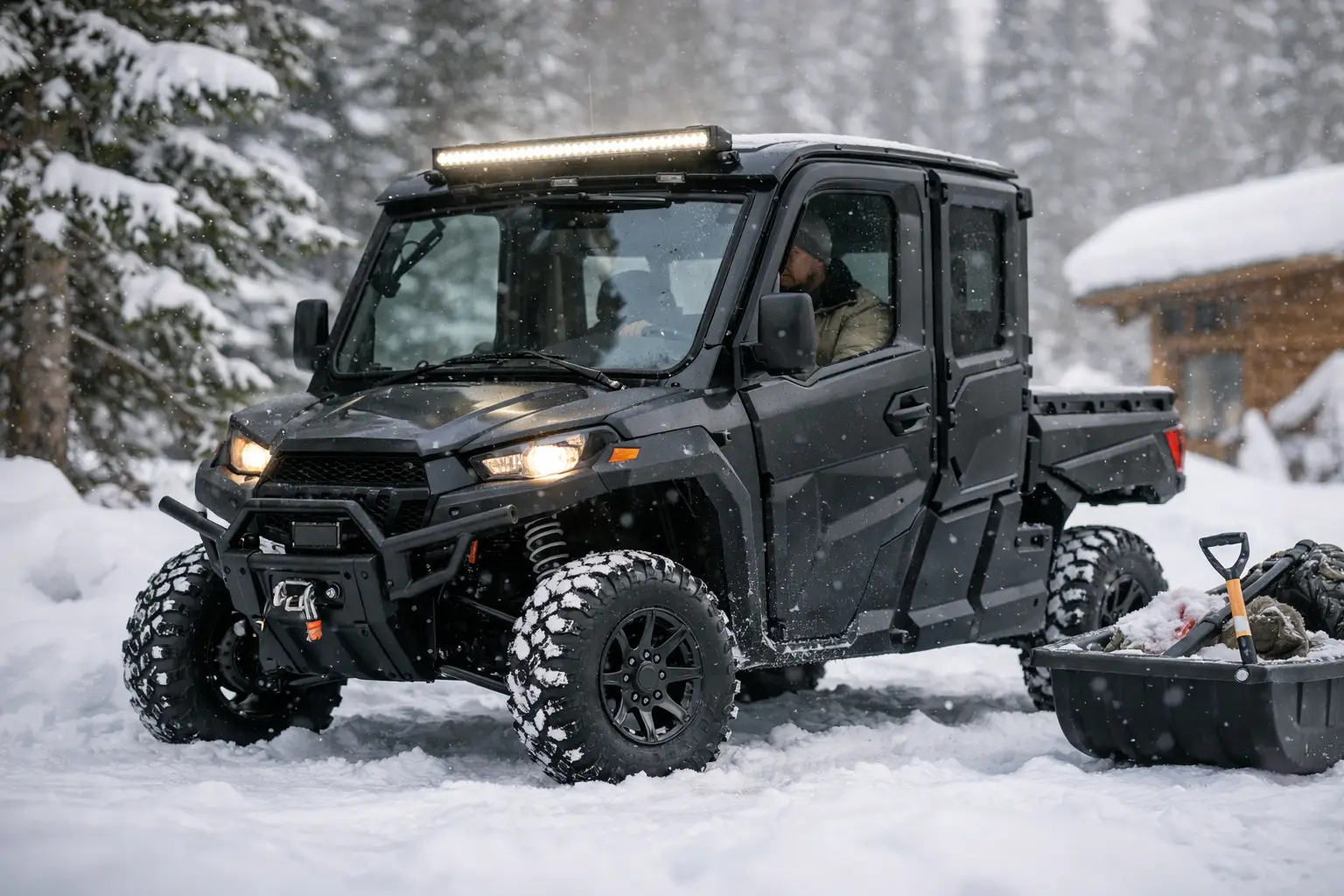
A 20-minute ride can feel a lot longer when wind pushes through the dash, snow blows across the seats, and your windshield fogs the moment the cab warms up. The right UTV cab upgrades for winter turn a seasonal machine into one you can use for plowing, feeding livestock, checking property, hauling firewood, or riding trails when temperatures fall.
The key is to build a cab system instead of buying isolated accessories. A heater will not do much if the cab is open on three sides. Full doors may keep out wind, but poor ventilation can leave you fighting fogged glass. Start with your machine's make, model, year, and existing accessories, then choose components designed to work together.
Start With a Proper Cab Enclosure
The biggest comfort improvement usually comes from stopping cold air before adding heat. A roof, windshield, rear panel, and doors create the foundation for every other winter accessory. On a Polaris Ranger, Can-Am Defender, Yamaha Wolverine, Kawasaki Mule, Honda Pioneer, or sport-focused side-by-side, the available cab options can vary significantly by trim and model year. Fitment matters.
A hard roof is often the first piece to install if your UTV does not already have one. It blocks falling snow and dripping meltwater while giving a windshield and rear panel a stable mounting point. Poly roofs are lighter and typically cost less; aluminum roofs offer greater durability for branches, loading gear on top, and hard-working utility use. Either option should mount securely without interfering with factory doors, rear-view mirrors, or light bars.
Windshield choice depends on how you use the vehicle. A full polycarbonate windshield offers fast protection from wind and snow, especially for occasional winter work. Glass windshields cost more, but their scratch resistance, clarity, and compatibility with wipers can make sense for frequent road crossings, plowing, ranch work, and long cold-weather rides. If you choose polycarbonate, use a cleaner made for that material. Standard glass cleaner and dry wiping can haze it over time.
Rear panels are easy to overlook, yet they close off a major draft path. They also help prevent powdery snow and mud spray from entering the cab behind the seats. On machines with a rear cargo bed, choose a panel that works with your bed operation and any installed rack, storage box, or gun boot.
Doors Matter More Than Most Riders Expect
Half doors provide a useful barrier against brush and lower-body wind, but they rarely create a warm winter cab by themselves. For cold climates, full hard doors with weather seals are the more effective option. They reduce crosswinds at shoulder height and help a heater maintain usable cab temperature.
Soft doors and zippered enclosures can be a practical middle ground. They are often less expensive, easy to remove in warmer months, and well suited to utility machines that see light winter duty. Their trade-off is sealing and long-term durability. Zippers, snaps, and soft windows need regular cleaning, and they generally will not hold heat as well as hard doors.
Before ordering doors, check for compatibility with your roof, windshield, mirrors, and door-mounted storage. Model-specific parts eliminate the guesswork that comes with universal enclosures. Also consider entry and exit. If you climb in and out repeatedly while working a property or handling livestock, a door setup with dependable latches and easy operation is worth the investment.
Add Heat After You Control the Drafts
A cab heater is one of the most valuable winter additions, but it is not a substitute for an enclosure. Most UTV heater kits use engine coolant to create heat, then move it through a compact heater core with an electric fan. Installed properly, they deliver steady warmth and can help clear moisture from the windshield.
Heater output is only part of the decision. Look at hose routing, dash space, vent placement, electrical draw, and whether the kit is designed for your exact platform. A model-specific kit usually includes brackets, hoses, clamps, wiring, and instructions that reduce installation time and avoid improvised mounting.
For a working UTV, directional defrost vents are often as valuable as floor-level heat. Aim some airflow toward the windshield and some toward your hands or feet. A basic heat-only setup may be enough for a short commute to the barn. Riders spending hours plowing or trail riding will usually appreciate multiple outlets and adjustable fan speeds.
Do not ignore electrical capacity. Heaters, wipers, lights, radios, and accessory chargers can add up. If your winter build includes several powered accessories, inspect battery condition, charging output, fuse protection, and switch placement. A weak battery is far more noticeable when the temperature drops.
Plan Ventilation and Visibility Together
A sealed cab without airflow creates a familiar winter problem: fogged windows. Your breath, wet boots, melting snow, and warm cabin air all add moisture. The goal is not to seal every opening permanently. The goal is to control where air enters and exits.
A windshield with a vent position can help, as can adjustable dash vents connected to a heater. Some riders also leave a rear window or small side opening cracked during slow work. The best setup depends on outside temperature, passenger count, and how wet your gear gets. A dry, enclosed cab with a heater may need very little ventilation. Two riders climbing in with snow-covered coats may need more airflow immediately.
A wiper and washer kit is a smart addition for glass windshields and many hard-coated polycarbonate windshields. Snow dust, slush, and road spray can quickly obscure your view during plowing or winter travel. Confirm that the windshield is rated for wiper use before installing one. Using wipers on a windshield not designed for them can cause scratching or distortion.
Interior lighting is another useful visibility upgrade. A small dome light makes it easier to locate tools, gloves, and controls before daylight, while rear-facing work lights help with backing up to trailers, woodpiles, and implements. Use switches that are easy to reach with gloves on.
A Smart Order for UTV Cab Upgrades for Winter
Winter builds go more smoothly when you buy in the order that solves the biggest problem first. For most machines, this sequence prevents wasted spending:
- Install a compatible roof, windshield, and rear panel to cut exposure.
- Add full doors or a quality soft enclosure based on your budget and use.
- Install a heater with defrost capability once the cab can retain warmth.
- Finish with a wiper, washer, lights, mirrors, storage, and electrical upgrades.
This order changes if your UTV already has a factory cab. In that case, a heater, wiper kit, replacement seals, or upgraded lighting may be the immediate priority. If you use the machine primarily for snow plowing, visibility and a reliable heater can rank ahead of doors. If you hunt from your side-by-side, quiet doors, secure storage, and a clear windshield may matter more than maximum heat output.
Protect the Rest of the Machine
Cab comfort is only one part of reliable winter use. Cold weather exposes weak points in recovery gear, tires, electrical connections, and fluid maintenance. A winch with a covered contactor, properly routed wiring, and a wired remote or protected switch is valuable when snow or ice leaves you stuck. Keep recovery straps, shackles, gloves, and a small shovel where they are accessible without unloading the cargo bed.
Tire selection also affects how useful the cab feels. A warm, enclosed UTV is still not much help if it cannot climb a snowy access road or stop on packed ice. Aggressive all-terrain tires work well in mixed mud and snow, while purpose-built winter tires can provide better cold-weather grip where snow and ice are the primary conditions. Check local rules before using tire chains, particularly on public routes.
Finally, inspect door seals, windshield fasteners, heater hoses, battery terminals, and accessory wiring before winter arrives. Snow, vibration, and repeated temperature swings can turn a minor loose connection into a no-start morning. Side By Side Sports makes it easier to shop by machine and find the fitment-specific parts that make a winter cab work as a system.
Build for the coldest job your UTV has to handle, not the average ride. When the wind is blocked, the glass stays clear, and the heater has a sealed space to warm, winter use becomes less about enduring the weather and more about getting the work or ride done.