
Polycarbonate vs Glass UTV Windshield
Posted by Drew Cummings on Jul 8th 2026
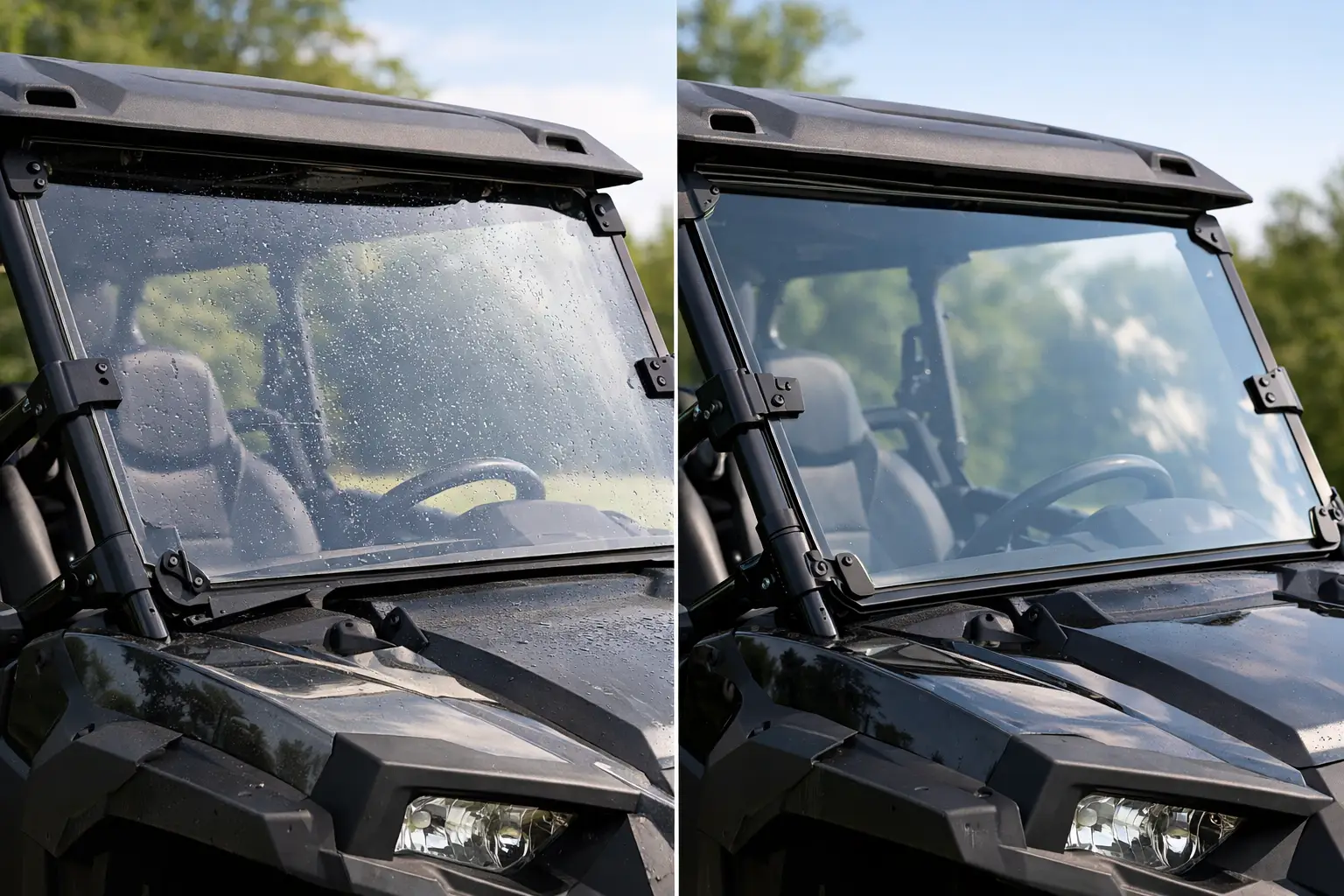
A windshield looks simple until the first branch snaps back across the front of your machine, or a freezing morning ride fogs everything up at the worst time. That is where the polycarbonate vs glass UTV windshield decision gets real. The right choice depends less on what sounds premium and more on how you actually use your side-by-side.
For some riders, polycarbonate is the clear winner because it takes abuse, keeps weight down, and handles rough trail conditions well. For others, glass is worth the extra cost because the visibility stays cleaner over time, the cab feels more refined, and wipers work better in bad weather. If you are outfitting a Polaris, Can-Am, Yamaha, Kawasaki, or Honda UTV, the best windshield is the one that matches your terrain, riding speed, and tolerance for maintenance.
Polycarbonate vs glass UTV windshield: what changes on the trail?
The biggest difference is how each material reacts to impact, abrasion, weather, and daily use. Polycarbonate is an extremely tough plastic. It is known for impact resistance, which makes it a strong fit for wooded trails, rocky routes, and work environments where brush, debris, and flying gravel are part of the job.
Glass feels more like an automotive upgrade. It is harder at the surface, so it resists light scratching better than standard polycarbonate. That matters if you ride in dusty areas, use your windshield year-round, or want the cleanest possible view after months of washing and wiping.
Neither material is automatically better in every case. A ranch machine used around limbs, tools, and rough terrain may benefit more from polycarbonate. A cabbed UTV used for cold-weather riding, road crossings, or longer-distance trail systems may feel better with glass.
Durability is not just about strength
A lot of buyers hear that polycarbonate is nearly unbreakable and stop there. That toughness is real, but impact strength is only one part of durability. Polycarbonate can flex under stress and is far less likely to shatter from a hit. If a rock gets thrown up or a branch catches the front end, that resilience can save you from a damaged windshield and a ruined ride.
Glass is more brittle by comparison. It does not like sharp impact the way polycarbonate does. Laminated safety glass is still a strong, proven material, but if your riding puts the windshield in direct contact with brush or debris often, glass carries more risk.
On the other hand, glass usually wins the long game against surface wear. Standard polycarbonate is more likely to haze or show wipe marks over time if it is cleaned carelessly or exposed to repeated dust abrasion. Hard-coated polycarbonate improves that a lot and is a much better option than basic plastic, but glass still tends to hold its clarity longer in heavy-use conditions.
Visibility and optical clarity
If you spend hours behind the wheel, visibility becomes a daily issue, not a small detail. Glass usually offers the best optical clarity. It has a more stable, familiar look with less chance of distortion, especially on full windshields used at higher speeds or on machines with enclosed cabs.
Polycarbonate can still provide very good visibility, especially when it is hard-coated and well made. But lower-quality panels may show some distortion, and as scratches build up, that can become more noticeable in direct sunlight or at night with oncoming light.
This is one reason glass appeals to riders who use their UTV for plowing, property work, or all-season riding. If you are constantly looking through the windshield instead of over it, long-term clarity matters more.
Weight, handling, and installation
Polycarbonate is lighter than glass, and that affects more than shipping. A lighter windshield is easier to install, easier on mounting hardware, and a better fit for riders who want to keep accessory weight under control. If your machine already carries a roof, doors, rear panel, winch, storage, and larger tires, every added pound starts to count.
Glass is heavier and usually part of a more substantial frame-based design. That can make the windshield feel more solid and finished, but it also means more installation effort and more load up high on the machine. For most recreational riders, the difference will not transform handling, but for aggressive trail riding or machines built with weight in mind, polycarbonate has an advantage.
Wipers, weather, and cab comfort
If you plan to run a wiper system, glass generally has the upper hand. Wipers work more naturally on glass, and repeated use is less likely to damage the surface. In rain, sleet, mud, and snow, that can be a major practical benefit.
Polycarbonate can be used with some wiper systems, but compatibility and long-term wear need closer attention. The wrong wiper setup or poor maintenance can leave marks on the surface. For occasional fair-weather riding, that may not matter much. For enclosed cab use in wet or winter conditions, it matters a lot.
Fogging and sealing also come into play. A framed glass windshield paired with a roof and doors often creates a more complete cab feel. That is appealing for cold-weather riders and anyone using heaters. Polycarbonate options vary more by design. Some are full hard-coated windshields with excellent seals, while others prioritize lighter weight and simpler mounting.
Cost and value over time
Polycarbonate usually costs less up front, which makes it attractive for riders who need protection without pushing the budget too far. For many UTV owners, especially those building out a machine with multiple upgrades at once, that lower entry cost makes sense.
Glass usually comes in at a higher price point. You are paying for material, framing, and often a more automotive-style build. The question is whether that extra cost gives you value in your specific use case.
If you ride hard in wooded terrain and break parts now and then, polycarbonate may actually be the smarter long-term value because it is more forgiving on impact. If you rack up lots of hours in dust, weather, and year-round cab use, glass may earn its keep by staying clearer and working better with wipers.
Which windshield fits your riding style?
For trail riders in tight woods, polycarbonate makes a strong case. It handles branch strikes and trail debris better, and the lighter weight is a plus. Hunters and landowners who use their machine off maintained routes often like it for the same reason. It is practical, resilient, and well suited to unpredictable terrain.
For riders using their UTV more like a utility vehicle or cold-weather cab machine, glass often makes more sense. Snow plowing, winter trail riding, and all-day work in mixed weather put more emphasis on visibility, sealing, and wiper performance. In those situations, glass brings a more refined and functional setup.
If your machine sees a little of everything, then the choice comes down to what you are least willing to compromise on. If impact resistance is your top priority, choose polycarbonate. If long-term optical clarity and weather performance matter more, choose glass.
What to watch before you buy
Material is only part of the decision. Fitment and build quality matter just as much. A well-designed hard-coated polycarbonate windshield from a reputable manufacturer can outperform a cheap glass option in real-world use. The same goes the other direction. A properly framed glass windshield with good seals and hardware will feel worlds better than a poorly designed plastic panel.
Look closely at whether the windshield is model-specific for your exact machine, including year and trim. Check if it works with your roof, doors, mirrors, and any existing accessories. Also pay attention to venting. Some riders want maximum sealing, while others prefer adjustable airflow to reduce dust swirl and cab pressure.
That is where a specialized UTV parts source such as Side By Side Sports has an edge. When you are shopping by make, model, and use case instead of guessing through generic listings, it is easier to match the windshield to the way your machine actually works.
The right answer is usually based on where your tires go
The polycarbonate vs glass UTV windshield debate is not about finding one universal winner. It is about choosing the material that fits your terrain, your weather, and the kind of abuse your machine sees. If your rides are rough, wooded, and unpredictable, polycarbonate is hard to beat. If your machine is built for all-season comfort, better wiper performance, and cleaner long-term visibility, glass is often worth the upgrade.
Before you decide, picture your next ten rides instead of your last one. That usually points you to the windshield you will still be happy with months down the road.