
How to Winterize UTV Cab for Cold-Weather Rides
Posted by Drew Cummings on Aug 27th 2026
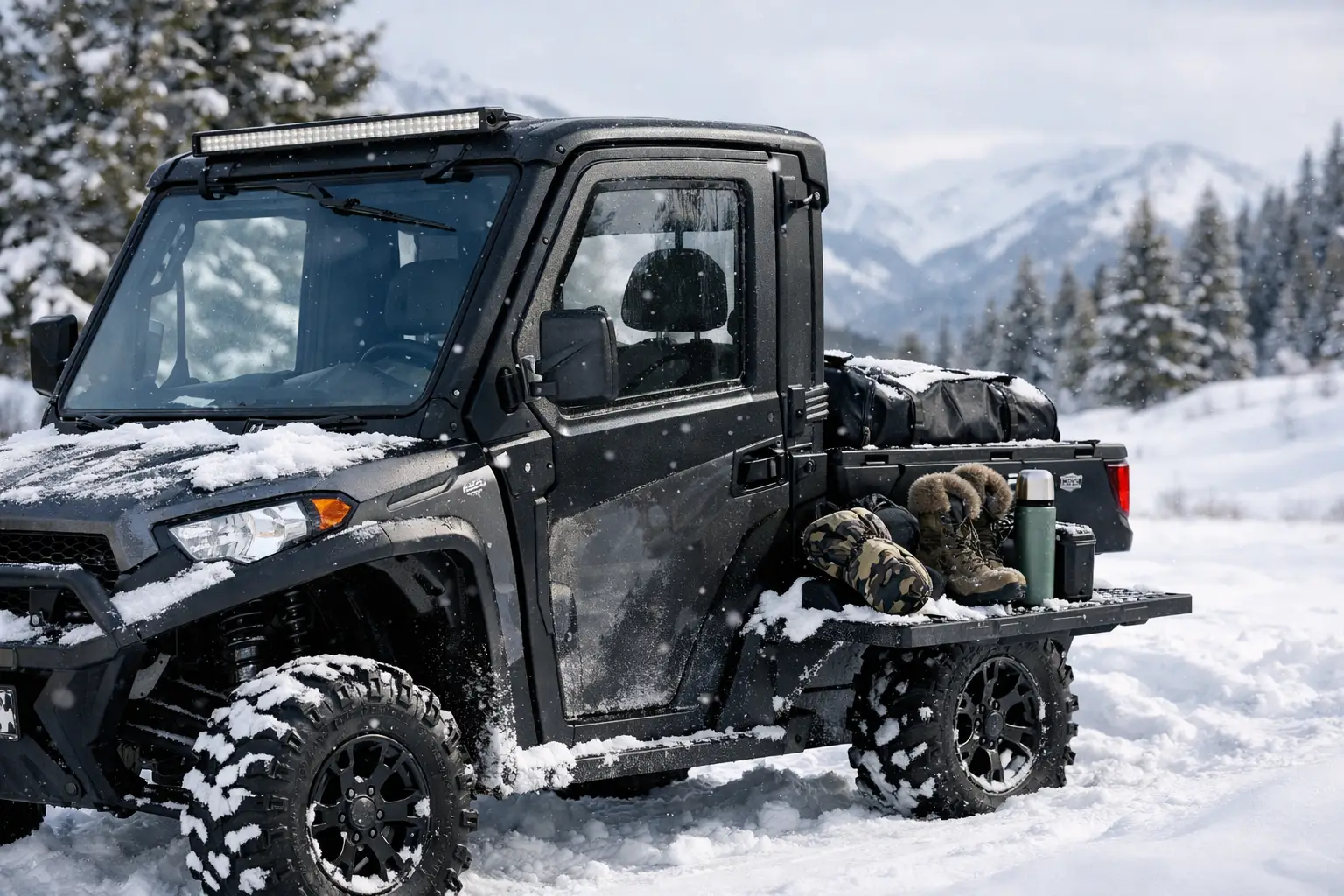
A cold ride gets miserable fast when wind cuts through a door gap, slush sprays in through an open lower cab, and the windshield keeps fogging. Knowing how to winterize utv cab setups before the temperature drops lets you keep using your machine for plowing, hunting, chores, and trail miles without fighting the weather every time you climb in.
The right setup depends on your machine, how severe your winters are, and whether you need access to the cab year-round. A fully enclosed, heated cab is hard to beat below freezing, but a windshield, roof, rear panel, and quality soft doors can make a major difference for riders in milder conditions. Start with protection from wind and moisture, then add heat and visibility where your use demands it.
How to Winterize a UTV Cab the Right Way
Winterizing a cab is less about adding one big accessory and more about closing the gaps between the components you already have. A windshield cannot do its job if the roof leaves an open channel above it. Doors help, but only if they seal reasonably well against the frame and latch securely over rough ground.
Begin by inspecting the cab as a system. Wash away mud and dust from the roll cage, body panels, door seals, and windshield mounting points. Dirt trapped under a clamp or weatherstrip can create leaks and wear surfaces over time. Look closely for loose hardware, cracked plastic, worn rubber seals, torn soft cab panels, and missing fasteners. Fix those issues before adding new accessories, or the cold-weather upgrade will never fit or perform as intended.
Build a wind-blocking enclosure
For most UTV owners, the foundation starts with a windshield and roof. A full windshield provides the strongest defense against cold air, snow, rain, and trail debris. It is the better choice for plowing, long workdays, and sustained winter riding. A half windshield may direct some air up and over the driver, but it still leaves the cab exposed and can create turbulence depending on the vehicle and rider height.
Choose the windshield material around your priorities. Polycarbonate is common because it handles impacts well, which matters on wooded trails and work sites. Glass typically provides better optical clarity and resists scratches, but it is heavier and may require a wiper system. On either option, verify compatibility with your exact make, model, year, roof, mirrors, and door style. Fitment matters more in winter because even a small mismatch can become a cold-air leak.
Pair the windshield with a full roof and rear windshield or back panel. The rear panel prevents cold air from circling into the cab behind your shoulders, especially at higher speeds. It also helps reduce the dust and exhaust swirl that can occur on certain machines. If you use a rear panel with a heater, pay attention to ventilation requirements and manufacturer instructions. A tightly sealed cab still needs safe airflow.
Doors are the next major upgrade. Hard doors usually offer the best protection, security, and durability, while soft doors are often lighter, less expensive, and easier to remove when spring arrives. For a machine used mostly on a ranch, hunting property, or snow-covered trails, hard doors can be worth the investment. For a recreational UTV that sees only occasional cold-weather use, well-built soft doors may be the practical choice.
Seal the common trouble spots
Once the main panels are installed, check the spots that frequently let cold air in: windshield-to-roof joints, door edges, lower door openings, the rear-cab perimeter, and openings around shifters or dash panels. Manufacturer-designed weatherstripping and foam seals are generally the best route because they are sized for the panel and vehicle frame. Universal materials can work for minor corrections, but they should not be used to force incompatible accessories together.
Do not block drain channels or seal moving components so tightly that doors will not latch properly. Water needs a path out of the cab, particularly when snow melts off boots and gear. A small, controlled drain is better than moisture trapped under floor mats, where it can freeze overnight.
Add Heat Without Creating New Problems
A cab heater changes winter use more than almost any other accessory, but it needs to be selected carefully. Most UTV heaters use engine coolant to generate heat and a fan to move warm air through ducts. They work well once the machine reaches operating temperature and are a strong option for riders who regularly work in cold conditions.
Before installing a heater, confirm that it is designed for your UTV and engine configuration. Check hose routing, electrical requirements, mounting space, and whether the kit includes vents for windshield defrost. A heater that warms your knees is useful. A heater with well-placed defrost vents is far more valuable when snow, breath, and wet gear are fogging the windshield.
Installation quality matters. Keep coolant hoses away from hot exhaust parts and sharp edges, secure wiring properly, and protect circuits with the specified fuse. After installation, run the machine until it is fully warm, check the coolant level once it cools, and inspect every connection for leaks. A coolant leak in the cab is not just inconvenient. It can leave you without heat and create a slippery mess underfoot.
Heated seats and steering wheels can add comfort, but they are support upgrades rather than substitutes for a sealed cab and functional heater. They are especially useful for short rides where the engine may not run long enough for a coolant heater to deliver full output.
Keep the Windshield Clear and the Machine Reliable
Winter visibility depends on more than a clean windshield. If your cab is enclosed, moisture from wet clothing and occupants can fog the glass or polycarbonate quickly. A heater with defrost vents helps, but proper ventilation is still necessary. Crack a vent or window as needed to move humid air out, particularly during slow plowing or stop-and-go work.
If you run a glass windshield, a wiper and washer system are worthwhile for snow, slush, and road spray. Use winter-rated washer fluid, not plain water, which can freeze in the reservoir and lines. For polycarbonate windshields, use cleaners intended for that material and a soft microfiber cloth. Harsh household cleaners, paper towels, and dry wiping can scratch the surface and make night riding harder.
Lighting also deserves attention. Verify that headlights, taillights, brake lights, and any roof-mounted lights are operating before the first winter storm. Snowplow work often happens before daylight or after dark, and a dirty or weak light becomes a real safety issue. Keep a soft brush in the cab or storage box to clear snow from lights and camera lenses without scratching them.
A winter-ready cab should be paired with basic vehicle maintenance. Test the battery, inspect terminals for corrosion, check tire condition and pressure, and make sure the charging system is healthy. Cold weather exposes a weak battery quickly, especially when you are running a heater fan, wiper, auxiliary lights, winch, and audio system. If your UTV sits for long periods, use an appropriate battery maintainer rather than finding out it will not start when a storm rolls in.
Choose Upgrades Around How You Actually Use Your UTV
There is no single winter cab package that makes sense for every rider. A trail rider in a region with light snow may be well served by a roof, full windshield, rear panel, and removable soft doors. A landowner plowing driveways or feeding livestock through a northern winter may need hard doors, a glass windshield with wiper, a heater with defrost, and durable floor protection.
Before ordering, confirm these fitment details:
- Your UTV's manufacturer, model, year, and trim level
- Whether your machine has factory or aftermarket doors, roof, mirrors, and windshield
- Clearance needed for a plow mount, light bar, side mirrors, or roof storage
- Whether you need accessories that remove easily for warm-weather riding
This is where fitment-specific parts save time and frustration. A cab accessory designed around the roll cage and body lines of your Polaris, Can-Am, Yamaha, Kawasaki, or Honda is more likely to seal correctly and install without modification than a generic option. Side By Side Sports organizes winter cab upgrades by vehicle fitment so you can build around the machine you own, not a close guess.
After the first cold ride, take five minutes to recheck clamps, latches, weatherstripping, and heater connections. Most winter cab problems show up early as a draft, rattle, drip, or fogging issue. Catching that small problem in the garage is a lot better than discovering it halfway through a snowy trail or a long morning behind the plow.