
Honda Pioneer Roof Upgrades That Fit Your Ride
Posted by Drew Cummings on Aug 7th 2026
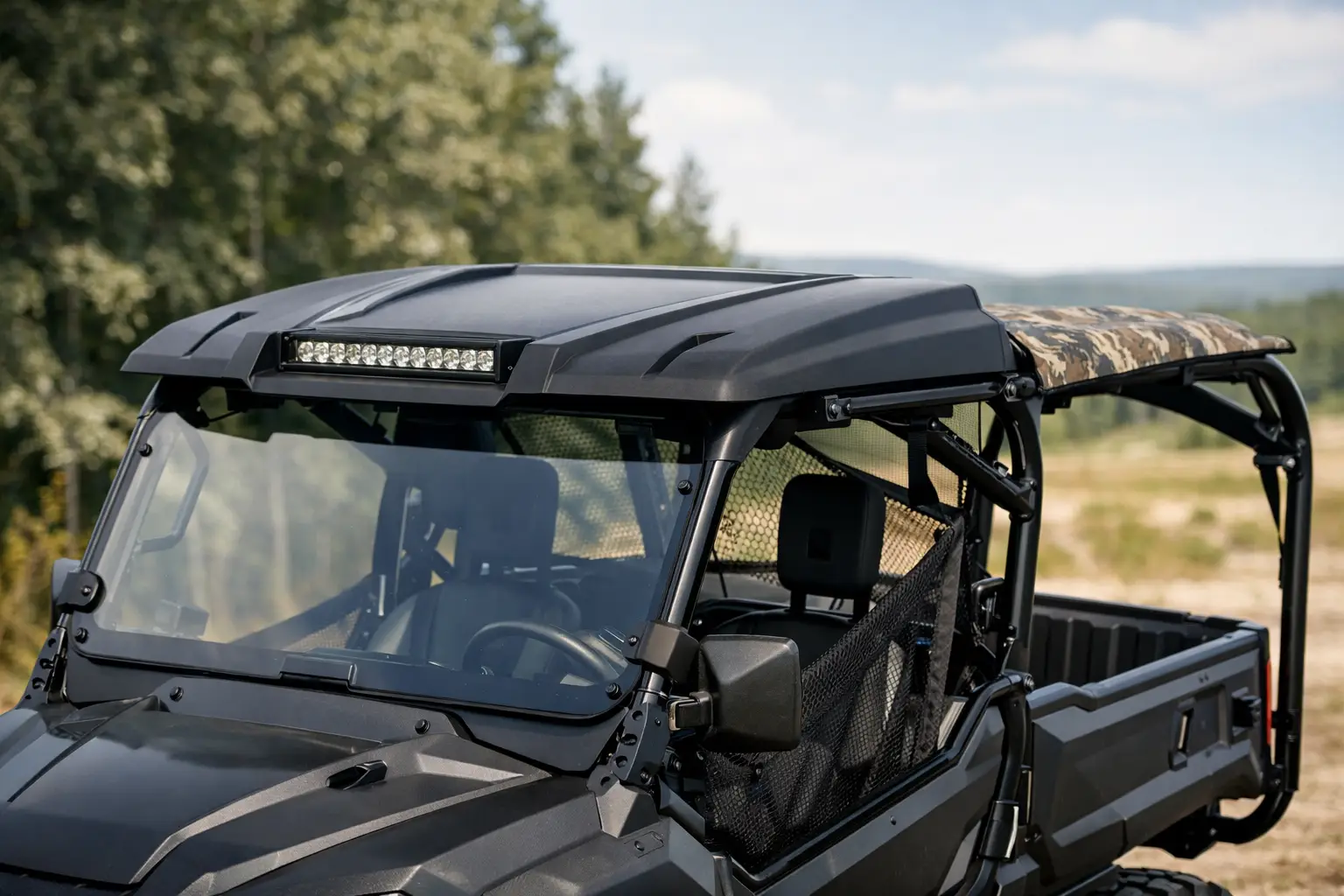
A roof is one of the first upgrades that changes how often you use your UTV. The right Honda Pioneer roof upgrades keep direct sun off the driver, cut down on rain exposure, and make long days on the trail, ranch, or hunting property more comfortable. The wrong one can rattle, interfere with accessories, or simply not fit your exact Pioneer cab configuration.
Honda builds the Pioneer line for real work and real terrain, but every rider uses that platform differently. A Pioneer 500 on tight wooded trails has different roof needs than a Pioneer 1000 hauling feed, pulling a trailer, or covering miles during hunting season. Start with how you ride, then choose a roof built for your specific machine.
Choose Honda Pioneer Roof Upgrades by Use
The best roof is not always the thickest or most expensive option. Material, coverage, accessory compatibility, and fitment matter more than a long feature list.
For hot, dry trail riding, a lightweight aluminum or molded plastic roof is usually the practical choice. It provides dependable shade without adding much weight up high. These roofs are easy to live with, hold up well against branches, and do not require the maintenance of a fabric top.
For ranch work, hunting, and all-season utility use, a hard roof with a full perimeter design makes more sense. The added structure helps keep rain from dripping through the cab area and pairs better with windshields, rear panels, and doors. If your Pioneer earns its keep in changing weather, build the roof into a broader cab enclosure plan instead of buying it as a stand-alone accessory.
Soft roofs have a place, especially for riders who want removable overhead coverage or need a compact option for seasonal use. They are generally lighter and can be less expensive, but they will not offer the branch resistance, noise control, or long-term rigidity of a hard roof. A soft top is a good answer for fair-weather riders, not necessarily for someone clearing trails or working under low limbs every weekend.
Hard Roof Materials: Plastic, Aluminum, and Composite
Most hard roofs fall into three useful categories: molded plastic, aluminum, and composite construction. Each has a different trade-off.
Molded polyethylene roofs are popular because they are durable, relatively quiet, and often shaped to direct water away from the cab. They take normal trail abuse well and do not corrode. Their main limitation is that they may offer fewer easy mounting points for lights, radios, or overhead storage than a metal roof.
Aluminum roofs are a strong option for riders who want a rigid platform and a clean, purpose-built appearance. Powder-coated aluminum resists corrosion and can handle brush contact better than lighter materials. Many aluminum designs also provide better options for mounting a light bar, whip flags, mirrors, or a roof-mounted cargo solution. The trade-off is that metal roofs can transmit more sound from rain, branches, and vibration unless the design includes insulation or a liner.
Composite roofs often combine a formed outer shell with reinforcement for strength and reduced noise. They can offer a more finished cab feel, particularly on a Pioneer used in colder or wetter conditions. Expect to pay more for that refinement, and verify that any drilling or accessory mounting is approved by the roof manufacturer.
Fitment Is More Than Pioneer 500, 700, or 1000
A product labeled for a Honda Pioneer is not automatically right for your vehicle. Honda has produced multiple Pioneer models, seating layouts, and factory cage configurations. Pioneer 500 and Pioneer 520 models have different dimensions and mounting requirements than Pioneer 700 and Pioneer 1000 models. A two-seat Pioneer 1000 may also use different roof hardware than a five-seat crew version.
Before ordering, confirm the model year, seating configuration, and whether your machine has factory or aftermarket accessories already installed. Factory roofs, windshields, rear panels, overhead speakers, and light brackets can all affect installation. This is especially important when combining brands. A roof may fit the roll cage correctly but conflict with a windshield clamp or a light bar bracket.
At Side By Side Sports, the fastest way to avoid a return is to shop by exact vehicle fitment first, then narrow options by roof style and material. If your Pioneer has a nonstandard cage, cab enclosure, or existing accessory setup, get fitment guidance before buying. A few minutes spent checking hardware compatibility beats modifying a new roof in the garage.
Build the Roof Around Your Cab Setup
A roof does more when it works with the rest of the cab. If you run only a roof, you gain shade and basic rain coverage. Add a windshield, and the roof begins to reduce wind and weather fatigue. Add a rear windshield or back panel, doors, and a heater, and the Pioneer becomes a far more capable cold-weather or wet-weather machine.
That does not mean every rider needs a fully enclosed cab. On dusty summer trails, a full windshield and rear panel can create unwanted turbulence or trap heat. A half windshield paired with a hard roof may provide the right balance of airflow and protection. In rainy regions or during late-season hunting, a full windshield and a roof with good edge coverage are usually worth the added investment.
Think about door clearance as well. Some roof designs extend low along the cage for better coverage, which can conflict with certain upper door frames or soft door enclosures. Review the mounting location and roof profile before committing to a complete cab package.
Lighting and Accessory Mounting Considerations
Many owners install a roof because it creates a better location for forward lighting. That can work well, but roof-mounted lights need planning. A large light bar mounted too far forward may reflect glare off a windshield or hood, while tall brackets can catch branches in tight timber. The cleanest setup uses brackets designed for your cage and roof combination, with wiring routed and protected from abrasion.
If you use your Pioneer for property work, a roof can also support task lighting, rear-facing work lights, or a beacon mount. Hunters may prefer low-profile lighting that does not interfere with a gun boot, bow rack, or overhead cargo bag. Overlanders and campers may prioritize mounting space for communications gear or a compact awning.
Do not assume a roof can carry any accessory weight. Thin plastic roofs are not intended to support heavy speakers, storage boxes, or a full-size spare tire. Mount substantial equipment to the roll cage or a manufacturer-approved bracket system instead of loading the roof panel itself.
Installation Details That Prevent Noise and Leaks
Most Honda Pioneer roofs can be installed with basic hand tools, but installation quality affects long-term performance. Clean the cage before fitting clamps or foam seals. Dirt trapped beneath mounting pads can cause slipping, squeaks, and scratched powder coat.
Tighten hardware evenly and follow the roof manufacturer’s torque guidance. Over-tightening can deform plastic panels, crush isolators, or damage the cage finish. After the first few rides, inspect the clamps and retighten as needed. Vibration from rough trails can settle hardware, particularly on a new installation.
Pay attention to seal placement around the front edge and side rails. A roof will not make an open cab waterproof, but correctly installed foam strips and rubber seals can reduce water drips at the windshield line. If you regularly pressure-wash the machine, avoid forcing water directly into roof seams and clamp points.
When a Factory Roof Makes Sense
An OEM Honda roof can be a smart choice when you want known fitment, a factory appearance, and straightforward compatibility with other Honda cab accessories. It is often a good route for riders who want simple overhead protection and prefer to keep their Pioneer close to stock.
Aftermarket options deserve a close look when you need heavier-duty materials, better rain coverage, integrated light mounting, or a roof designed around a specific job. The right aftermarket roof can offer more utility than a basic factory panel, but only if it matches your model and your planned accessories.
Your Pioneer should not sit parked because the forecast calls for heat, rain, or a long day in the field. Choose a roof that fits the machine you own, supports the way you use it, and leaves room for the upgrades you will want next season.