
Clean UTV Air Filter Care for Dusty Trails
Posted by Drew Cummings on Oct 16th 2026
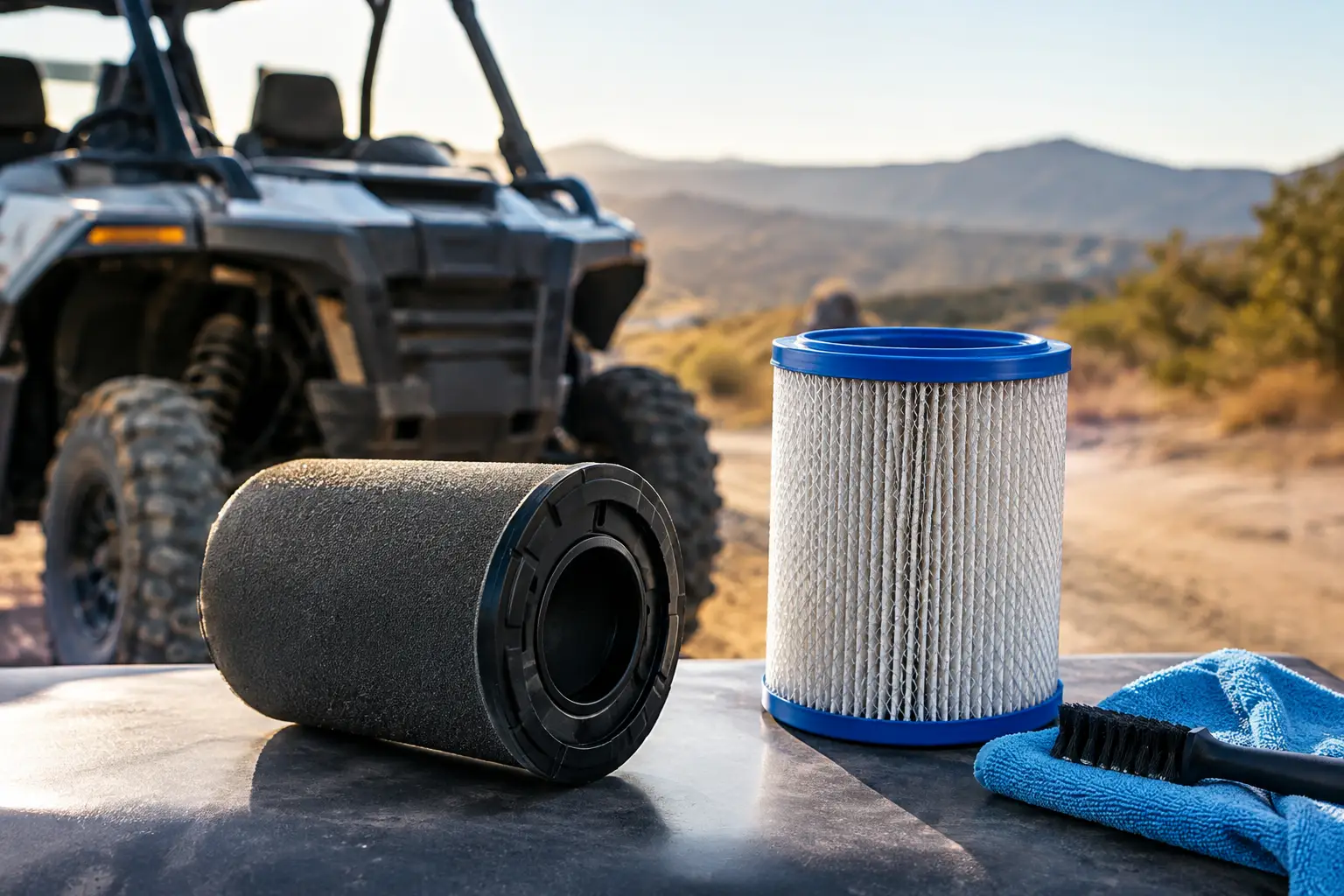
A clean UTV air filter is one of the cheapest forms of engine protection you can buy. It keeps abrasive dust, sand, chaff, and trail debris out of the intake tract, where they can wear cylinder walls, piston rings, and other expensive engine components. Whether your machine spends its weekends in a convoy of trail riders or its weekdays working a ranch, filter maintenance should be part of the routine.
The catch is that not every dirty-looking filter should be cleaned the same way. Foam and reusable performance filters have different service needs than disposable paper elements, and an overly aggressive cleaning job can create the exact problem you were trying to avoid. Start with the filter type specified for your Polaris, Can-Am, Yamaha, Kawasaki, or Honda UTV, then service it the right way.
Why a clean UTV air filter matters
Your UTV pulls a large volume of air through its intake whenever the engine is under load. Add dry trails, dusty roads, agricultural work, or a group ride where you are following another machine, and that air can carry a surprising amount of fine grit. The air filter is the barrier between that debris and your engine.
As dirt builds up, airflow is restricted. You may notice less response under acceleration, reduced power at higher RPM, richer running, or poorer fuel economy. On fuel-injected machines, the engine management system can compensate for some changes, but it cannot make a clogged filter flow like a clean one.
The more serious concern is a damaged or poorly installed filter. A small tear, a hardened sealing surface, or dust left inside the airbox can let unfiltered air bypass the element. That damage happens gradually, so riders may not notice it until the engine has already taken a beating. A few minutes spent inspecting the intake area is far less expensive than repairing an engine exposed to contaminated air.
Know which UTV filter you have
Before reaching for cleaner, identify the filter material. Most OEM-style UTV filters are pleated paper elements, though some machines use foam pre-filters, foam main filters, or reusable cotton-gauze performance filters. The correct service method depends on that construction.
Paper filters
Paper filters are common because they provide strong filtration and are easy to replace. They are generally not designed for washing. Light dust can sometimes be removed by gently tapping the filter with the dirty side facing down, but blasting it with compressed air or rinsing it with water can tear the media or drive debris deeper into the pleats.
If a paper filter is heavily loaded, stained with oil, wet, damaged, or cannot be inspected clearly between the pleats, replace it. For riders who regularly run in powdery dust, carrying a spare dry filter is practical insurance.
Foam filters and pre-filters
Foam elements are washable and often require filter oil after cleaning. The oil is not optional. It helps trap fine dirt that could otherwise pass through the foam. Use a cleaner and oil made for foam filters, and avoid gasoline, brake cleaner, or harsh solvents that can break down the foam and weaken its glued seams.
Reusable cotton-gauze filters
Cotton-gauze filters need their own cleaning kit and a measured amount of matching filter oil. Too little oil reduces filtration efficiency. Too much can restrict airflow and may contaminate intake sensors on certain applications. Follow the filter manufacturer's instructions rather than treating it like a foam or paper element.
How to clean a UTV air filter without creating a problem
Service the filter with the engine cool and the machine parked on level ground. Take a moment to wipe dirt away from the airbox cover before opening it. That simple step keeps loose debris from falling directly into the intake when the cover comes off.
For a washable foam or reusable performance filter, use this process:
- Remove the filter carefully and note how its sealing edge sits in the airbox. Inspect the airbox for loose dust, leaves, water, or signs that dirt has been getting past the filter.
- Cover the intake opening with a clean, lint-free rag while you clean the airbox. Wipe the housing with a clean cloth. Do not push debris down the intake tube.
- Apply the correct filter cleaner and let it work as directed. Gently wash the filter from the clean side outward when the product instructions call for rinsing. Never twist or wring foam hard enough to tear it.
- Let the filter dry completely in a clean area. Installing a damp element can pull moisture into the intake and prevent filter oil from adhering properly.
- Apply the proper filter oil evenly. Work foam oil through the element with gloved hands, then squeeze out excess. For cotton-gauze filters, apply oil only as directed by the manufacturer.
- Inspect the filter for tears, crushed pleats, loose seams, cracked rubber, or a damaged seal. Reinstall it squarely, making sure the airbox cover and all latches are fully secured.
For paper filters, skip the washing process. Inspect the element under good light and replace it when it is loaded with dust or damaged. Trying to stretch the life of a paper filter can cost more than a replacement ever will.
When cleaning is not enough
There is no universal hour interval that fits every UTV. A machine used on wet forest trails may go much longer between services than one used for desert riding, hay work, or hunting access on dry two-track roads. Conditions matter more than the calendar.
Check the filter after any especially dusty ride, after running behind other UTVs, and whenever you notice a loss of performance. If your machine has a pre-filter, inspect it frequently. Cleaning that outer layer early can extend the service life of the main filter.
Replace the filter instead of cleaning it when the media is torn, the sealing gasket is hard or cracked, the filter is oil-soaked from a mechanical issue, or the element remains heavily restricted after proper cleaning. Also inspect the airbox lid, drain tube, intake boots, and clamps. A premium filter cannot protect the engine if the system has an air leak around it.
Common filter service mistakes
The most common mistake is using high-pressure compressed air on a paper element. It may make the outside look cleaner, but it can open holes in the media that are too small to see. Another is reinstalling a foam filter dry or before it has fully dried.
Avoid running the engine with the filter removed, even briefly. Dirt in the airbox can move quickly into the intake. Be careful with aftermarket intakes as well. They can improve airflow and add serviceable filtration, but the filter, pre-filter, and intake system must match your exact UTV model and the conditions you ride in.
Over-oiling is another issue. A filter should be uniformly treated, not dripping. If oil is pooling in the airbox or collecting around sensors, clean the excess and revisit the product instructions.
Build maintenance around where you ride
Riders who work cattle, plow, or travel gravel roads should make air-filter checks part of their regular inspection routine alongside tire pressure, fluids, and belt condition. Trail riders can inspect the filter before a major weekend, then again after riding in a dusty group. If you operate in deep dust, carrying a sealed spare filter and the tools needed to access the airbox can save a trip.
When ordering a replacement, shop by make, model, and year rather than assuming similar-looking filters interchange. Correct fitment matters at the sealing surface, not just at the overall shape. Choose an OEM-style replacement for straightforward protection or a quality reusable option when its maintenance requirements fit the way you use your machine.
A clean filter does more than support horsepower. It gives your UTV a better chance of delivering dependable miles when the trail is dusty, the workday is long, and turning back is not an option.