
Can Am Defender Heater Kit Buying Guide
Posted by Drew Cummings on Jul 8th 2026
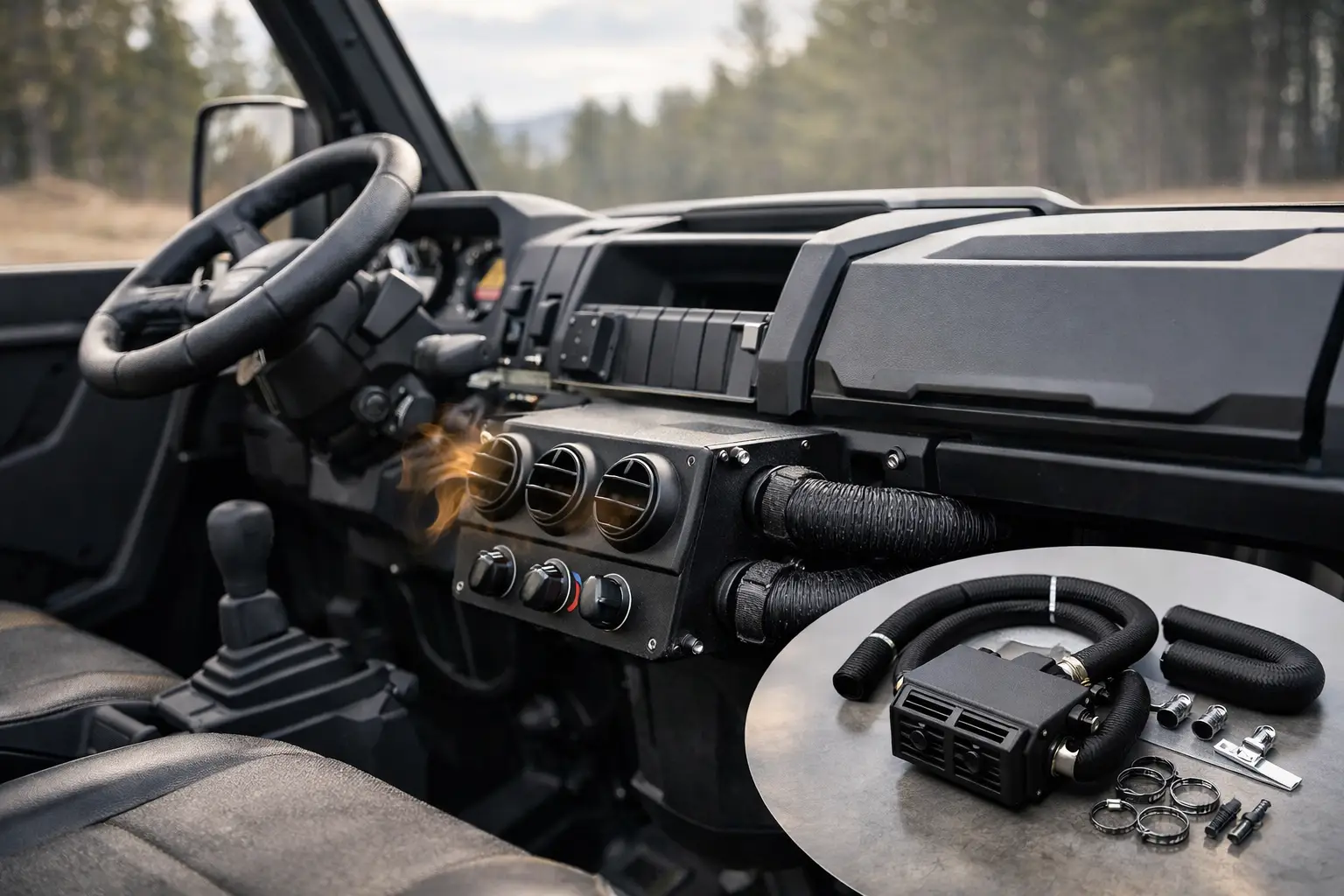
Cold cab, fogged windshield, numb hands by the second mile - that is usually the point when a Can-Am Defender owner starts looking seriously at a can am defender heater kit. If you use your machine for winter chores, hunting season, snow plowing, or late-fall trail rides, a heater is not a luxury add-on. It is a comfort and visibility upgrade that can make the cab far more usable when temperatures drop.
Why a can am defender heater kit matters
The Defender is built to work, and many owners rely on it long after fair-weather riding is over. That changes what you need from the cab. When the temperature falls, airflow inside the machine starts working against you unless the cab is properly enclosed and warmed. A heater kit helps by pulling heat from the engine's cooling system and directing it into the cab where you actually feel it.
That matters for more than comfort. Warm air across the windshield helps reduce fogging and frost buildup, which is a real safety advantage when you are hauling feed before sunrise or creeping along a wooded trail in the dark. It also helps the machine feel more finished if you already run a windshield, roof, doors, and rear panel. Without heat, an enclosed cab can still leave you cold and dealing with condensation.
What a Can Am Defender heater kit actually includes
Most quality heater kits for the Defender are built around a heater core and blower assembly that mounts under the dash or in another model-specific location. The system ties into the vehicle's coolant lines so the machine's engine heat becomes your heat source. From there, vents route warm air toward the driver, passenger, and often the windshield.
A complete kit usually includes the heater unit, hoses, fittings, hose clamps, ducting, vents, wiring, a switch, and machine-specific brackets or instructions. Some kits also include a defrost-focused vent layout, which is worth paying attention to if windshield clarity is one of your main concerns. The difference between a universal-style setup and a true vehicle-specific kit shows up quickly during installation.
Fitment comes first
This is where many buyers save time or waste it. The right heater kit is not just about brand. It is about your exact Defender configuration. Can-Am has produced multiple Defender trims and cab layouts, and details like model year, MAX versus non-MAX, HVAC-ready design, and existing accessories can affect compatibility.
Before buying, verify your machine's year and model exactly. If you have added lower doors, a hard rear panel, audio roof, or a different windshield style, those parts may also affect how the heater performs or installs. A model-specific kit is usually the best choice because bracket placement, hose routing, vent positioning, and switch mounting are already worked out for your platform.
If you are shopping the category the smart way, start with fitment and then compare heater output and vent design. That is how most experienced UTV owners avoid ordering a kit that looks right but turns into a wiring and hose-routing headache in the garage.
BTU output and real-world heating performance
Heater kits are often marketed by BTU output, and that number matters, but it is not the whole story. In simple terms, more BTUs generally means more heating capacity. For a larger cab or harsher winter use, that can be a real advantage. But the cab's enclosure level affects performance just as much as heater size.
A high-output heater in a machine with gaps around the doors and an open rear section will still lose heat quickly. On the other hand, a moderate-output kit in a well-sealed cab can feel surprisingly effective. If your Defender is used for snow removal, cold-weather property work, or long hunting access roads, prioritize both heat output and cab sealing. If you mostly want to knock the chill off during shoulder-season rides, you may not need the biggest unit available.
Fan strength and vent placement also influence how warm the cab feels. Heat aimed at your legs is welcome, but a kit that also puts air on the windshield and upper body tends to feel more useful in everyday conditions.
Windshield defrost is a bigger deal than many buyers expect
A heater is often purchased for comfort, then appreciated most for visibility. Defender owners who run a full windshield know how quickly moisture can build when outside temperatures drop. Breath, wet gear, snow tracked into the floor, and temperature swings all contribute to fogging.
That is why vent design deserves a close look. A can am defender heater kit with dedicated defrost vents can make the machine much easier to use early in the morning or late in the day. If you plow snow, work livestock, or drive between heated buildings and cold outside air, defrost capability is not a minor feature. It can be the reason the system feels worth the investment.
The type of windshield you run matters too. Glass and hard-coated poly windshields tend to be better long-term matches for enclosed cab use than lower-end materials that scratch easily or haze over time. The heater can only do so much if visibility is already compromised.
Installation: manageable, but not always quick
Most Defender heater kits are within reach for a mechanically confident owner, but this is not the same as bolting on mirrors or a roof. You are usually working with coolant lines, dash access, vent routing, wiring, and interior panel removal. Depending on the kit and machine, installation can take a solid afternoon or more.
The biggest factor is how complete and model-specific the kit is. Purpose-built kits usually reduce guesswork and cut down on fabrication. That means cleaner hose routing, better vent placement, and fewer surprises once panels are off. If you use your machine for work and cannot afford downtime, a better-designed kit often pays for itself in easier installation and fewer fitment issues.
Pay attention to where the heater mounts and how serviceable it will be later. A tight install may look clean but can make future maintenance harder if access to fittings or wiring is blocked. This is another reason experienced buyers tend to favor established heater kits over generic solutions.
The cab setup around the heater matters
A heater works best as part of a complete cold-weather cab strategy. If your Defender is still open on the sides or rear, the heater will help, but results may be limited. For the strongest improvement, think in terms of system matching.
A full windshield, roof, doors, and rear panel create the environment that lets cab heat build and stay where it belongs. Floor gaps, poor door seals, and open dash areas can all bleed warmth. Even small drafts become obvious once you start expecting the machine to hold heat.
This is also where buyer priorities differ. A ranch owner feeding stock at dawn may care most about quick windshield clearing and warm feet. A trail rider may care more about general cab comfort over longer distances. A hunter may want enough heat to stay comfortable without creating excessive fan noise at low speeds. The best heater kit depends on how the Defender is actually used.
What to look for before you buy
Start with fitment, then look at output, defrost capability, and kit completeness. A good heater kit should clearly state the Defender models it fits and whether it is intended for certain trim levels or cab configurations. If that information is vague, move on.
After that, look at whether the kit includes dedicated vents for both cabin heat and windshield defrost. Consider hose quality, bracket design, and switch integration. A kit that feels complete on paper is usually easier to install and more dependable once the weather turns.
It is also smart to think about support. Heater kits are one of those products where clear fitment guidance and knowledgeable help can save a lot of time. Side By Side Sports serves a buyer base that shops by machine and use case for exactly this reason - getting the right part the first time matters more than sorting through generic listings that leave key details out.
Is a Can Am Defender heater kit worth it?
For warm-climate owners who rarely ride in the cold, maybe not. But for anyone who uses a Defender through winter, in hunting season, or for early morning work, the answer is usually yes. The improvement shows up in comfort, visibility, and how often you are willing to use the machine when conditions are bad.
The main trade-off is cost and installation time. A quality heater kit is not the cheapest accessory you will buy, and installing it takes more effort than many basic cab upgrades. But if your Defender already earns its keep in cold weather, heat is one of the few accessories that changes the ride every single time you climb in.
The right move is to buy for your exact machine, your climate, and your cab setup - not just the highest number on the spec sheet. Get fitment right, make sure defrost is covered, and match the heater to a properly enclosed cab. When that first hard freeze hits and the windshield stays clear, you will know you picked the right upgrade.