
Best UTV Skid Plates for Real Trail Protection
Posted by Drew Cummings on Aug 10th 2026
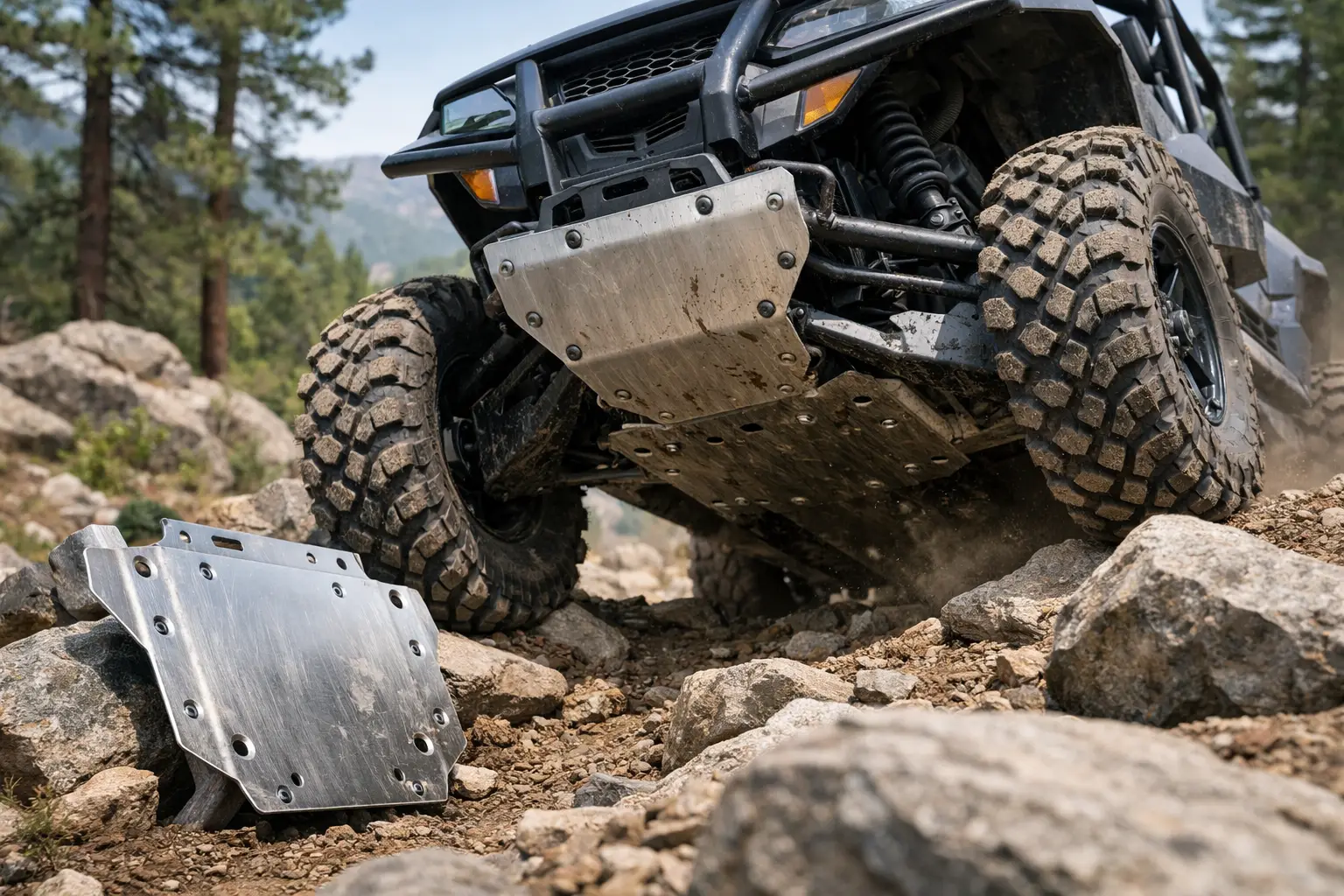
A sharp rock can turn a good ride into a long recovery when it catches the front differential, punches a factory plastic panel, or bends a vulnerable brake line. The best UTV skid plates give the underside of your machine the same level of protection you expect from a quality bumper, roof, and winch. They are not just for extreme rock crawlers, either. Trail riders, hunters, ranch owners, and overland crews all benefit when the driveline, suspension mounts, and chassis stay protected from repeated impacts.
The right setup depends on where and how you ride. A lightweight full-length plate can make sense for fast, mixed-terrain trails. Thick aluminum protection with front-to-rear coverage is often the better call for rock shelves, deep ruts, and hard-working utility machines. Before choosing a kit, focus on fitment, material, coverage, and how the plate handles mud and maintenance.
What Makes the Best UTV Skid Plates?
A skid plate is only useful if it protects the areas that actually take abuse. That means more than covering the center of the frame. A well-designed system follows the contours of the chassis and protects exposed components without interfering with suspension travel, ground clearance, drain points, or service access.
For most riders, the best kits are model-specific rather than universal. A plate designed for your Polaris, Can-Am, Yamaha, Kawasaki, or Honda platform will use existing mounting points, sit tight to the chassis, and account for the location of the differential, A-arms, trailing arms, and factory guards. Universal panels can work for a custom build, but they usually require fabrication and rarely provide the clean coverage of a dedicated kit.
Pay attention to transitions between panels. A plate with exposed leading edges can catch on rocks, roots, and packed snow. Overlapping panels or formed edges help the machine slide over obstacles instead of snagging them. Recessed hardware matters, too. Bolts that sit below the surface are less likely to get ground down or hang up on terrain.
Choose Material for Your Terrain
Material affects impact resistance, weight, noise, and long-term maintenance. There is no single correct answer for every UTV owner.
Aluminum skid plates
Aluminum is a popular choice for full underbody systems because it delivers strong protection without adding excessive weight. It resists corrosion well, which is valuable for riders who deal with wet trails, snow, creek crossings, or winter road salt. Aluminum plates also tend to slide smoothly over rocks and ledges.
Thickness matters. A thin aluminum panel may be adequate for occasional trail riding, while riders who regularly hit sharp rock need a heavier-gauge option. The trade-off is weight and cost. More material means more protection, but it can also make installation harder and add pounds low on the chassis.
UHMW skid plates
UHMW, or ultra-high-molecular-weight polyethylene, is a high-density plastic material known for its slick surface and excellent resistance to abrasion. It is especially useful in rocky terrain because it helps the UTV glide over obstacles rather than grind against them. It also runs quieter than metal and does not corrode.
UHMW is not the automatic choice for every application. It can be bulkier than aluminum to achieve comparable stiffness, and extreme point impacts may call for reinforced sections or metal protection in key areas. Still, for riders who want a quiet, low-friction underbody setup, it is a serious option.
Steel skid plates
Steel offers high impact strength and can be a practical choice for focused protection, especially around the front differential or vulnerable areas on a work machine. It is generally heavier than aluminum and requires a quality coating to resist rust. A full steel skid system can add substantial weight, so it is more commonly used where maximum localized strength is the priority.
Coverage Matters More Than a Single Center Plate
A center skid plate is a good start, but it leaves several expensive parts exposed. Think about the obstacles your machine encounters when loaded, turning, climbing, or backing through uneven ground. The lowest point is not always the only point that gets hit.
A complete protection plan may include a front differential skid plate, full belly plate, rear differential or transmission protection, and A-arm guards. Front protection is critical because the differential often takes the first hit when dropping off a ledge or pushing through a washout. Full belly coverage protects the frame and drivetrain as the UTV slides over rocks, logs, and high-centered trail sections.
A-arm guards are worth considering for riders who run narrow, wooded trails or rocky creek beds. They help shield lower control arms and CV boot areas from branches, stones, and trail debris. They can collect mud in certain conditions, so look for drainage and cleanout features if you ride in clay, mud, or snow.
For ranch and hunting use, coverage should match your working conditions. A machine crossing fields, brush, and uneven access roads may not need the same armor as a dedicated rock crawler, but protecting the front differential and belly still prevents costly downtime far from the shop.
Fitment Is Not a Detail
UTV skid plates are not one-size-fits-all accessories. Even within the same model family, differences in year, trim, wheelbase, drivetrain, suspension package, and factory components can affect compatibility. A skid system for a two-seat machine may not fit its four-seat version. High-clearance suspension, long-travel kits, portal gear lifts, and aftermarket bumpers can also change what works.
Confirm your exact make, model, year, and configuration before ordering. Check whether the kit is designed around factory A-arms and suspension components, and verify compatibility if you have added aftermarket upgrades. This is particularly important with front differential skids, A-arm guards, and plates that mount near winch brackets or suspension mounting points.
At Side By Side Sports, shopping by make and model helps narrow the field quickly, but it is still smart to review fitment notes before buying. The right part is the one that protects your specific machine without creating installation problems or limiting future upgrades.
Installation and Service Access
Most model-specific skid plate kits can be installed with common hand tools, but the job is easier with two people or a lift. Full-length panels can be awkward to position, especially when working on the ground. Start with all hardware loose, align the panels, then tighten fasteners evenly once the system is seated correctly.
Before installation, clean the underside of the UTV. Mud, packed grass, and small rocks trapped between the frame and plate can hold moisture and create noise. If the kit uses brackets, spacers, or threaded inserts, lay out the hardware by panel before you begin. It saves time and reduces the chance of installing a bracket in the wrong location.
Service access deserves real attention. Some plates include openings for oil changes, differential service, or drain plugs. Others need to be removed for maintenance. A plate that takes extra time to remove is not necessarily a bad design, especially if it provides superior coverage, but know what you are signing up for. Riders who service their own machines frequently may prefer a system with access panels or quick-removal sections.
After the first ride, inspect the hardware. Skid plates settle after heat cycles, vibration, and impacts. Retorque bolts as recommended by the manufacturer, then check them periodically. Also look for bent sections, loose mounting tabs, and mud packed around the driveline or suspension.
Match Your Skid Plate Setup to How You Ride
Fast trail riders often want a lighter system that protects the belly and front differential without adding unnecessary weight. Riders tackling rocky mountain terrain should prioritize thick, full-length coverage, smooth panel transitions, and protection for differentials and A-arms. Mud riders need good drainage and a design that does not create large pockets for packed debris.
For utility work, durability and serviceability usually matter more than the lightest possible setup. If your UTV carries tools, pulls equipment, crosses rough acreage, or runs loaded on uneven trails, a full belly plate can prevent the repeated chassis hits that slowly damage components and create expensive repairs.
Do not buy protection based only on plate thickness. A properly formed, well-mounted skid system with strong attachment points often outperforms a thicker flat panel that flexes, catches obstacles, or leaves critical areas uncovered. Choose the coverage your terrain demands, verify exact fitment, and give your UTV the protection it needs before the trail chooses the weak spot for you.