
Best UTV Roof Materials for Real-World Riding
Posted by Drew Cummings on Jul 22nd 2026
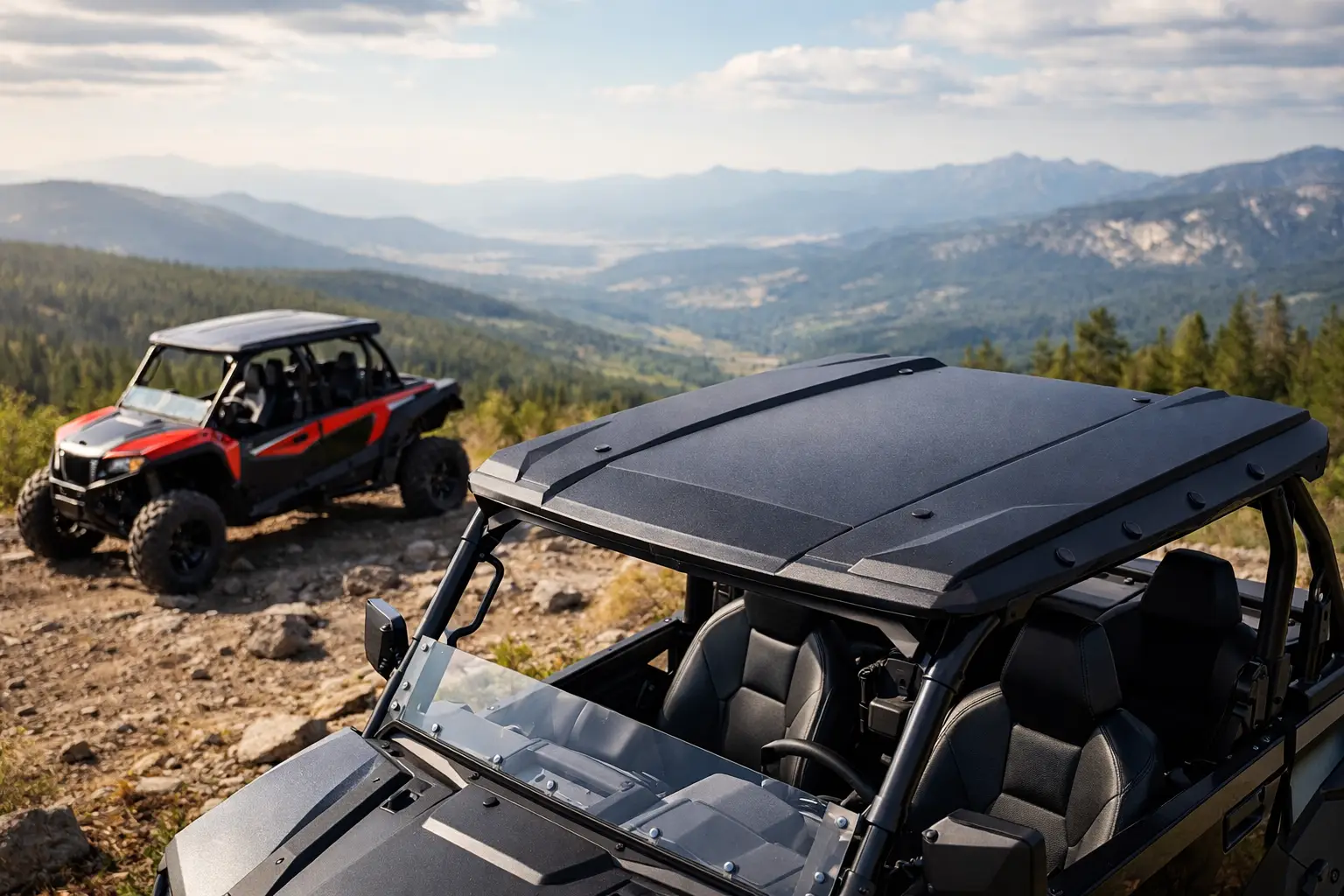
A roof can turn a machine you only tolerate in bad weather into one you use year-round. The best UTV roof materials depend on where and how you ride: a ranch machine parked in the sun has different needs than a Polaris RZR running wooded trails, or a Can-Am Defender used for winter chores. Material affects heat, noise, visibility, impact protection, weight, and the accessories your cab can support.
A roof also has to fit the machine correctly. A universal panel may look like a bargain until it rattles on rough ground, interferes with a windshield, or leaves gaps at the roll cage. Start with a roof built for your exact year, make, model, and cab configuration, then choose the material around your real riding conditions.
Best UTV Roof Materials by Riding Need
There is no single material that wins for every rider. Aluminum is usually the strongest all-around hard-roof option. Molded plastic delivers practical coverage at a lower cost and weight. Polycarbonate is useful when overhead visibility matters, while fabric soft tops are best for riders who need fast, removable shade rather than a permanent cab upgrade.
Fiberglass and composite roofs occupy a middle ground, often delivering a clean finished appearance and solid weather protection. Their value depends heavily on the manufacturer, mounting design, and how much brush, cargo, or trail impact the machine sees.
The right answer comes down to the job your UTV does most often, not the one trip a year when conditions are extreme.
Aluminum: Best for hard use and long-term protection
Aluminum roofs are a strong choice for utility riders, overlanders, hunters, and trail riders who expect contact with branches, mud, snow, or cargo. A quality aluminum roof resists cracking, does not absorb water, and can handle years of vibration better than many lighter materials. It is also a dependable foundation for adding a light bar, roof-mounted speakers, a rear-view mirror, or other accessories when the roof is designed for those loads.
The downside is weight and sound. Rain, hail, and thrown gravel can be loud against bare aluminum, especially in an open cab. A powder-coated finish improves corrosion resistance and appearance, but it does not eliminate noise. Riders who spend long days in the cab may want a roof with an integrated liner or add insulation where the roof design allows it.
Aluminum is often worth the investment when your side-by-side is a work tool or sees demanding terrain. For a Polaris Ranger, Can-Am Defender, Honda Pioneer, or Kawasaki Mule used around property and in changing weather, it is hard to beat for durability.
Molded plastic: Best value for everyday coverage
Molded plastic roofs, often made from polyethylene or ABS-based materials, are common because they are lightweight, reasonably priced, and naturally quiet compared with metal. They shed rain well, resist rust completely, and are easier to remove than many heavy hard-top systems. For casual trail riding, farm use, and weekend hunting trips, a model-specific plastic roof can provide the protection most owners need without adding much weight overhead.
Not all plastic roofs are equal. Thin panels can flex at highway speeds or on washboard trails, and cheaper materials may fade or become brittle after years of direct UV exposure. Look for molded contours that follow the roll cage, reinforced mounting points, and a design that directs water away from the driver and passenger area.
Plastic is a practical choice when you want a hard roof without the expense of aluminum. It is especially well suited to riders who prioritize a quieter cab and do not plan to mount heavy accessories overhead.
Polycarbonate: Best for overhead visibility
Polycarbonate roofs are popular with riders who need to see uphill terrain, low branches, or the next obstacle on technical trails. The clear panel keeps the cab from feeling closed in and can be a major advantage for rock crawling, wooded riding, and work around trees. It also pairs naturally with full windshields and rear panels for riders building a more enclosed cab.
Choose polycarbonate carefully. It should be UV-stabilized and hard-coated whenever possible, because unprotected clear material can haze, yellow, or scratch over time. Polycarbonate is impact resistant, but it is not maintenance-free. Abrasive cleaners, dry wiping dusty panels, and harsh chemicals can damage the surface and reduce visibility.
Heat is another consideration. A transparent roof lets in light, which can make the cab feel noticeably hotter in summer. Tinted panels, sunshades, or a roof with a clear center section and opaque outer panels can be a better compromise for hot climates.
Fiberglass and composites: Best for a finished cab look
Fiberglass and composite roofs can offer a smooth, molded appearance that feels closer to an automotive cab. Good designs provide strong weather coverage, clean edges, and enough rigidity to avoid the drumming associated with thinner metal panels. They are a solid option for recreational riders and property owners who want a permanent, polished roof system.
The trade-off is that fiberglass can crack if it takes a sharp impact from a low limb or a rollover event. Repairs are possible, but they are more involved than replacing a bolt-on plastic panel. Composite roofs also vary substantially in quality, so fitment and mounting hardware matter as much as the material itself.
If your machine spends more time on maintained trails, around camp, or doing general property work than pushing through tight brush, fiberglass can be a good-looking and capable choice.
Fabric soft tops: Best for removable shade
A fabric top is not designed to replace a hard roof for heavy-duty use, but it has a clear role. It provides quick shade, reduces direct sun exposure, and can often be removed or folded back when riders want an open-air experience. For warm-weather trail riders, seasonal use, and machines stored under cover, a quality fabric top is a simple solution.
Look for UV-resistant, water-resistant fabric with reinforced straps and secure attachment points. Soft tops can flap at speed, hold water if not tensioned correctly, and offer limited protection from falling debris. They are not the best choice for snow loads, frequent branch contact, or riders who want to mount lighting and audio equipment.
Match the Roof to Your Weather and Terrain
Hot, sunny regions call for opaque coverage, UV resistance, and enough ventilation to keep the cab comfortable. A molded plastic or insulated aluminum roof usually makes more sense than a full clear panel in these conditions. If summer rain is common, pay close attention to the roof's front lip, side overhang, and compatibility with your windshield. The difference between a roof that sheds water and one that funnels it into the cab often comes down to those details.
For snow, cold rain, and winter work, a rigid roof is the better investment. Aluminum and quality molded plastic handle the season well, especially when paired with a windshield, rear panel, doors, and a heater. Check the roof's stated load capability before assuming it can carry wet snow. Even a durable panel can be damaged when excessive snow weight is left on it overnight.
In tight woods, material strength matters, but roof profile matters too. A low-profile roof with clean edges is less likely to catch branches than a tall roof with exposed brackets. Trail riders should also inspect whether the front edge creates glare or blocks upward sightlines on steep climbs.
Fitment Matters More Than Material Alone
The best material cannot make up for poor fitment. UTV roll cages differ by model year, trim level, and factory cab design. A roof for a two-seat Yamaha Wolverine may not fit a four-seat version, and a roof built around a factory Pro-Fit cage may not work with aftermarket doors or a different windshield system.
Before ordering, verify the exact vehicle year, model, seating configuration, and whether your machine has a factory roof, front windshield, rear windshield, doors, or a tip-out windshield. Also check for accessory conflicts. Light bars, mirrors, overhead storage, roof speakers, and gun racks may require specific brackets or a roof with pre-drilled mounting locations.
At Side By Side Sports, shopping by make and model helps narrow the field to roof systems designed around the cage dimensions of your machine. That is the faster route to a clean installation and fewer surprises when you start adding other cab accessories.
What to Look for Before You Buy
Material is the headline, but the mounting system determines whether the roof stays quiet and secure. Quality clamps, formed brackets, rubber isolation pads, and corrosion-resistant hardware all matter on rough terrain. A roof should mount firmly without placing unnecessary stress on the roll cage or requiring improvised drilling.
Also consider how the roof works with the rest of the cab. A roof that pairs with your preferred windshield and doors gives you room to build a weather-ready enclosure over time. If you plan to add lighting, confirm both the roof's load capacity and the available wire-routing options before installation.
Finally, think about ownership beyond the first ride. Black roofs can show dust and scratches more than textured finishes. Clear panels need careful cleaning. Metal roofs may benefit from sound-deadening material. These are minor details until the machine is used every weekend.
Choose the roof material that matches the work and terrain your UTV sees most, then buy it in the exact fitment your machine requires. A properly fitted roof earns its place every time the forecast turns, the trail tightens up, or the workday runs longer than planned.