
Best UTV Rear View Mirrors for Real Trail Use
Posted by Drew Cummings on Aug 31st 2026
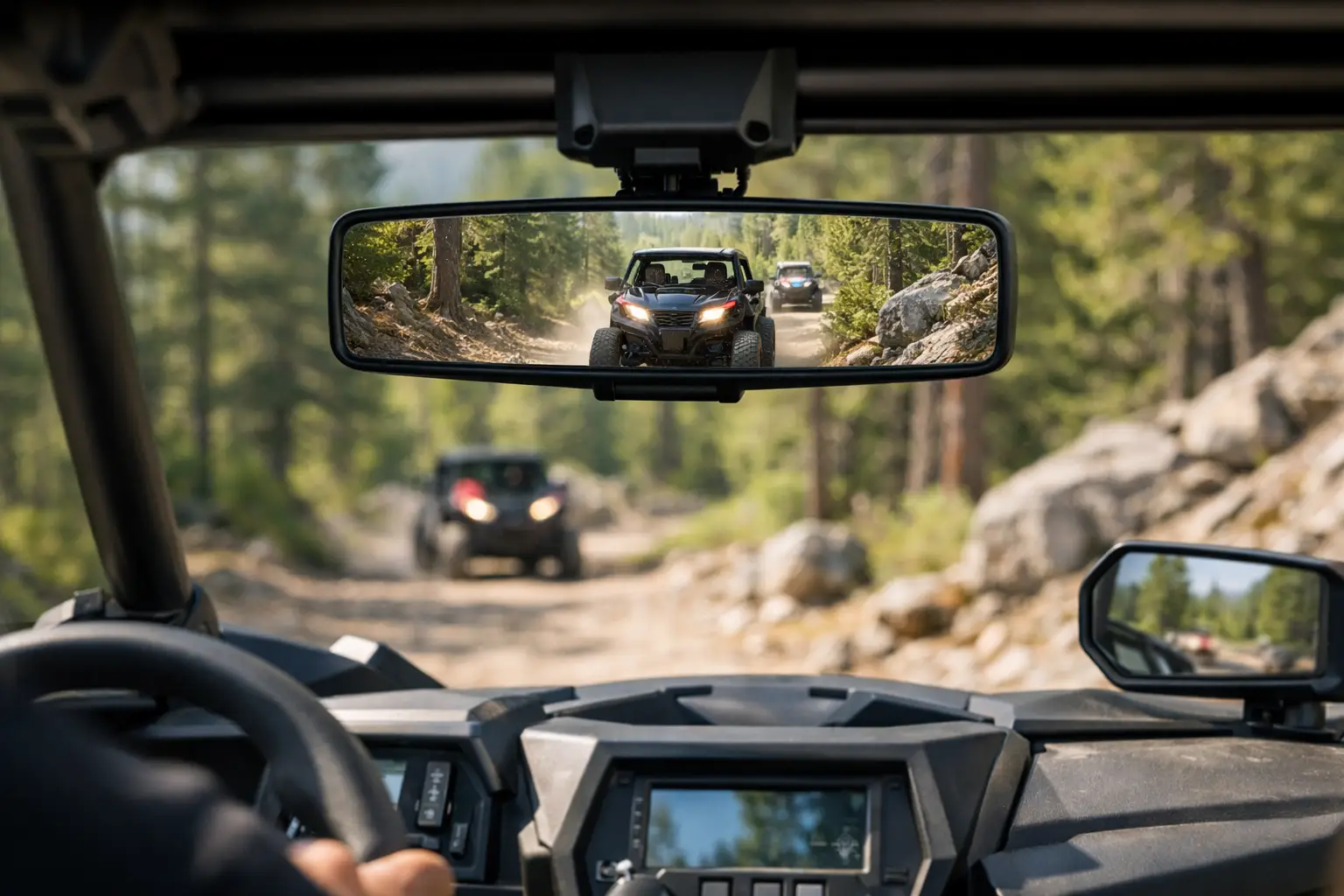
A rearview mirror is one of those UTV upgrades you notice most when you do not have one. Backing a loaded machine toward a trailer, watching riders behind you on a narrow trail, or checking for a gate post around the rear cargo area all become easier with the right setup. The best UTV rear view mirrors provide a wide, usable view without rattling loose, blocking your sightline, or creating a distorted blur when the terrain gets rough.
For most owners, the right mirror is not simply the biggest one available. It needs to match the cab layout, windshield setup, roof, roll cage diameter, and the way the machine is used. A trail rider may prioritize a broad panoramic view and a tough breakaway mount. A ranch owner may want a stable mirror that stays clear above a windshield. Hunters often need quiet hardware that does not loosen or clatter over washboard roads.
What Makes the Best UTV Rear View Mirrors?
A quality UTV mirror starts with a clear field of view. Convex glass is common because it shows more of what is happening behind the vehicle than a flat mirror. That extra coverage is useful on group rides and while maneuvering around obstacles, but it also makes objects appear farther away. The wider the convex curve, the more awareness you gain, though fine detail can become less precise.
Mount stability matters just as much as glass shape. A mirror that looks sharp in the garage but shakes on a rocky climb is not doing its job. Look for rigid brackets, secure clamp hardware, and a pivot that holds its adjustment after repeated impacts. Aluminum housings and brackets are a strong choice for long-term durability, while quality composite housings can reduce weight and handle branch strikes well.
The best design for your machine also depends on where it mounts. Many rearview mirrors clamp to the upper roll cage crossbar. This is a simple, effective position on open-cab UTVs, but a windshield, roof panel, or overhead audio setup can limit available space. Model-specific mirror mounts are often the cleaner option because they are designed around the factory cage and cab dimensions rather than forcing a universal bracket to fit.
Choose the Mirror Style for How You Ride
Panoramic center mirrors
A wide center-mounted panoramic mirror is the go-to choice for many trail riders. It gives you a broad view of riders, dust, and approaching traffic behind the UTV without needing to turn around. This style is particularly useful in forests and desert riding, where group spacing changes constantly.
The trade-off is size. An extra-wide mirror can occupy valuable windshield space and may feel distracting if it sits too low in your forward view. Measure the available area between the roof line and windshield frame before ordering. If your UTV has a full windshield, confirm that the mirror can be adjusted high enough to give you a clear rearward view.
Compact center mirrors
A smaller rearview mirror works well on work-focused machines and tighter cabs. It keeps the dashboard and forward view less cluttered while still helping with backing, trailer alignment, and monitoring gear in the bed. Compact mirrors are also a practical answer when a roof, cab enclosure, or windshield leaves little room for a panoramic unit.
You give up some peripheral visibility, so this is not always the best option for fast-paced group trail rides. Pairing a compact center mirror with side mirrors can close that gap.
Breakaway and folding mirrors
If your normal route includes brush, wooded trails, or narrow property lanes, breakaway capability is worth considering. A breakaway mirror folds or deflects when it meets a branch instead of transferring all that force into the housing and clamp. It will not make a mirror indestructible, but it can prevent a routine trail strike from ending the ride with broken hardware.
Folding mirrors are also helpful when loading the UTV into an enclosed trailer or squeezing through a tight gate. Check whether the folding mechanism locks firmly in the riding position. A loose fold point can create vibration and make the mirror gradually move over rough terrain.
Cab-mounted and windshield-compatible mirrors
Full windshields, hard roofs, doors, and rear panels add comfort, but they change how accessories fit. Some mirrors clamp neatly above the windshield frame, while others require a dedicated bracket or mount through an existing roof structure. Do not assume a universal clamp will work just because the roll cage diameter matches.
Pay attention to the path of the windshield, especially with flip-up or folding designs. A mirror can be technically installed yet still interfere with opening panels, wipers, visors, or roof storage. This is where choosing by year, make, and model saves time and avoids a return.
Fitment Is More Than Roll Cage Diameter
Roll cage tubing size is a starting point, not the whole answer. UTV cages may use different tube diameters from one location to another, and the upper front bar may be shaped, gusseted, or partially covered by a roof. Polaris, Can-Am, Yamaha, Kawasaki, and Honda models also have different cab layouts across generations and trims.
Before purchasing, confirm the exact year and model, then check whether the mirror is intended for your vehicle or for a specific cage size. Include factory accessories in the equation. A hard roof, flip windshield, light bar, overhead soundbar, visor, or enclosed cab can change the mounting options significantly.
Also look at the hardware design. Rubber or polymer inserts can protect the cage finish and help reduce vibration, but they should not substitute for a properly sized clamp. Over-tightening an ill-fitting universal clamp can damage powder coat, deform softer components, or still leave the mirror prone to slipping.
Vibration Control Separates Good Mirrors From Frustrating Ones
Every UTV vibrates. Engine pulses, tire balance, rough trail chatter, and suspension movement all travel through the chassis. The goal is not a mirror that never moves, but one that remains readable at normal riding speeds and holds its adjustment after a hard day.
A stable mount, a well-supported mirror housing, and a secure adjustment joint are the key pieces. Large mirrors naturally have more leverage, so they need more substantial mounting hardware than a compact unit. If you ride heavily rutted trails or run oversized tires, prioritize a reinforced bracket and a mirror designed for off-road use over a lightweight automotive-style option.
Installation also affects vibration. Tighten clamps evenly, use the supplied hardware and thread treatment where specified, and recheck fasteners after the first ride. If the mirror has an adjustment ball or pivot, set it firmly enough to resist movement without forcing the joint so hard that future adjustment becomes difficult.
Build a Better View With Side Mirrors
A center rearview mirror is useful, but it has a blind spot directly beside and slightly behind the UTV. Side mirrors fill that gap, especially when changing trail position, passing through work areas, or pulling a trailer. They are not a replacement for looking over your shoulder when conditions allow, but they add awareness where a center mirror cannot.
For open-cab trail machines, a panoramic center mirror and folding side mirrors is often the most versatile combination. For a utility UTV with doors, a windshield, and regular property work, compact cab-compatible mirrors may provide a cleaner and more protected setup. The best arrangement depends on whether you need maximum coverage, minimal obstruction, or the ability to fold mirrors out of harm's way.
Install for a Clear Sightline
Mount the mirror as high as practical without blocking your forward view. Sit in the driver's seat in your normal riding position before tightening anything. The mirror should show the trail or work area behind the machine, not mostly the roof, rear panel, or cargo bed.
Angle a panoramic mirror so you can see directly behind the UTV plus a reasonable amount of both rear corners. Avoid aiming it excessively downward just to watch cargo. You need visibility where another rider, vehicle, animal, or obstacle is most likely to appear.
Once the installation is complete, test the setup on a short ride over the terrain you actually use. A mirror that seems perfect on pavement may need a small adjustment after a few miles of trail vibration. Recheck clamp torque periodically, particularly after impacts or when the temperature swings between seasons.
Buy for the Machine and the Job
The best UTV rear view mirrors are the ones that fit your exact machine, stay steady on your normal terrain, and give you useful coverage without complicating the cab. Start with vehicle fitment, then choose the mirror size and mount style around your windshield, roof, and riding conditions. Side By Side Sports makes that process easier by organizing UTV accessories around the make, model, and upgrade you need.
A clear view behind the wheel will not replace careful driving, but it makes every backup, trail stop, gate crossing, and group ride more controlled. Choose the mirror before the next ride, not after the first close call.