
Best UTV Gun Boots for Safe, Ready Carry
Posted by Drew Cummings on Aug 17th 2026
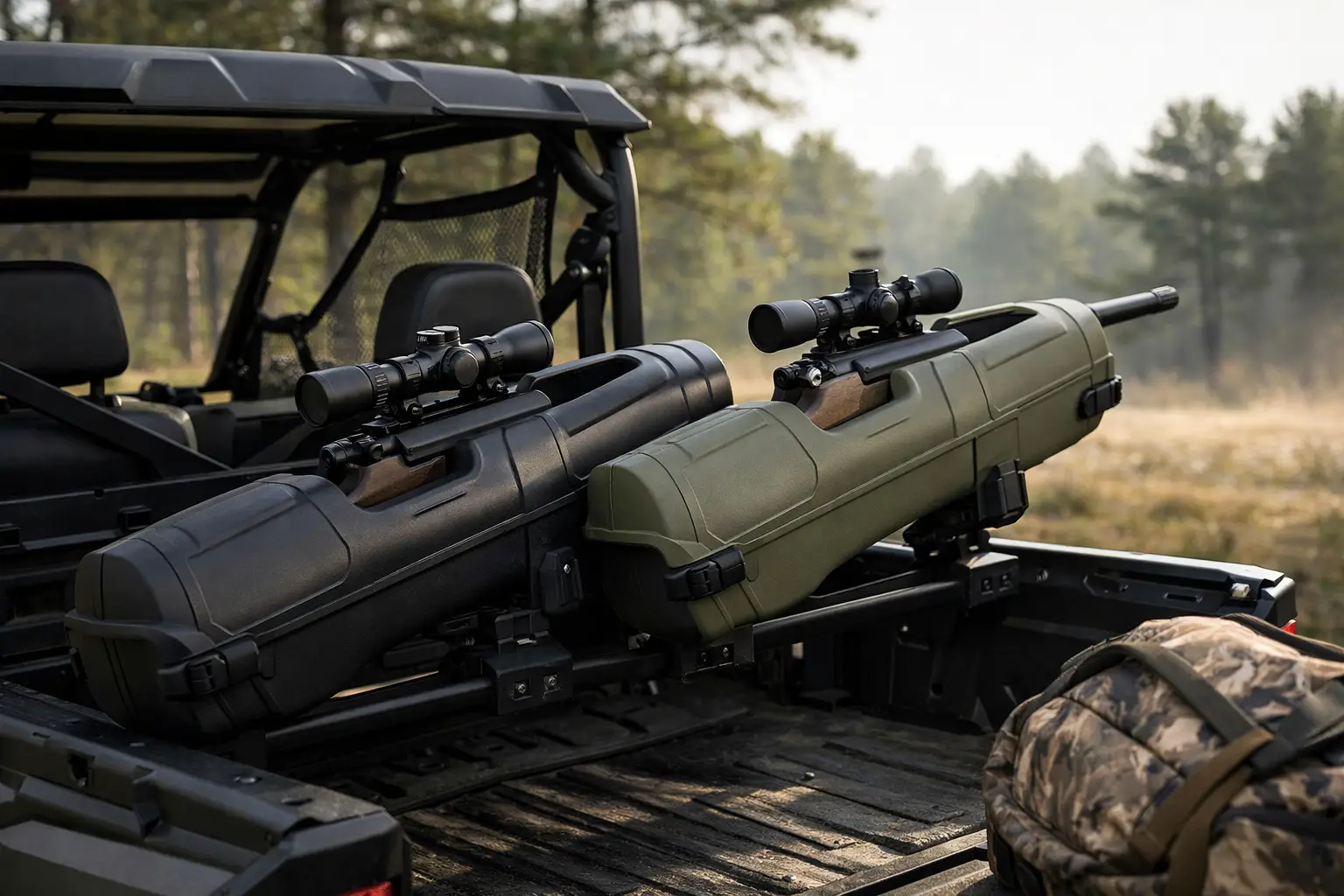
A rifle laid across a UTV cab is one hard stop, steep hill, or muddy creek crossing away from becoming a problem. The best UTV gun boots keep a long gun protected from dust, brush, vibration, and impact while holding it where the driver or passenger can reach it without crowding the cab.
For hunters, ranch owners, and backcountry riders, a gun boot is not just another accessory. It has to work with the machine's cab layout, your firearm, the terrain, and applicable transport laws. The right setup protects expensive equipment and keeps the ride safer. The wrong one can block entry, rattle loose, collect water, or leave a scope exposed.
What Makes the Best UTV Gun Boots?
There is no single best gun boot for every side-by-side. A compact soft case mounted behind the seats may be right for a two-seat trail machine, while a hard, sealed boot mounted high on a rack may make more sense for a ranch UTV that sees dust, rain, and rough access roads every day.
Start with protection. A purpose-built UTV gun boot should have a stiff outer shell or reinforced body that resists branch strikes and cargo contact. It should also include a padded interior or a secure sleeve that prevents the firearm and optic from bouncing against the case. A loose rifle inside a hard shell can still suffer damage over miles of washboard trail.
Weather resistance matters just as much. Look for a close-fitting lid, dependable latches, and drainage or sealing appropriate for how you ride. Fully sealed cases offer the best defense from rain and dust, but they can trap moisture if a wet firearm is stored immediately after a hunt. Open the case, dry the firearm, and inspect the lining after wet conditions.
Access is the other balancing act. A gun boot should be easy to open when you are stopped and handling the firearm safely, but not so exposed that it can be bumped open on the trail. Secure latches and provisions for a lock are worthwhile, especially when the UTV is parked at camp, at a trailhead, or around a working property.
Choose the Mount Before You Choose the Boot
Many buyers focus on case size and overlook the mounting system. That is where fitment and real-world usability are decided. A quality gun boot is only as secure as the rack, bracket, roll-cage clamp, or bed mount holding it in place.
Rear cargo rack mounts are common because they keep the firearm outside the passenger area and preserve legroom. They work well on UTVs with a usable rear rack or an accessory cargo system. On a machine with a dump bed, though, confirm that the boot and bracket will not interfere with bed travel, tailgate operation, or cargo loading.
Roll-cage mounts can place the boot higher and closer to the cab. They are a smart option when bed space is limited, but placement is critical. The case must not restrict door travel, block a rear-view mirror, interfere with a roof, or create a head-strike hazard for occupants. Cage diameter and clamp design must match the machine rather than relying on improvised hardware.
Cab-mounted and behind-seat arrangements can keep the case protected from direct weather, particularly on enclosed UTVs. Their trade-off is space. Measure carefully around seats, harnesses, heaters, speakers, roof panels, and rear windows before ordering. A gun boot that technically fits can still make getting in and out of the machine frustrating.
For Polaris, Can-Am, Yamaha, Kawasaki, and Honda owners, model-specific mounting hardware is often the cleanest path. It typically uses existing mounting points or is designed around the vehicle's rack and cargo layout. Universal mounts can be useful, especially on older machines or custom builds, but they require a closer check of clamp position, hardware quality, and clearance through full suspension and bed movement.
Size the Case for Your Firearm and Optic
Do not buy based on the overall length of the rifle alone. The firearm's widest point is often the scope, turret, cheek riser, pistol grip, or magazine area. Measure the complete unloaded setup as it will be carried, including scope caps or a sling if those will remain attached.
A case with too little interior room can press directly on turrets, alter scope settings, or make removal slow and awkward. One that is excessively large can allow the firearm to shift. Interior foam, a molded cradle, or an adjustable retention strap helps keep the gun positioned securely.
Consider barrel orientation as well. Some boots carry the muzzle upward, while others are positioned more horizontally. A vertical or angled case can reduce the chance of the firearm sliding out during loading, but it also needs overhead clearance under roofs, low branches, and trailer roofs. Horizontal mounting may be lower profile, yet it can extend beyond the machine's side or rear footprint.
If you carry more than one type of long gun, choose around the largest common configuration. A case that works well with a scoped hunting rifle may be too narrow for a shotgun with a taller optic or accessory setup. There is no benefit to forcing a firearm into a tight case just because the exterior dimensions looked close.
Hard Gun Boots vs. Soft Cases
Hard gun boots are the better choice for riders who regularly run wooded trails, rocky terrain, wet weather, or dusty roads. Their rigid shell gives the best protection from impacts and keeps branches from pressing into the firearm. They are also easier to clean after mud season. The trade-off is bulk, added weight, and a more noticeable profile on the UTV.
Soft cases are lighter and can be easier to store in a cab or bed box. A quality padded soft case is suitable for less punishing travel, especially when it rides inside an enclosed cab or secured cargo area. It will not offer the same crush resistance as a hard boot, and exposed zippers can collect dirt or moisture over time.
There are also rack-mounted holders that secure the firearm directly with straps or clamps. These can be fast to load and compact, but they provide far less environmental protection. For travel through brush, rain, snow, or sustained dust, a fully enclosed gun boot is usually the better investment.
Installation Details That Prevent Trail Problems
Mount the boot only after checking the UTV through its full range of use. Cycle a dump bed, open every door, move the seats, and account for passengers. If the UTV will be trailered, check clearance with the trailer wall, tie-downs, and any overhead rack.
Use the supplied hardware when it is designed for the mount, and follow the manufacturer torque guidance. Recheck fasteners after the first few rides. UTV vibration can expose a loose bracket quickly, particularly on machines running larger tires, stiffer suspension, or aggressive terrain.
Before heading out, inspect these four areas:
- The boot latches fully close and cannot open from vibration.
- The mount has no cracks, bent tabs, or shifting clamps.
- The firearm is retained inside the case and does not contact the lid or hard edges.
- The boot clears tires, suspension movement, cargo-bed travel, doors, and passenger space.
Avoid mounting a gun boot where it blocks taillights, reflectors, license plates, or your view behind the vehicle. A clean installation should look intentional, not like an afterthought strapped to the first available tube.
Safe Transport Still Comes First
A gun boot protects the firearm, but it does not replace safe handling or legal transport requirements. Carry firearms unloaded unless lawful use and local regulations clearly allow otherwise. Keep the muzzle in a safe direction, use the safety practices appropriate for your firearm, and secure the case when the machine is unattended.
State, local, hunting-area, and land-management rules can differ on loaded firearms, chambered rounds, transport on public roads, and access in wildlife areas. Never assume that because a firearm is enclosed in a UTV case, its transport is legal everywhere you ride. Check the rules for the specific state and property before leaving home.
The best UTV gun boot is the one that fits your machine, protects your exact firearm setup, and stays out of the way until you need it. Select the mount as carefully as the case, install it with real trail clearance in mind, and you will have a safer, more capable hunting or work rig when the road turns rough.