
Best UTV Audio Systems for Real Trail Riding
Posted by Drew Cummings on Aug 17th 2026
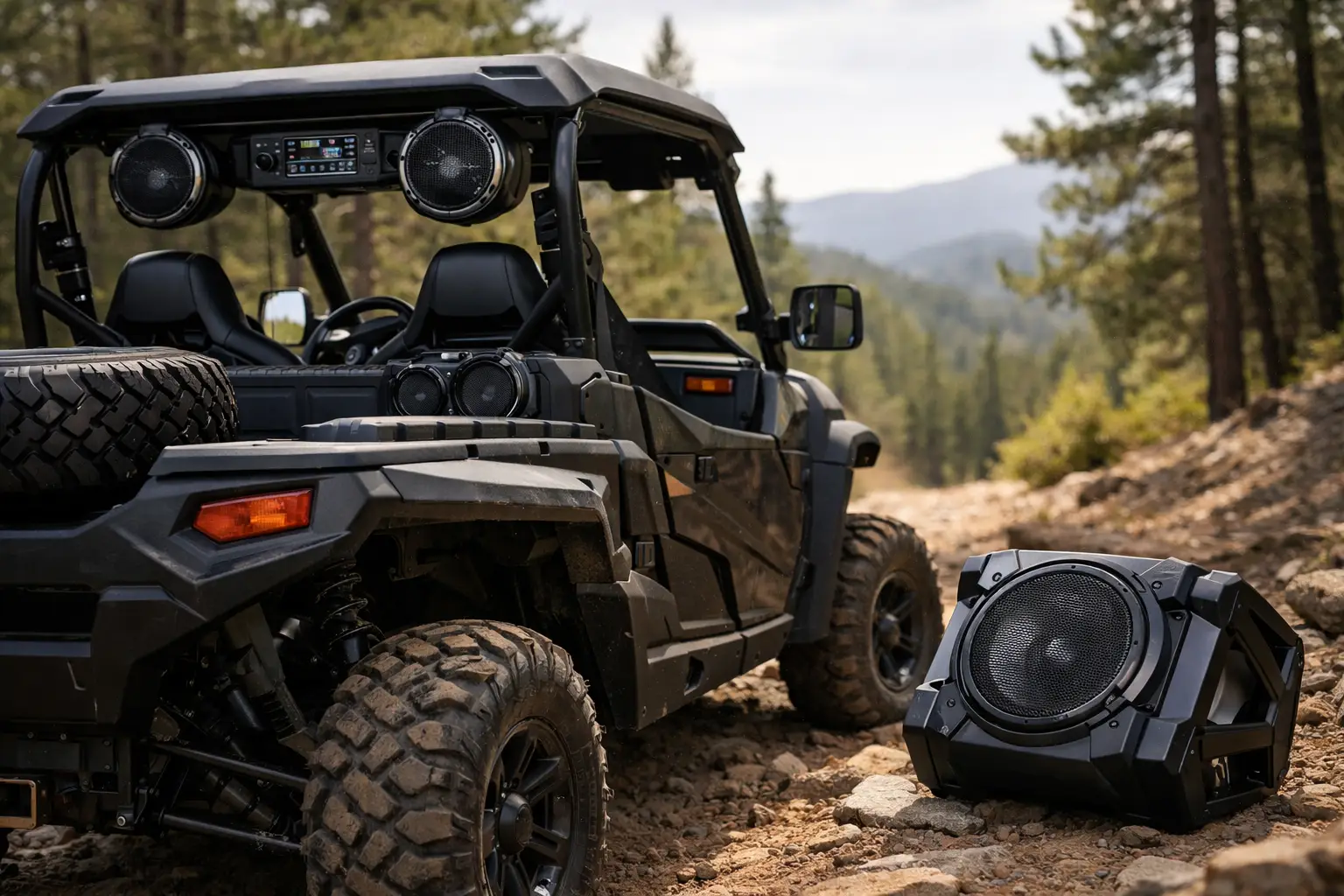
A good UTV audio system has to do more than play music in the driveway. It needs to cut through engine noise, tire roar, wind, helmets, and a group of machines running down the trail. The best utv audio systems are the ones matched to your cab layout, riding style, electrical capacity, and the way you actually use your side-by-side.
For some riders, that means a simple Bluetooth sound bar for weekend trails. For others, it means an overhead system with speakers, an amplifier, and a subwoofer built for long rides, dunes, or camp setups. The right choice is not always the loudest one. It is the system that fits cleanly, survives the weather, and gives you usable sound without creating installation headaches.
What Makes the Best UTV Audio Systems?
UTVs are a difficult environment for audio equipment. Water, dust, vibration, heat, and constant movement can expose weak components fast. A system that sounds fine in a garage can become distorted or disappear under throttle when mounted on an open-cab machine.
Start with weather resistance. Look for equipment designed for marine or powersports use, with sealed controls, corrosion-resistant hardware, protected wiring connections, and speakers that can handle rain and washdowns. An IP rating can be useful, but the whole installation matters. A weather-resistant sound bar with exposed wiring and poor mounting points will not hold up as well as a properly installed system with protected connections.
Power matters, but watt numbers alone do not tell the full story. Peak power figures are often used in marketing and can make a basic system look stronger than it is. RMS power is the more useful number because it represents the power an amplifier or speaker can handle continuously. Higher RMS output generally helps a system stay clear at trail volume, but speaker placement, enclosure design, and tuning still determine what you hear from the driver’s seat.
Fitment is the other deciding factor. A universal sound bar may be quick to mount, while a vehicle-specific roof audio system can provide a cleaner, more secure installation. Check cage diameter, roof design, door clearance, windshield style, and available mounting space before buying. A system should improve the ride, not block sightlines, interfere with a roof, or make cab access harder.
Choose the Audio Style That Matches Your Machine
Sound Bars for Fast, Flexible Upgrades
Bluetooth sound bars are often the most practical starting point for open-cab UTVs. They mount to the roll cage, combine speakers and controls in one housing, and usually require less wiring than a component system. This makes them a strong option for trail riders who want reliable music, straightforward installation, and minimal space loss.
A sound bar works especially well on machines used for recreational riding, hunting property, or light utility work where you do not need concert-level volume. The trade-off is bass response. Small integrated speakers cannot move as much air as a dedicated subwoofer, and sound bars can struggle at high speed on a machine with no windshield or cab enclosure.
When comparing sound bars, pay attention to clamp compatibility, control placement, Bluetooth range, auxiliary inputs, and whether the unit includes an internal amplifier. LED lighting may be a bonus for some builds, but it should not be the reason you choose the system.
Overhead Audio Systems for a Clean Cab Setup
Overhead audio systems are built around the top portion of the cab, often pairing a roof panel or overhead enclosure with speakers, a receiver, and sometimes integrated lighting. They are a natural choice for riders who want the audio protected above shoulder level and out of the way of gear, passengers, and mud.
This layout can deliver better sound staging than a single rear-mounted sound bar because the speakers are closer to the occupants. It also keeps the dash area available for switches, communications equipment, GPS units, and accessory controls. For enclosed cabs, an overhead system can be particularly effective because doors, a windshield, and a rear panel help contain sound.
The limitation is fitment. Roof systems are often model-specific, and compatibility can change based on whether your Polaris, Can-Am, Yamaha, Kawasaki, or Honda has an OEM roof, aftermarket roof, windshield, or rear window installed. Verify every accessory already on the machine before selecting an overhead enclosure.
Component Systems for Riders Who Want More Output
A component system separates the major pieces: speakers, amplifier, receiver, subwoofer, and wiring. It requires more planning, but it gives you more control over sound quality and output. This is the route for riders who regularly run high-speed desert trails, sand dunes, group rides, or long overland trips where a basic sound bar will not be enough.
A typical setup may include front speakers or dash pods, rear cage speakers, a compact amplifier, and a sealed subwoofer. The advantage is balance. Instead of forcing a small all-in-one unit to handle every frequency, each component does a specific job. Vocals stay clearer, music remains audible at speed, and low-end response improves dramatically.
The trade-off is cost, space, wiring time, and electrical demand. You may need additional battery capacity, heavier wiring, a relay, or a charging upgrade depending on system size and how many other accessories are installed. Winches, light bars, heaters, communication radios, and refrigerated storage all add to the load.
Power and Electrical Planning Before Installation
Adding audio without considering the electrical system is one of the quickest ways to create problems. A small Bluetooth sound bar may draw little power, but amplifiers and subwoofers can place real demand on the battery and charging system. If the machine struggles to start after sitting with music playing, the issue is not the speakers. It is the available reserve capacity.
Use a fused power connection sized for the system, route wiring away from heat and moving suspension parts, and protect cables with loom where they pass near sharp edges. An accessory bus or dedicated fused distribution block can help keep an installation organized, especially when multiple upgrades are already on the vehicle.
For larger systems, consider an isolator or second battery setup. This lets you run music at camp or while parked without risking the starting battery. It is not necessary for every UTV, but it makes sense for riders who run high-output audio, lights, coolers, and other accessories away from the trailhead.
Placement Matters More Than Most Riders Expect
Speaker location changes the result as much as speaker quality. Rear-mounted speakers may look clean, but they have to project forward through wind and engine noise. Front or overhead speakers place sound closer to the driver and passenger, which usually improves clarity at moderate volume.
Avoid mounting speakers where they will be constantly kicked, struck by cargo, or sprayed directly by the front tires. Make sure a speaker pod does not interfere with seat movement, harnesses, door latches, or entry into the cab. On work-oriented machines, cargo access and tool storage may matter more than maximum speaker count.
Subwoofers require even more thought. They add the low-frequency output that small speakers cannot reproduce, but they take space and need a protected enclosure. A compact, sealed subwoofer is usually a better fit for off-road use than a large enclosure that consumes the bed or leaves equipment exposed to dust and water.
Features Worth Paying For
The most useful audio features are usually the least flashy. Bluetooth control from a phone is standard, but physical controls are valuable when gloves, dust, or a rough trail make touchscreen use frustrating. USB charging, an auxiliary input, AM/FM capability, and a wired remote can also make a system easier to use in real conditions.
For group riders, consider whether you need audio only or an integrated communication solution. Music and two-way communication serve different purposes. A high-output stereo will not replace a properly selected intercom or radio system for coordinating turns, spotting obstacles, or managing a work crew.
Lighting integration can be useful on a recreational build, but keep safety first. Colored speakers and accent lights should never distract the driver or compromise required lighting. If the machine sees road crossings or nighttime work, prioritize functional headlights, brake lights, and visibility upgrades before adding cosmetic lighting.
Buy for Fitment, Not Just the Spec Sheet
The best UTV audio system for a two-seat trail machine may be completely wrong for a four-seat crew cab, enclosed hunting rig, or work-focused utility vehicle. Before ordering, identify your exact year, make, model, cab configuration, and existing roof or windshield setup. Then decide where every component will mount and how the wiring will reach the battery safely.
Side By Side Sports makes that process easier by organizing upgrades around major UTV makes and model-specific fitment. That matters with audio because a clean installation starts with components designed to work around your cage, roof, dash, and cab accessories.
Choose the system that supports the way you ride, then install it with the same care you would give a winch or lighting upgrade. When the music stays clear, the wiring stays protected, and nothing rattles loose after a rough day on the trail, you made the right call.