
Are UTV Rock Sliders Worth It for Your Ride?
Posted by Drew Cummings on Oct 14th 2026
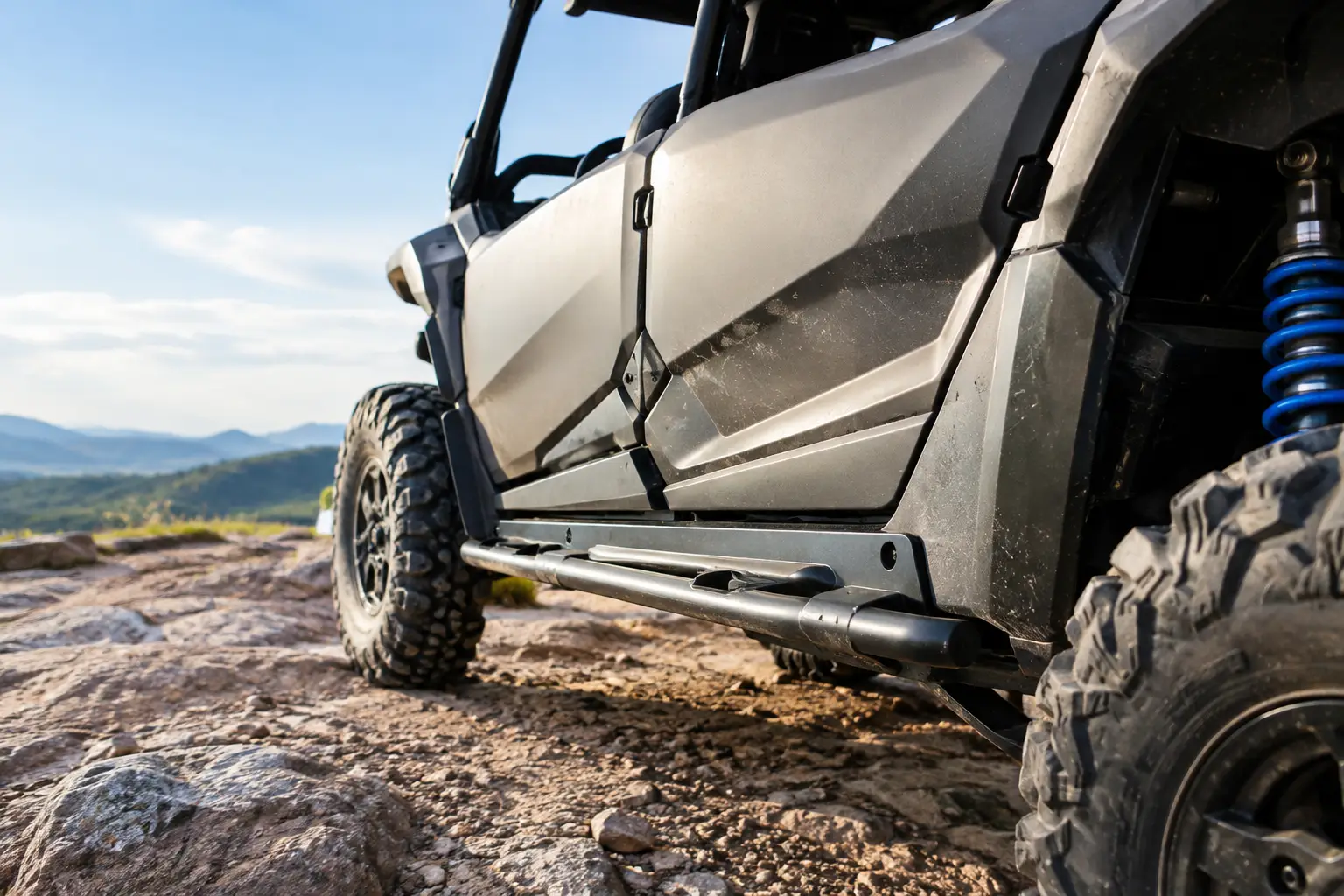
A sharp rock against the lower side of your UTV can do more than leave a scratch. It can crush a plastic rocker panel, bend a lower door edge, damage mounting points, or leave your machine hung up when the trail gets technical. So, are UTV rock sliders worth it? For riders who regularly encounter rocks, ruts, stumps, ledges, or narrow wooded trails, they are one of the most practical protection upgrades you can make.
Rock sliders are not mandatory for every side-by-side. A machine used mainly on flat farm ground, groomed trails, or pavement may never put them to work. But if your riding includes uneven terrain or if you want side protection before an expensive hit happens, a quality, model-specific set is money well spent.
What UTV Rock Sliders Actually Protect
Rock sliders mount along the lower outside edge of the chassis, beneath the doors or opening of the cab. Their primary job is to take the impact that would otherwise land on the rocker area, lower bodywork, and frame-adjacent components.
On a rocky climb, a slider can contact an obstacle and let the UTV slide across it rather than catch and drag the vulnerable side of the vehicle. In tight woods, it helps deflect stumps, embedded roots, and trail debris away from lower plastics and door skins. The protection is especially valuable on larger cab machines, where replacement doors, trim panels, and related hardware can add up fast.
A properly designed slider may also provide a more controlled contact point if the vehicle leans into a bank or comes down off a ledge. That does not make it a substitute for careful line choice. It does give the chassis a sacrificial barrier built for abuse.
Are UTV Rock Sliders Worth It for Your Type of Riding?
The answer depends less on how aggressively you ride and more on where you ride. Trail terrain, vehicle width, wheelbase, ground clearance, and how often you carry passengers all affect the value.
They are a strong buy for rocky and technical trails
If you ride mountain trails, desert rock, forest service routes, creek crossings, or wooded areas with tight obstacles, rock sliders are easy to justify. Even a cautious rider will occasionally misjudge a ledge or drop a tire into a rut. The lower side of a UTV is difficult to see from the driver's seat, particularly when the machine is loaded or the trail is off-camber.
They also make sense for overlanding-style rides where turning around is not simple. A side-panel hit far from the truck can turn a long day into a recovery problem. Protection parts help keep small trail mistakes from becoming trip-ending damage.
They make sense for hunting and property work
Hunters and landowners often think of sliders as a recreational add-on, but brushy two-tracks and uneven property trails can be just as punishing as a dedicated off-road park. Stumps hidden in grass, drainage ditches, rock piles, and worn-out fence-line trails all put the rocker area at risk.
For work machines, sliders can also reduce wear from routine use. That matters when the UTV is expected to haul tools, access remote stands, check livestock, or keep moving during a busy season.
They may be optional for mild use
If your side-by-side spends most of its time on maintained gravel roads, level fields, and smooth trail systems, a skid plate, front bumper, and good tires may be higher-priority upgrades. Rock sliders still offer insurance, but they may not deliver the same immediate return as they would on difficult terrain.
That distinction matters. The right accessory package should match the job your UTV actually does, not the most extreme trail video you watched last weekend.
The Cost of Sliders Versus the Cost of Damage
Rock sliders are usually easier to justify when you compare them with potential repairs. A hard side strike can damage more than a replaceable plastic panel. It can affect doors, hinges, body mounts, lower frame components, and the appearance of a machine you may eventually sell or trade.
There is also downtime to consider. A bent door that will not latch properly or damaged lower bodywork can make a cab less secure and less comfortable. Finding parts, waiting on shipments, and installing replacements costs time even when the repair is straightforward.
A premium slider set is designed to absorb trail contact repeatedly. It is not indestructible, and it may collect scrapes, gouges, or chipped powder coat. That is the point. Better the slider wears the evidence of the trail than the vehicle body does.
What to Look for in UTV Rock Sliders
Not all rock sliders offer the same protection. Generic side steps may improve cab access but lack the mounting strength, coverage, or clearance needed for repeated rock contact. Choose a set based on your exact make, model, year, and cab configuration.
Fitment comes first
A model-specific slider follows the contours and factory mounting locations of your Polaris, Can-Am, Yamaha, Kawasaki, or Honda UTV. That helps preserve ground clearance, avoids interference with doors and accessories, and gives the product a secure mounting foundation.
Before ordering, confirm whether your machine is a two-seat or four-seat model and whether it has factory doors, aftermarket doors, fender flares, lower door inserts, or other side accessories. Similar model names do not always share the same chassis or mounting points.
Construction matters more than appearance
Look for heavy-wall steel tubing or formed steel construction, reinforced mounting brackets, and hardware intended for the application. The slider should tie into strong chassis locations rather than relying on thin body panels. Quality welds and a durable finish matter because these parts live in mud, water, salt, and constant tire spray.
Tube shape affects how the slider behaves on obstacles. A rounded outer tube can help the machine glide over rocks, while a more angular design may offer broad side coverage. Neither is automatically better. Consider the terrain you run and whether you also want a usable step.
Steps are useful, but they involve trade-offs
Many riders prefer rock sliders with an integrated step, especially on lifted machines or four-seat models where passengers climb in and out frequently. A step can make daily use more comfortable and keep boots from sliding against the lower body.
The trade-off is clearance. A wide step can catch on obstacles sooner than a tight-to-body slider. If hard rock crawling is the priority, choose a design that stays close to the machine. If ranch use, hunting, family rides, and easier cab access matter more, a step-style slider may be the better fit.
Rock Sliders, Skid Plates, and Doors Work Better Together
Rock sliders protect the sides. They do not replace a full skid plate, front bumper, trailing-arm protection, or doors. Each part covers a different exposed area.
A skid plate guards the undercarriage from impacts below. A bumper protects the front and can provide a mounting point for recovery equipment. Doors help contain occupants and shield the cabin from mud, brush, and side intrusion. Rock sliders bridge the gap at the lower sides, where a UTV often contacts obstacles during turns, climbs, and off-camber sections.
For riders building a machine for demanding terrain, protection upgrades are best planned as a system. Start with the areas your terrain hits most often. If you routinely scrape the belly, prioritize the skid plate. If the lower doors and rocker area already show scuffs, sliders should move to the top of the list.
Installation and Real-World Use
Most fitment-specific UTV rock sliders are designed for bolt-on installation with common hand tools. Read the instructions before beginning, lay out the hardware, and install both sides loosely before final tightening if the manufacturer recommends it. This helps ensure the parts sit evenly and clears up any alignment questions before torqueing bolts.
After the first few rides, inspect the mounting hardware. Trail vibration and initial settling can make a recheck worthwhile. Continue to rinse out packed mud and inspect the sliders after major impacts. Surface scratches are normal, but bent brackets, loose hardware, or damage near a mounting point should be addressed before the next hard ride.
If your UTV sees rocks, stumps, narrow timber trails, or rough utility ground, rock sliders are not decoration. They are practical side armor with a clear purpose. Choose a set built for your exact machine and the way you use it, then let it take the trail scars your UTV does not need to wear.