
UTV Turn Signal Kit Street Legal Setup Guide
Posted by Drew Cummings on Jun 29th 2026
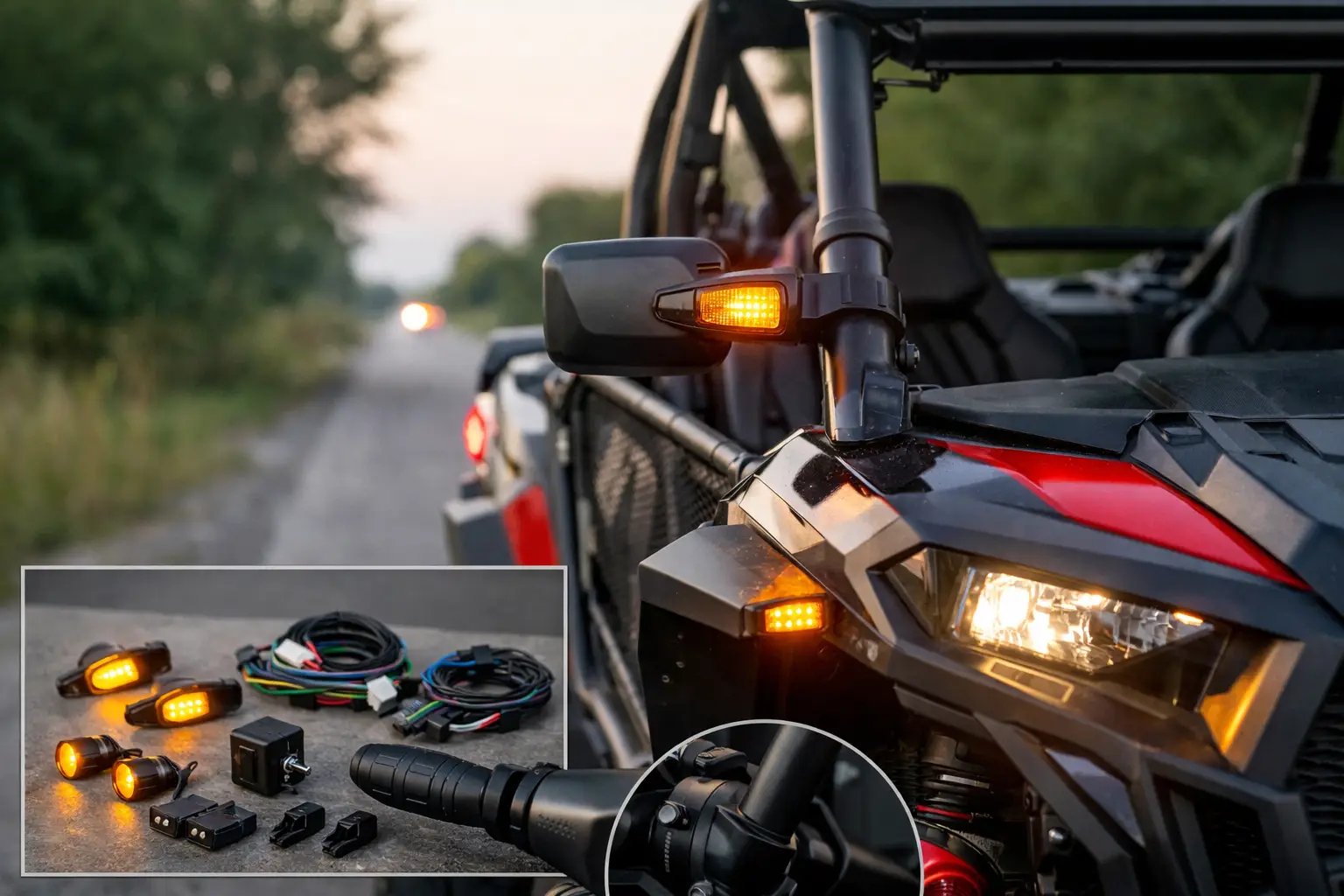
Getting a side-by-side ready for pavement usually comes down to one question fast: what does a UTV turn signal kit street legal setup actually need? The short answer is that signals are only one piece of the equation, but they are one of the first upgrades riders look for because they affect visibility, compliance, and everyday usability. If you are trying to register a Polaris, Can-Am, Yamaha, Kawasaki, or Honda UTV for limited road use, choosing the right kit starts with fitment, wiring design, and your state’s equipment rules.
What a street legal UTV turn signal kit actually does
A turn signal kit adds the controls and lighting needed to signal left and right turns the same way a passenger vehicle does. On most UTVs, that means a dash-mounted or column-mounted switch, front and rear signal lights, a horn button in many combo kits, a flasher module, and the wiring harness to tie it all together.
The reason this upgrade matters goes beyond checking a box for registration. On a ranch road, county road, or town connector, hand signals are easy to miss. A properly installed kit makes your machine easier for other drivers to read, especially if you are already running a windshield, roof, cargo in the bed, or cab accessories that reduce visibility from certain angles.
That said, a turn signal kit by itself does not automatically make a machine street legal. In most states, riders also need some combination of a horn, mirror, license plate mount, brake lights, illuminated plate light, DOT-approved tires, and sometimes a windshield or specific reflectors. The exact list depends on where you ride and register.
UTV turn signal kit street legal requirements vary by state
This is where many buyers get tripped up. They search for a UTV turn signal kit street legal package and assume every all-in-one option will satisfy local law. Sometimes it will. Sometimes it will get you close but not all the way there.
State and local requirements can differ on whether the machine is allowed on public roads at all, whether operation is limited to certain speed zones, and whether inspection is required before registration. A kit marketed as street legal is usually best understood as street-legal capable. It gives you the equipment commonly required, but your final compliance still depends on your machine, your location, and how the kit is installed.
That is why model-specific shopping matters. A universal kit may technically provide the components, but if the switch is awkward, the harness routing is sloppy, or the rear lights are mounted where dust and cargo block them, the setup can be frustrating in real use. A cleaner fit usually means fewer headaches during install and better function once you are on the road.
How to choose the right kit for your machine
Start with your exact year, make, and model. That sounds basic, but it is the difference between a weekend install and a wiring project that drags on. Many UTV kits are designed around factory harness locations, dash layouts, and tail light configurations that vary from one platform to the next.
A good fitment-specific kit should match the way your machine is built. Some plug into existing rear light circuits. Others include dedicated signal lights that mount separately. Neither style is automatically better. It depends on the machine and how visible you want the finished setup to be.
If your UTV already has brake lights integrated into the rear lights, a combo module may let the turn signal function work through those assemblies. That can give you a cleaner look. If your current tail light setup is limited, separate rear indicators may be the better choice because they are easier to see and easier to troubleshoot later.
Switch style also matters more than most riders expect. Column-mounted stalks feel more like an automotive setup and are easy to use with gloves. Rocker switches can fit cleanly into the dash and work well on machines with tight interiors. The right answer depends on how you ride and how much factory-looking integration you want.
Features worth paying attention to
Not every kit is built for the same kind of rider. If your UTV sees occasional backroad use between trail systems, a straightforward signal and horn setup may be enough. If you use the machine for hunting property, in-town errands, or utility work around a farm, durability and ease of use start to matter just as much as basic compliance.
Self-canceling turn signals are one of the most useful features you can get. On a UTV, it is easy to leave a signal blinking after a turn, especially when you are focused on traffic, gear, or terrain transitions. A self-canceling function cuts down on that issue and makes the machine feel more finished.
Hazard lights are another smart feature. They help when you are moving slowly, dealing with a breakdown, loading gear near a roadway, or crossing traffic in poor light. Some kits include four-way functionality from the start, while others focus only on left and right signal operation.
A horn is often bundled into street-legal packages, and that is usually a good thing. Buying a turn signal kit and then adding a separate horn later can mean extra wiring and more clutter behind the dash. If road use is your goal, a combined system is often the cleaner route.
Weather resistance is not optional. UTVs live in mud, wash water, vibration, and dust. Connectors, switches, and flashers need to hold up in those conditions. Cheap universal kits often look fine on the bench but become a problem once they are exposed to real riding conditions. A trail-tested kit with quality connectors and a harness designed for off-road use is usually worth the extra cost.
Installation: simple on some machines, involved on others
Many buyers want to know whether this is a do-it-yourself job. In a lot of cases, yes. If the kit is designed for your exact model and includes clear instructions, installation is usually manageable for owners comfortable removing panels, routing wires, and making clean connections.
The time involved depends on how complete the kit is. Plug-and-play systems are the easiest path, particularly on newer machines with more integrated electrical layouts. Universal kits can still work, but they often require more custom mounting, more splicing, and more planning around switch placement and wire protection.
Cab accessories also affect install time. Windshields, roofs, upper doors, audio systems, and storage add-ons can limit access to wiring paths or mounting points. If your machine is already heavily outfitted, expect the install to take longer than the product listing might suggest.
Before you start, it helps to think through the whole road-use package instead of treating the signal kit as a standalone upgrade. If you know you will also be adding mirrors, a license plate bracket, extra brake light visibility, or a horn, planning the electrical layout once is cleaner than revisiting the same panels later.
Common mistakes buyers make
The biggest mistake is buying by price alone. A bargain kit can turn expensive if you end up replacing connectors, extending wires, or troubleshooting weak flashers after the first few rides. Reliability matters when the machine is sharing space with trucks and cars.
Another common issue is assuming universal fit means easy fit. Universal kits are attractive because they cover a lot of machines, but they can leave too much up to the installer. That is fine for experienced builders. It is less ideal for owners who want a predictable install and factory-style operation.
Visibility is another area where shortcuts show up. Small lights tucked behind bumpers, racks, or cargo can technically function while still being hard to see. If you haul tools, coolers, feed, or hunting gear, think about how your rear setup looks when the machine is loaded, not just when it is parked empty.
Finally, some riders stop after installing signals and assume they are done. For actual street use, you still need to verify everything else required where you live. The smartest purchase is the one that fits your UTV correctly and supports the full compliance path, not just one part of it.
Buying with fitment and support in mind
For most owners, the best move is to shop by make, model, and intended use. A machine that spends time on county roads between trailheads may need a different setup than one used for farm work or desert town access. The more specific the fitment and feature set, the more confident you can be in the result.
That is where a specialized UTV retailer has a real advantage. Instead of sorting through generic automotive parts, you can focus on kits built around actual side-by-side platforms and supported by people who understand how these machines are wired and used. Side By Side Sports serves that kind of buyer well because the shopping process starts with vehicle fitment, not guesswork.
If you are building toward legal road use, think beyond the label on the box. The right turn signal kit should fit your machine cleanly, hold up to the conditions you ride in, and work as part of a complete street-legal setup. Get that part right, and the rest of the build gets a whole lot easier.