
Best UTV Heater for Winter: What to Buy
Posted by Drew Cummings on Jun 29th 2026
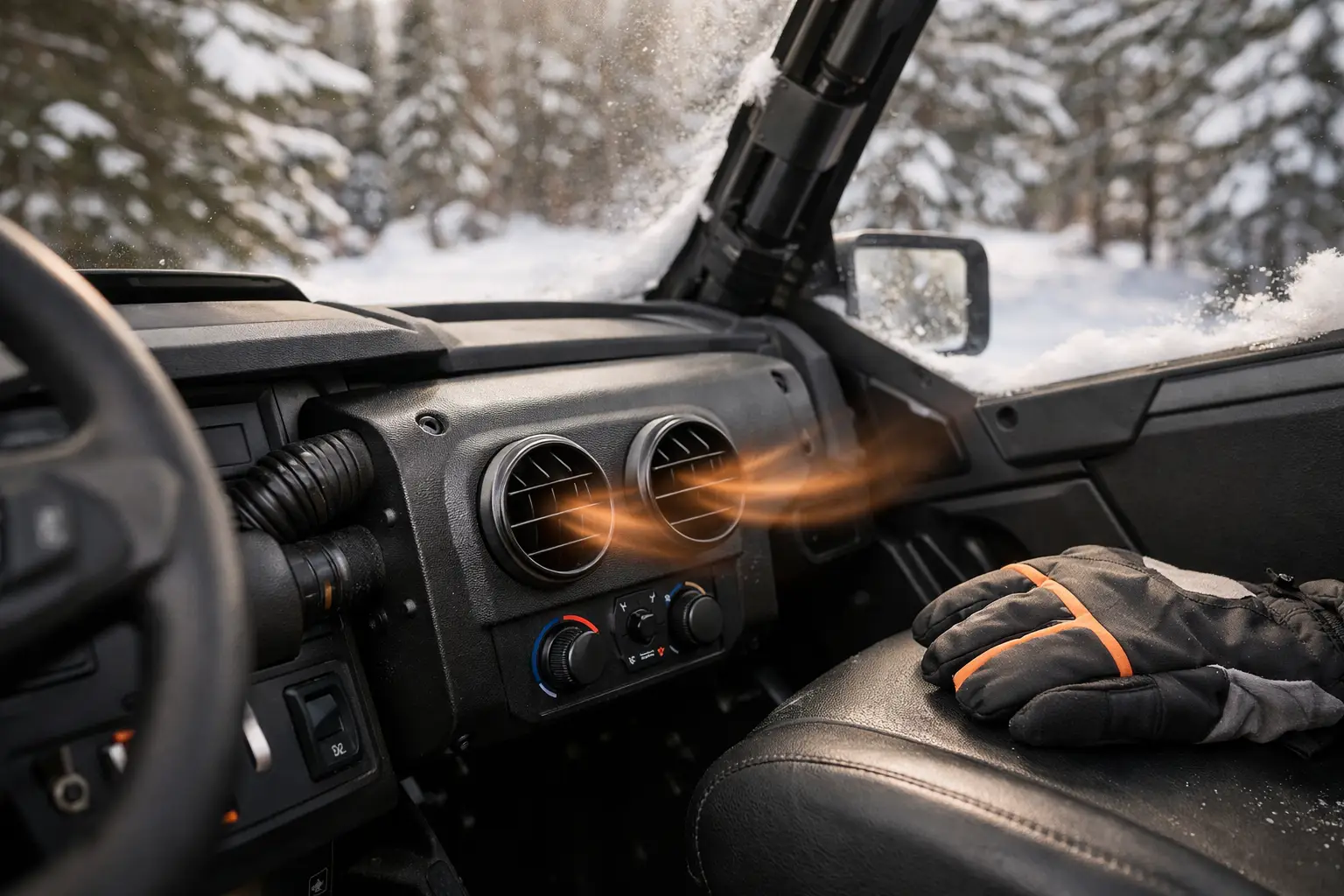
Cold hits differently when you are halfway through a fence line repair, parked at a hunting spot before daylight, or pushing snow with wind coming through the cab. The best UTV heater for winter is not just the one that gets hot. It is the one that fits your machine correctly, works with your cab setup, and keeps up when temperatures drop and you are actually using the vehicle.
A lot of buyers make the same mistake. They shop by price or BTU rating alone, then end up with weak airflow, a difficult install, or a heater that does not play well with the windshield, roof, and doors already on the machine. A winter-ready cab needs to work as a system, and the heater is only one part of that equation.
What makes the best UTV heater for winter?
For most riders, the right answer starts with three things: fitment, heat delivery, and how enclosed the cab really is. A model-specific heater kit usually gives you the cleanest install because the brackets, hoses, vents, and switch locations are designed around the vehicle. That matters on Polaris, Can-Am, Yamaha, Kawasaki, and Honda platforms where space behind the dash can vary quite a bit.
Heat delivery is about more than raw output. A heater with strong airflow and smart vent placement will often feel warmer than a higher-BTU unit with poor circulation. If the defrost vents are weak or the cab leaks badly around the windshield and doors, you will feel that fast on freezing mornings.
Your cab setup also decides how much heater you need. If you are running a full windshield, roof, and doors, you can hold heat much better than an open-sided machine with a half windshield. In a partially enclosed cab, even a quality heater can struggle once the temperature really drops or the machine is moving at trail speed.
Heater types and which one fits your use
Most UTV owners looking for the best winter setup are choosing between engine-powered heater kits and compact 12-volt defroster-style units. These are not equal options.
Engine-powered heater kits
For serious cold-weather riding and work, engine-powered heaters are usually the right call. These systems tap into the machine's cooling system and use engine heat to warm the cab. When installed properly, they provide real heat, solid airflow, and much better performance for long rides, snow plowing, ranch work, and hunting access.
The trade-off is installation time. You are routing hoses, mounting the heater box, wiring the fan and switches, and in some cases trimming panels or working in tight dash space. But if you want dependable heat rather than a mild warm breeze, this is where most owners should focus.
12-volt heaters and defrosters
Small 12-volt units are usually better thought of as supplemental airflow or light defrost help, not primary heat. They can make sense for short rides, enclosed accessory cabs, or situations where you only need to knock a little fog off the glass. They are easier to install, but expectations need to stay realistic.
If you plow snow, ride before sunrise, or spend hours in below-freezing temperatures, a 12-volt heater alone is rarely the best UTV heater for winter.
Fitment matters more than most buyers expect
Generic heater kits can look appealing on paper, but fitment problems cost time fast. Mounting points may not line up cleanly, hose routing may become awkward, and vent locations may not direct air where you need it. That becomes even more frustrating on machines with limited dash room or factory accessories already in place.
A model-specific kit reduces those headaches. It also gives you more confidence that the heater will clear existing components and deliver air to the footwell and windshield in a useful way. For buyers who use their machine for work, that matters as much as heat output because downtime during install is still downtime.
This is also why you want to think about the full accessory stack. Windshield style, roof type, upper doors, lower doors, rear panel, and even wiper systems can affect heater performance and installation room. A good heater in a poorly sealed cab will feel mediocre. A properly matched heater in a tight cab can make winter riding far more manageable.
How much heat do you really need?
The answer depends on how you use the machine.
If you mostly trail ride on cool days with an enclosed cab, moderate heat and good defrost may be enough. If you are out checking property lines at dawn, sitting still while hunting, or plowing snow at low speed with wind exposure, you want stronger airflow and better heat retention. Utility riders generally need more than casual weekend riders because they are outside longer and usually cannot just head back when the weather turns rough.
Cab size plays a role too. Larger multi-passenger models have more interior volume to heat, which means a smaller heater can feel underpowered. In those cases, vent placement and blower strength become even more important.
Defrost is not optional in winter
A lot of heater conversations focus on staying warm, but visibility is just as critical. A windshield that fogs or frosts over can make the machine hard to use safely, especially when plowing, driving wooded trails in low light, or navigating uneven ground.
Look for a heater with dedicated defrost vents, not just footwell output. Warm feet are nice, but being able to clear the glass quickly is what turns a heater from a comfort upgrade into a practical winter accessory. If your windshield tends to collect moisture or your cab sees big temperature swings, strong defrost performance should be near the top of your list.
Installation: where buyers should be realistic
Some heater kits are straightforward for experienced do-it-yourself owners. Others are better handled by a shop, especially if the machine already has several accessories installed. Getting into the cooling system, routing lines cleanly, and mounting vents in a way that looks factory takes patience.
There is also the question of serviceability. A heater should not create future maintenance headaches by blocking access to key components or forcing awkward hose routing. Clean installation matters long term, not just on day one.
If you are buying for a newer machine or one with tight packaging behind the dash, it is worth paying attention to how complete the kit is. Vehicle-specific brackets, hoses cut to fit, clear instructions, and properly matched switches can save a lot of time.
What to look for before you buy
When comparing options, start with your exact make, model, and year. Then look at whether the kit is built for a fully enclosed cab or can still perform reasonably in a partial enclosure. Check vent count, defrost capability, blower strength, and how the unit mounts in the dash or under it.
It is also smart to think about your actual winter use instead of your ideal one. A hunter who drives in before first light and sits in the machine needs different performance than a rider who takes short afternoon loops. A ranch owner feeding livestock every morning in January needs different reliability than someone who only rides when the weather is decent.
That is why there is no single best heater for every machine and every rider. The best UTV heater for winter is the one matched to your platform, your cab setup, and the kind of cold-weather use you actually put the machine through.
A smart winter setup goes beyond the heater
If the goal is real comfort, pair the heater with a tight cab. A quality windshield, roof, doors, and rear panel help the heater do its job. Small air gaps may not seem like much in the garage, but they matter on the trail when cold air is pushing through the cab at speed.
For many owners, winter comfort is a system purchase, not a one-part purchase. That is especially true if you work your machine through the season instead of parking it until spring. A good heater can change the experience, but it performs best when the rest of the cab is set up to support it.
If you are shopping by machine and want to avoid guesswork, Side By Side Sports makes that process easier by organizing heater options around specific UTV fitment and real-world accessory needs. That matters when you want the right part quickly, not a universal kit that turns into a weekend project for the wrong reasons.
Winter riding does not need to feel like a trade-off between getting the job done and freezing through it. Pick the heater that matches your machine and cab, and you will feel the difference every time the temperature drops.