
UTV Battery Keeps Dying? Check These 7 Causes
Posted by Drew Cummings on Sep 16th 2026
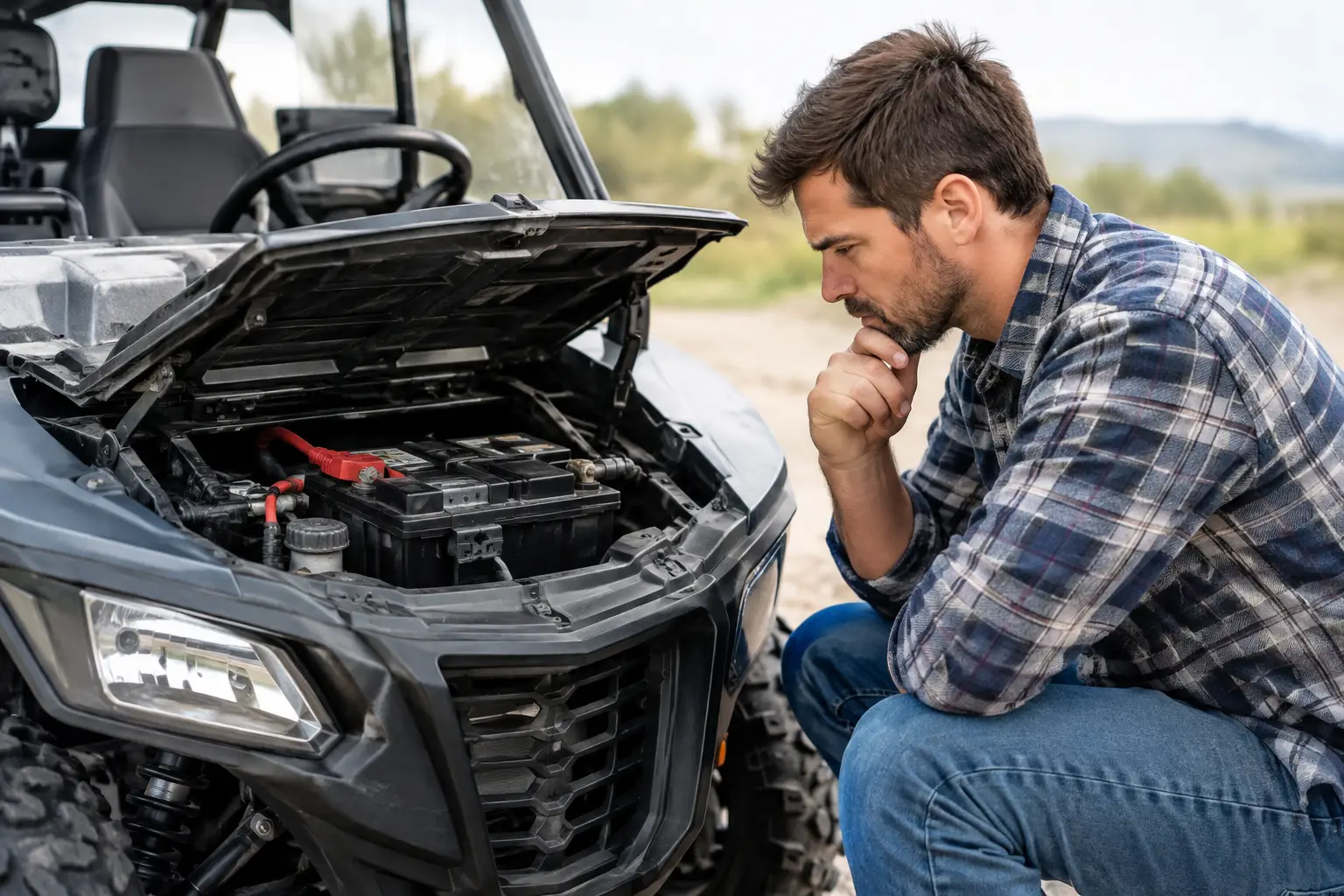
A machine that cranks slowly at the trailhead or will not start after a week in the barn has a problem worth tracking down. If your UTV battery keeps dying, replacing it may get you moving once, but it will not fix the underlying cause. On a working ranch rig, a hunting machine with extra lighting, or a trail-built side-by-side loaded with audio and recovery gear, the battery is part of a larger electrical system. Find the actual fault before the next ride leaves you stranded.
Start With the Battery Itself
A battery can show enough voltage to light the dash and still fail under the heavy load of the starter. Age, vibration, deep discharges, loose internal plates, and winter storage all shorten battery life. Most conventional UTV batteries last roughly three to five years, but frequent hard use, extreme heat, or a charging-system problem can cut that much shorter.
Begin with a visual inspection. Check for a swollen case, cracked housing, loose terminals, corrosion, or electrolyte leaking around the battery. Clean any corrosion from the posts and cable ends, then tighten the connections securely. A terminal that feels tight by hand can still have enough movement to create resistance when the starter pulls high amperage.
Use a multimeter after the UTV has been sitting with the key off for at least a few hours. A fully charged 12-volt AGM battery should usually read around 12.6 to 12.8 volts. Around 12.4 volts means it is partly discharged. At 12.2 volts or lower, charge it before making conclusions. Voltage alone is not a complete battery test, so a load test is the better call when available. Many parts stores can test a battery, or you can use a dedicated load tester.
If the battery repeatedly fails a load test after it has been fully charged, replacement is the practical answer. Match the physical size, terminal orientation, amp-hour capacity, and cold cranking amp rating required for your specific Polaris, Can-Am, Yamaha, Kawasaki, or Honda model. Do not force a generic battery into a fitment that leaves cables stretched, terminals exposed, or the hold-down loose.
Why a UTV Battery Keeps Dying Even When It Is New
A new battery only proves the old battery may have been weak. It does not prove the UTV is charging correctly or that something is not draining power while parked.
1. The charging system is undercharging
With the engine running, check voltage directly at the battery terminals. At a fast idle, many UTV charging systems should produce roughly 13.5 to 14.5 volts, although specifications vary by vehicle and conditions. A reading that remains near resting battery voltage suggests the stator, regulator-rectifier, wiring, fuse, or connection needs attention.
A bad regulator can also overcharge. Voltage consistently above about 15 volts can cook an AGM battery, shorten its life, and cause intermittent electrical issues. Do not assume a battery that starts the machine proves the charging system is healthy. Verify output with a meter.
2. An accessory is creating a parasitic draw
Modern side-by-sides often carry more electrical equipment than their stock charging systems were designed to support. Light bars, rock lights, heated grips, cab heaters, audio amplifiers, GPS units, camera systems, two-way radios, winch remotes, and phone chargers all add possible draw points.
The concern is not only what runs while riding. A relay wired incorrectly, a powered amplifier that never sleeps, an illuminated switch, or a USB outlet can slowly drain the battery after the key is removed. This is especially common when accessories are connected directly to battery power without a keyed relay or a proper auxiliary fuse block.
To test for parasitic draw, fully charge the battery, shut the UTV down, and allow its electronics to enter sleep mode. Disconnect the negative battery cable and connect a multimeter in series between the negative post and cable. Start on the meter's higher amperage setting to avoid blowing its fuse. If draw is excessive, remove one fuse or disconnect one accessory circuit at a time until the draw drops. That circuit is where the diagnosis starts.
3. Short trips never replenish the battery
Starting a UTV takes a substantial amount of current. A few minutes of idling, moving trailers around the property, or making repeated short runs may not give the stator enough time to restore what each start used. Add a winch pull, lights, heater, or sound system, and the battery can gradually lose ground even though the charging system works.
This is a usage issue, not necessarily a failed part. If the machine is used for short-duty work, charge the battery periodically with a quality smart maintainer. A maintainer is also a smart investment for seasonal machines that sit between hunting trips, snow-plowing jobs, or riding weekends. Avoid leaving a basic trickle charger connected indefinitely unless it is specifically designed to maintain AGM batteries.
4. The winch is pulling more than the system can replace
Winches are one of the biggest electrical loads on a UTV. Long recovery pulls, plow operation, or repeated loading can drain a battery quickly, particularly at low engine rpm. The charging system may not keep pace while the winch is working.
Use the correct gauge cable, inspect the winch ground, and make recovery pulls with the engine running when safe to do so. If the machine regularly runs a plow, larger winch, high-output lighting, heated cab equipment, and audio, consider the total electrical load as a system. A higher-capacity battery may help reserve capacity, but it cannot compensate for an alternator or stator that cannot support continuous demand.
5. Loose grounds and damaged cables add resistance
A poor ground can act like a weak battery. Check the negative battery cable where it attaches to the chassis and engine. Remove corrosion, clean the mounting point to bare metal where appropriate, and tighten the fastener. Inspect positive cables, starter connections, and main fuse connections for heat damage, green corrosion, rubbed insulation, or loose hardware.
Pay close attention after installing aftermarket bumpers, roofs, heaters, stereos, or lighting. Accessory installation can disturb factory grounds or introduce extra connections that are exposed to water, mud, and vibration. Weatherproof connectors and properly routed wiring matter as much as the accessory itself.
6. The battery is being stored poorly
A discharged lead-acid or AGM battery can sulfate while it sits. Once sulfation becomes severe, the battery loses capacity and may appear to charge normally while dying quickly in use. Cold weather reduces available cranking power, but heat can be even harder on battery life over time.
For storage, fully charge the battery, clean and secure the terminals, and connect a smart battery maintainer if power is available. If the UTV will sit where freezing temperatures are common, keeping the battery charged is critical. A fully charged battery resists freezing far better than a discharged one.
7. A switch, relay, or ignition component is staying on
Some drains are not aftermarket-related. A stuck relay, faulty ignition switch, damaged key switch wiring, or module that fails to go to sleep can keep a circuit energized after shutdown. Symptoms may include a warm relay, a faintly glowing light, a cooling fan that runs unexpectedly, or a battery that dies overnight with no accessories installed.
These problems require a methodical approach. Check fuses, inspect relays, and use the parasitic-draw test to isolate the circuit. For a newer machine with electronically controlled systems, factory diagnostic procedures may be necessary once basic battery, cable, and accessory checks are ruled out.
A Fast Diagnostic Order That Saves Time
Avoid changing parts at random. Work through the system in this order:
- Fully charge the battery and perform a load test.
- Clean and tighten the battery terminals, grounds, starter cables, and main fuse connections.
- Check charging voltage at idle and at a fast idle.
- Test for key-off parasitic draw, then isolate circuits by fuse or accessory connection.
- Review recent accessory installs, especially lights, audio, heaters, winches, and USB power ports.
- Consider real operating habits, including short trips, cold starts, long winch use, and seasonal storage.
This sequence separates a bad battery from a no-charge condition, a key-off drain, and an electrical load the machine cannot sustain. It also keeps you from buying a second battery only to have it damaged by the same issue.
Build the Electrical System Around How You Ride
A stock electrical setup may be enough for trail riding with factory lighting. A fully equipped cab machine used for winter work is different. If your UTV runs a heater, plow winch, forward and rear lighting, and communication equipment, choose model-specific electrical upgrades and wire them with the right fusing, relays, and mounting hardware. Protect wires from sharp edges, exhaust heat, suspension travel, and debris.
Side By Side Sports focuses on fitment-specific UTV upgrades, which matters when adding power-hungry equipment to a machine already working hard. The right accessory is only part of the job. Correct wiring and realistic electrical planning are what keep the battery ready when the trail, property, or weather calls.
Before the next trip, put a meter on the battery and charging system instead of hoping the last recharge solved it. A few careful checks in the garage are a lot easier than a jump-start in the woods after dark.