
Best UTV Tire Repair Kits for Trailside Fixes
Posted by Drew Cummings on Sep 14th 2026
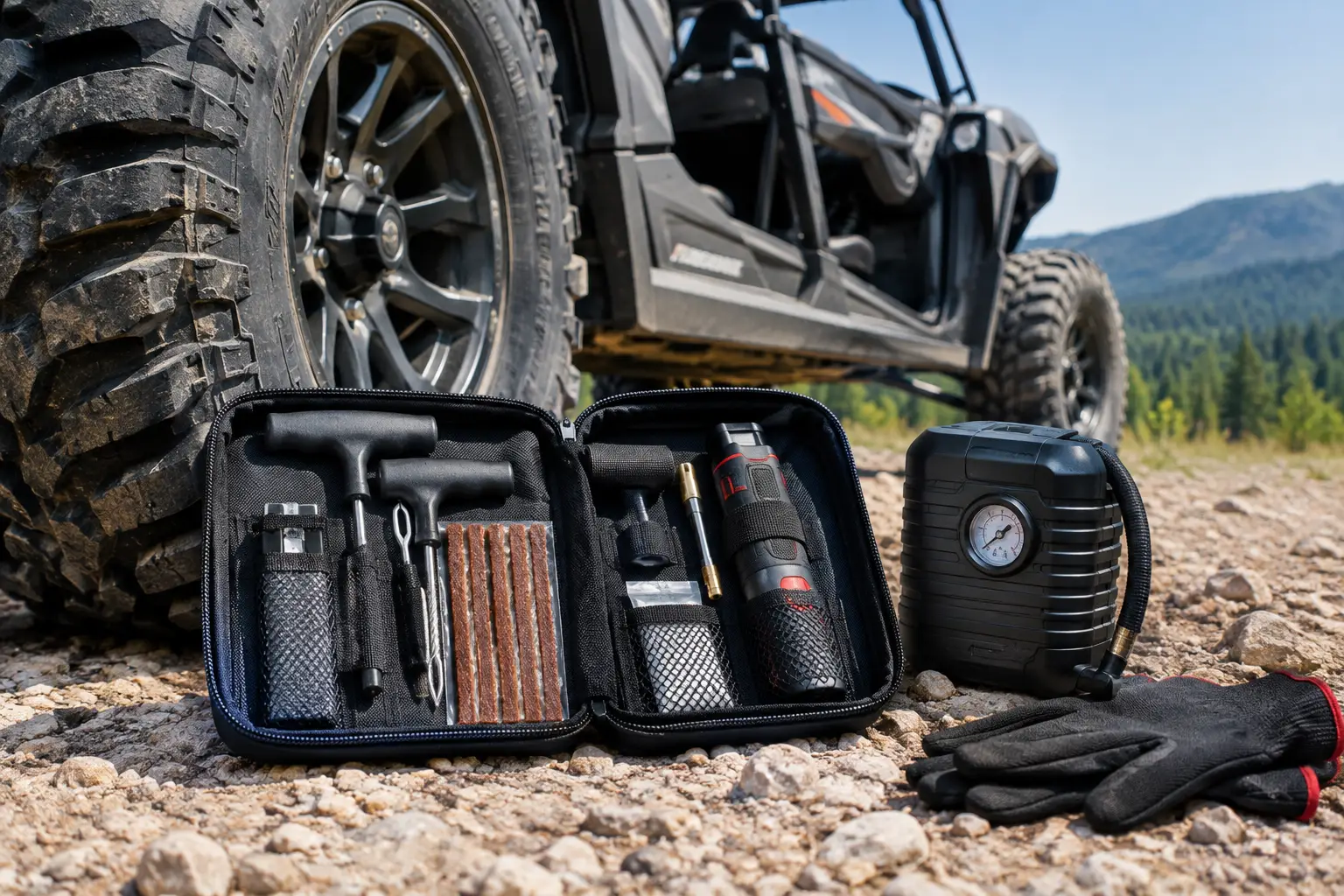
A flat UTV tire rarely happens beside the shop. It happens on a rocky climb, halfway through a hunting property, or miles into a ride when turning around is not an option. The best UTV tire repair kits are built for that reality: they let you seal a common puncture quickly, reinflate the tire, and get your side-by-side back to a safe place for a permanent inspection.
Not every tire kit belongs in every machine. A lightweight plug kit may be enough for a trail rider running tubeless tires near home. A ranch machine, overland build, or fully loaded four-seat UTV needs more capability, including dependable inflation, valve tools, spare plugs, and a way to manage a damaged sidewall. Choose the kit around your tire size, terrain, riding distance, and the consequences of being stuck.
What Makes the Best UTV Tire Repair Kits Different
A basic automotive tire plug kit can repair a small tread puncture, but UTV tires create a tougher working environment. Their larger diameter, lower operating pressure, aggressive lugs, and frequent exposure to sharp rock all demand tools that are easy to use with dirty hands and strong enough for a stiff carcass.
The core of a worthwhile kit is a quality plug system. Look for a metal T-handle reamer and insertion tool rather than thin, screwdriver-style tools that can twist or bend. The reamer needs to clean and slightly size the puncture channel; the insertion tool must push the plug through thick rubber without tearing it apart. Heavy-duty, sticky rope plugs are the most practical choice for most trailside tread punctures because they are compact, quick, and familiar to use.
Inflation is the other half of the repair. A plug does little good if you cannot put air back in the tire. Compact 12-volt compressors are a strong all-around solution for UTV owners because they can top off multiple tires and do not depend on carrying a limited number of cartridges. CO2 cartridges are fast and compact, but a few small cartridges may not provide enough volume for a large 30-, 32-, or 35-inch tire. If you use CO2, confirm the system has enough capacity for your actual tire size and pressure.
The best kits also account for the small problems that stop a repair. A valve-core tool, spare valve cores, a tire pressure gauge, and needle-nose pliers take up very little space. So does a small bottle of soapy water or leak-detection fluid, which helps verify that the plug is sealing before you put tools away.
Choose a Kit Based on How You Use Your UTV
A weekend trail machine and a working UTV may wear the same tire size, yet their repair needs can be completely different. Start with the job your machine has to do.
Trail Riders: Fast Plugging and Portable Air
For recreational trail riding, the priority is getting rolling again without filling half the cargo box with tools. A compact kit with T-handle plug tools, 10 to 20 rope plugs, a trimming blade, pressure gauge, valve tool, and a compact compressor covers the most likely problem: a nail, thorn, screw, or sharp stone puncture through the tread.
Carry enough plugs to repair more than one tire. A single puncture may take one plug, while a larger hole sometimes needs two. That does not mean every hole is repairable, but it gives you options when a puncture is near the upper limit of what a plug can safely seal.
Ranch, Farm, and Hunting UTVs: More Spares Matter
Utility riders often work far from pavement, carry loads, and travel through brush, wire, stubble, and debris. For these machines, choose a more complete kit and store it permanently in a sealed case or bag. Add spare valve cores, extra plug material, a stronger compressor, work gloves, and a compact flashlight or headlamp.
A tire that goes flat at the end of a long workday may need more than a quick plug. Carrying a valve-stem puller or replacement valve stem can be worthwhile if your terrain regularly damages stems. It also pays to inspect tire pressure before leaving, especially when the machine has been parked for several days.
Overland and Remote Riders: Plan for a Tire Change
Remote riding calls for a repair kit plus a recovery plan. Plugs solve tread punctures, but they cannot safely fix every failure. A torn sidewall, separated bead, broken wheel, or deep shoulder puncture may require installing a spare tire or arranging recovery.
For this use, pair a heavy-duty repair kit with a full-size spare matched to your current tire setup, proper lug tools, a jack solution that works on uneven ground, and a high-output compressor. Bead seating can be difficult in the field, so do not assume a small inflator can handle it. If you run beadlock wheels, bring the tools and hardware knowledge required for that wheel system.
The Tools Worth Carrying in Every Kit
A repair kit should be organized so you can find the right tool before daylight disappears. The following components make a practical baseline for most tubeless UTV tire setups:
- Metal T-handle reamer and plug insertion tool
- Heavy-duty rope plugs, plus plug cement if the kit uses it
- Valve-core tool with spare cores and valve caps
- Accurate low-pressure tire gauge
- 12-volt compressor or correctly sized CO2 inflation system
- Pliers, a plug trimming blade, gloves, and a small light
Keep the kit protected from moisture and dust. Rope plugs can dry out over time, compressors can corrode, and loose blades have a habit of disappearing into a tool bag. Check the kit at the beginning of each riding season, replace used supplies immediately, and test the compressor before the next remote trip.
Know What a Plug Can and Cannot Repair
Tire plugs are intended primarily for small punctures in the tread area of a tubeless tire. They are a practical trailside repair, but they are not a free pass to ignore tire condition afterward. Once you are back home, inspect the tire closely. A professional internal patch-plug repair or tire replacement may be the right answer depending on the injury, tire construction, and how long the tire was driven low or flat.
Do not rely on a rope plug for sidewall cuts, major shoulder damage, large gashes, a bent wheel, or a tire that has been run flat long enough to damage its internal structure. Low-pressure UTV tires can come off the bead after a hard hit or prolonged flat operation. In that situation, stop and assess whether a spare is the safer solution.
There is also a pressure question. Many UTVs operate at relatively low pressure for traction and ride quality, but the correct number depends on tire construction, payload, terrain, and manufacturer guidance. After repairing a tire, inflate it to the pressure appropriate for your setup, check for leaks, and recheck it after a short ride. If it will not hold pressure, do not keep forcing the issue.
A Trailside Plug Repair That Holds
Park on stable ground, set the parking brake, and keep the machine from rolling. Find the puncture and remove the object with pliers if it is still embedded. If the tire has enough air remaining, listen for the leak or use soapy water to locate bubbling.
Run the reamer through the puncture several times to clean the channel. Thread a rope plug through the insertion tool, push it into the hole until a small amount remains outside the tread, then pull the tool straight out. Trim excess plug material close to the tread, inflate the tire, and check the repair with soapy water. No bubbles means the plug is sealing at that moment.
Drive conservatively after any trailside repair. Avoid high-speed road travel, hard impacts, and aggressive cornering until the tire has been fully inspected. The goal is to finish the ride or return safely, not to treat a temporary repair like a brand-new tire.
Fit Your Repair Plan to Your Tire Setup
Before buying a kit, check whether your UTV has tubeless radial tires, bias-ply tires, beadlocks, or a tire sealant already installed. Most modern UTV owners running tubeless tires will get the most value from a heavy-duty rope-plug kit and a quality compressor. Riders with very large tires need to pay closer attention to compressor duty cycle and airflow. A tiny inflator that works fine on a 27-inch tire may be frustratingly slow on a 35-inch mud tire.
Storage matters, too. A kit stored under the seat may work well for one model but be exposed to water on another. Use a secure, weather-resistant location that remains accessible with cargo loaded. If your machine is built around a specific use case - hunting, plowing, hauling, or long-distance trail travel - make tire repair equipment part of the same planning process as recovery gear, spare belts, and first-aid supplies.
The right kit is the one you can use confidently when the tire is dirty, the weather is turning, and the nearest pavement is still a long ride away. Pack it before the trail demands it, and replace the first item you use before your next trip.