
Why UTV Steering Feels Loose and How to Fix It
Posted by Drew Cummings on Nov 20th 2026
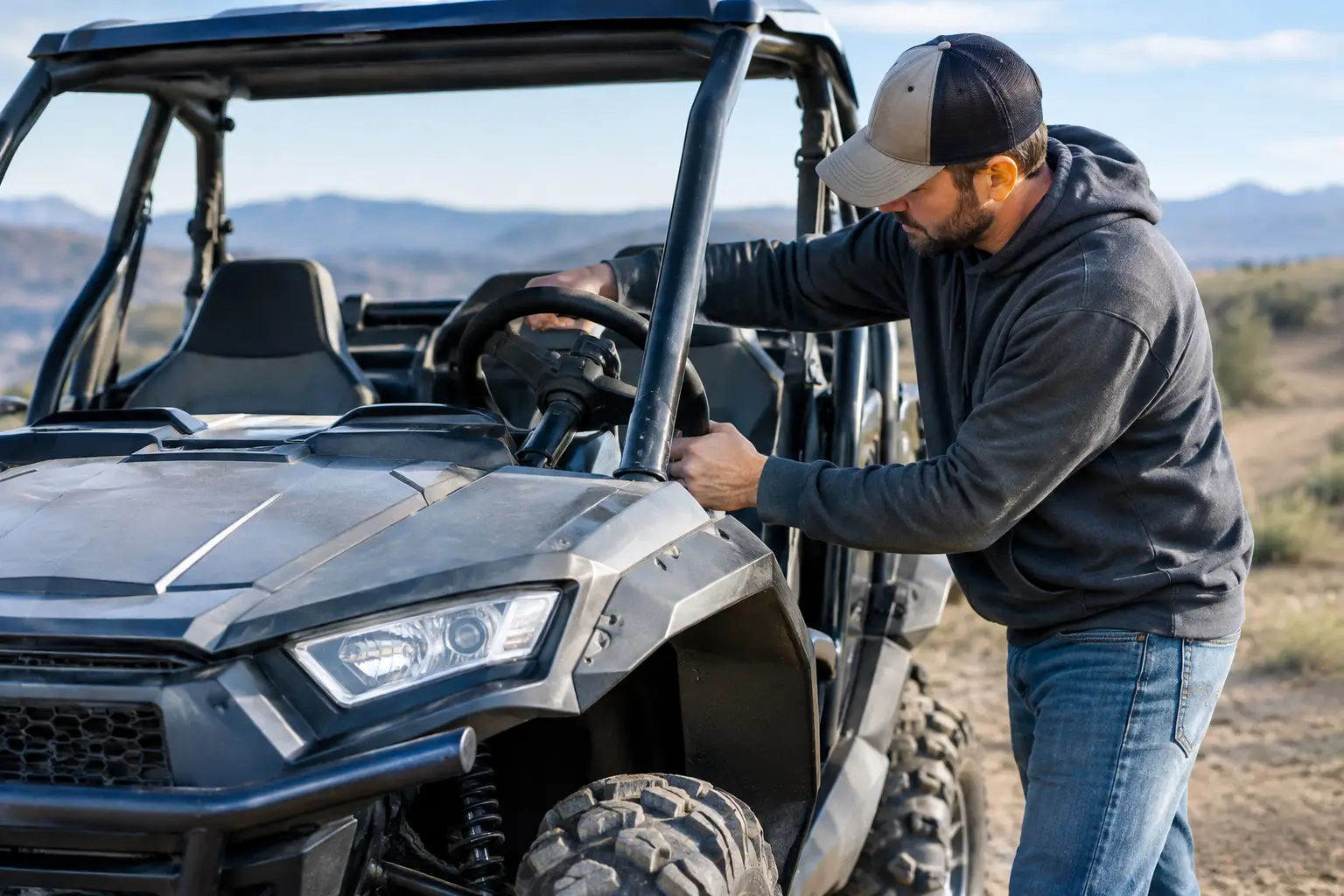
A UTV that wanders across the trail, needs constant correction on a gravel road, or has noticeable play before the tires react is telling you something. If you are asking why UTV steering feels loose, do not write it off as normal off-road behavior. Some tire deflection and feedback are expected on rough terrain, but a vague steering wheel can point to worn parts, incorrect alignment, loose hardware, or a setup that no longer matches the way your machine is used.
The right fix starts with finding where the movement is coming from. Replacing parts at random can get expensive, especially when the real problem is a loose tie-rod jam nut, low tire pressure, or worn rack bushings hiding behind an otherwise tight front end.
Why UTV Steering Feels Loose on the Trail
Loose steering usually falls into one of two categories: play in the steering system or poor directional stability. Play means you can turn the steering wheel before the front tires begin to move. Stability issues mean the tires respond, but the UTV still drifts, darts, follows ruts, or feels nervous at speed.
Those problems can occur together, but they do not always have the same cause. A worn tie-rod end creates real free play. Aggressive tires with uneven pressure may make a perfectly tight steering system feel unsettled. That difference matters when ordering replacement parts or planning an upgrade.
Worn tie-rod ends and steering rack components
Tie-rod ends take a beating on trail machines, work rigs, and lifted UTVs. Their job is simple: transfer movement from the steering rack to the knuckles. Once the ball-and-socket joint wears, the steering wheel can move without immediately changing tire direction.
With the vehicle safely supported, have someone gently move the steering wheel back and forth while you watch each tie-rod end. Any visible popping, vertical movement, or delay between the inner and outer components deserves attention. Check the tie-rod jam nuts, too. A loose jam nut can let alignment change even if the joints themselves are still in good condition.
The rack is another common source of trouble. Internal rack wear can create center play, while loose rack mounting bolts or deteriorated rack bushings let the entire assembly shift in its mounts. If the rack moves before the tie rods do, tightening or replacing the correct rack hardware and bushings may restore a much more direct feel.
Ball joints, wheel bearings, and suspension bushings
Not every steering problem starts at the steering wheel. Ball joints connect the knuckle to the control arms, and wear here allows the wheel to move in ways it should not. The same goes for wheel bearings. A loose bearing can make a UTV feel like it is steering itself, especially in ruts, through off-camber terrain, or under braking.
Lift the front end safely and grab the tire at the 12 and 6 o'clock positions. Movement can indicate a ball joint or bearing issue, though the exact diagnosis depends on your suspension design. Check the tire again at the 3 and 9 o'clock positions to help isolate tie-rod or steering play.
Control-arm bushings also deserve a close look, particularly on high-mileage utility machines and UTVs that spend time in mud, water, or dusty ranch conditions. Cracked, compressed, or loose bushings allow alignment angles to shift under load. The UTV may track acceptably in the driveway but wander when carrying cargo, pulling a trailer, or hitting washboard roads.
Incorrect toe alignment
Toe is the angle of the front tires when viewed from above. Most UTVs need a small amount of toe-in, but the exact specification is model-specific. Too much toe-out often makes steering feel twitchy and can cause the machine to wander. Excessive toe-in can make the steering feel heavy, scrub tires, and reduce straight-line stability.
A hard impact with a rock, stump, curb, or trail obstacle can bend a tie rod or shift alignment. So can a suspension lift installed without correcting the steering geometry. If your UTV started steering poorly after an impact, tire change, lift kit, or replacement of front-end parts, put alignment near the top of the inspection list.
Do not rely only on eyeballing tire position. A basic tape-measure check can reveal a major issue, but use the manufacturer specification for your exact model before making final adjustments. Set the steering wheel straight first, then adjust both sides evenly when possible so the rack remains centered.
Tires Can Make a Tight Steering System Feel Loose
Tires are often overlooked because they are not technically part of the steering linkage. They still have a major effect on how planted a UTV feels. One front tire that is several PSI lower than the other can make the machine pull or wander. Uneven tread wear, bent wheels, damaged belts, and mud packed inside a wheel can create similar symptoms.
Large aftermarket tires change the equation further. They add leverage to steering components, increase rolling resistance, and can make rut-following more noticeable. A wide, aggressive mud tire may be exactly what you need for deep ground, but it will not track like a lighter all-terrain tire on hardpack or pavement.
Check cold tire pressure with a reliable gauge and match it to the tire manufacturer's guidance, your load, and the terrain. Do not inflate to the sidewall maximum unless that is specifically appropriate for the tire and application. For a hunting or ranch UTV carrying gear, passengers, and a full cargo bed, the pressure that works for an empty trail ride may not be enough.
Inspect the Steering Shaft and Electronic Power Steering
On machines with electronic power steering, EPS can mask a developing mechanical problem because it reduces steering effort. It does not remove looseness from worn joints, bushings, or rack components. Start with the mechanical inspection before assuming the EPS unit has failed.
Still, inspect the steering shaft, U-joints, couplers, and mounting hardware between the steering wheel and rack. A worn shaft joint may create a clunk or a dead spot in the wheel. Dirt, corrosion, and water intrusion can shorten the life of these components, especially on machines used for mud riding or creek crossings.
EPS concerns tend to feel different from ordinary loose steering. You may notice intermittent assist, unusually heavy steering, a warning light, or assist that changes abruptly. Battery voltage, charging-system health, connectors, and fault codes all matter here. If the steering is heavy or an EPS warning is present, follow the diagnostic procedure for your model rather than replacing expensive electronics on a guess.
A Practical Order for Diagnosing Loose UTV Steering
Start with the simple checks before disassembling the front end. Verify tire condition and pressure, then inspect wheel lug torque and look for bent wheels or obvious tire damage. Next, check for movement at the wheel bearings, ball joints, tie-rod ends, steering rack mounts, and control-arm bushings.
After that, inspect the steering shaft and confirm that all steering and suspension fasteners are tightened to the specifications for your vehicle. Only then move to alignment measurements. This order prevents a common mistake: setting toe on a UTV with worn ball joints or rack bushings. The alignment may look correct sitting still but change as soon as the suspension loads up.
If you find more than one worn part, address the full problem before alignment. Installing new tie-rod ends while leaving a loose wheel bearing or damaged ball joint in place will not deliver the controlled steering feel you are after.
When an Upgrade Makes More Sense Than a Basic Replacement
A stock replacement is often the right answer for a UTV used for normal trail riding, property work, and light hauling. But riders who run oversized tires, lift kits, heavy bumpers, frequent mud, or high-speed rough terrain may benefit from stronger steering components and improved rack support.
Heavy-duty tie rods can add margin against bending, while upgraded rack bushings can reduce unwanted rack movement. The trade-off is that stronger parts do not correct bad alignment or eliminate stress caused by an improperly designed lift setup. Fitment matters as much as strength. Choose components built for the exact make, model, year, and suspension configuration of your Polaris, Can-Am, Yamaha, Kawasaki, or Honda.
Side By Side Sports organizes steering, suspension, and protection upgrades by machine fitment, helping you narrow the search to parts that match the way your UTV is actually used. Before ordering, confirm whether your machine has EPS, an installed lift, aftermarket control arms, or non-stock wheel offset.
Do Not Ignore New Steering Play
A little tire feedback on uneven ground is normal. Free play, clunks, wandering, or a steering wheel that needs constant correction is not something to put off until the next service interval. A worn steering or suspension component can accelerate tire wear, make alignment impossible to hold, and reduce control when the trail gets fast, steep, or loaded.
Work through the front end methodically, repair the source of movement, and align the machine only after the components are tight. A UTV with direct steering does more than feel better at the wheel - it lets you place the tires where they need to go when the terrain leaves no room for guesswork.