
UTV Winch Review for Real Recovery Needs
Posted by Drew Cummings on Oct 30th 2026
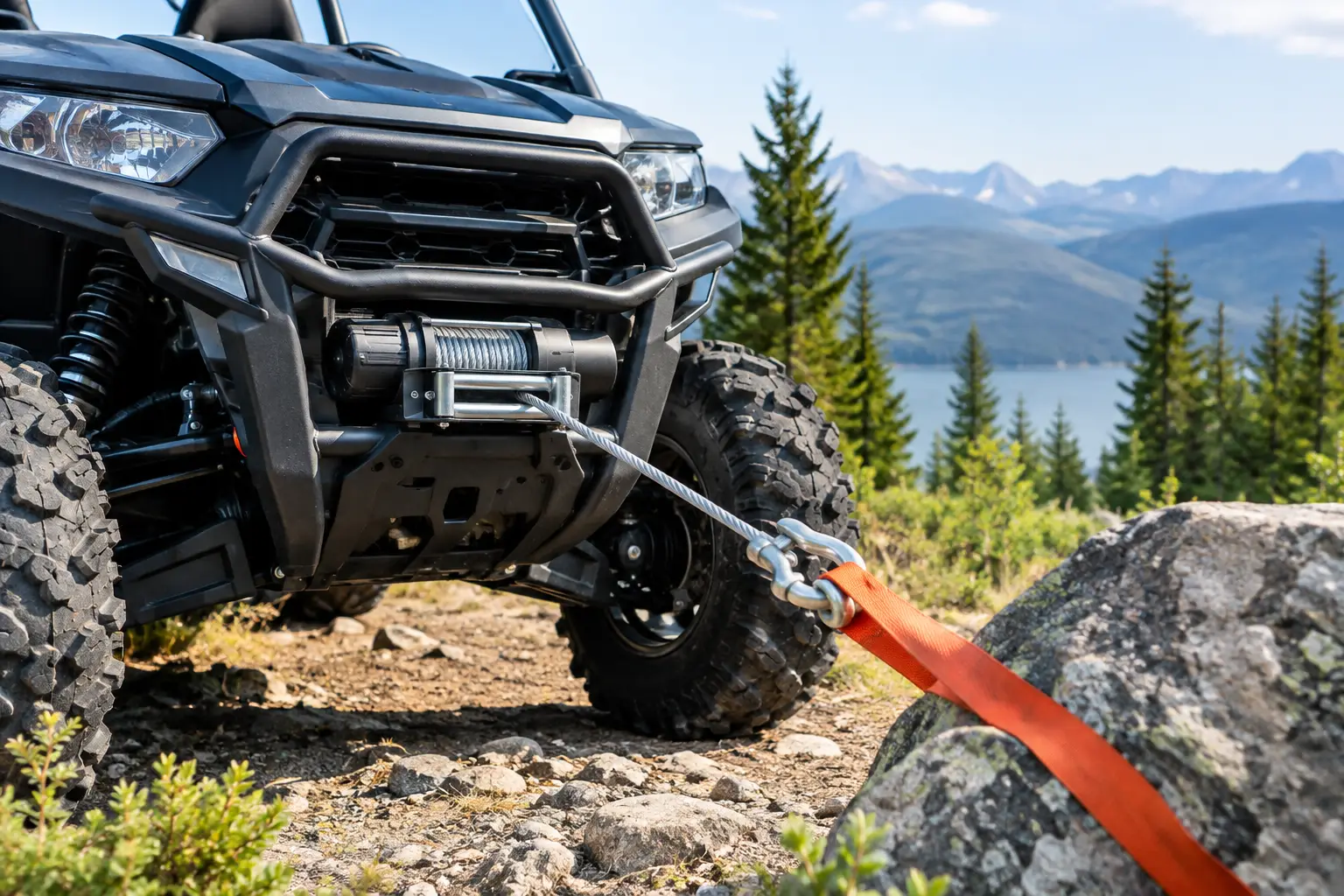
A winch usually becomes valuable at the least convenient moment: when a loaded UTV settles into a muddy rut, a snowplow job runs long, or the trail narrows with no room to turn around. This UTV winch review focuses on the details that decide whether a recovery setup works when it counts, not just the biggest pulling number on the box.
For most side-by-side owners, the right winch is not automatically the highest-capacity unit available. It is the unit that fits the machine correctly, has enough rated pull for the work, stays protected from water and debris, and gives the rider safe control from the seat or recovery point. Those priorities look different for a trail rider than for a ranch owner, hunter, or snowplow operator.
UTV Winch Review: What Matters Beyond Pull Rating
Rated line pull is the first specification most buyers see, and it matters. A practical starting point is a winch rated at roughly 1.5 times your UTV's wet weight. If your machine weighs 1,700 pounds with fuel, accessories, and normal cargo, a 3,500-pound winch is generally the minimum range to consider. A 4,500-pound model gives more reserve for angled pulls, mud resistance, and heavier work.
That does not mean every UTV needs a 6,000-pound winch. Larger units can add weight to the front end, draw more current, require a heavier mounting system, and cost more. On a compact trail machine used mostly for occasional self-recovery, excess capacity may not improve the real-world experience. On a full-size crew cab carrying tools, a cab enclosure, bumpers, and a plow, extra capacity is easier to justify.
The rating itself also has context. Maximum line pull is measured with the first wrap of rope on the drum. Pulling power drops as more rope layers build on the drum. That is why a longer recovery pull can benefit from a snatch block, which increases mechanical advantage and keeps the winch working in a more favorable range. It also doubles the load on the anchor point, so the bumper, mount, shackle, and tree strap must all be rated for the job.
Match Capacity to How You Use Your UTV
A 3,500-pound winch suits many two-seat trail UTVs, especially when the goal is self-recovery rather than repeated work. A 4,500-pound winch is a strong all-around choice for larger recreational machines, hunting rigs, and utility models carrying regular accessory weight. A 5,000- to 6,000-pound winch makes sense for heavy four-seat UTVs, work-focused machines, plow duty, and riders who routinely recover other vehicles.
Vehicle weight is only one part of the equation. Deep mud creates suction. A steep incline adds load. A dead vehicle being dragged with locked tires takes more force than a rolling vehicle. Capacity reserve is useful, but it should be paired with disciplined recovery technique rather than used as permission to pull harder than the rigging can safely handle.
Fitment Is the Difference Between a Clean Install and a Headache
A high-quality winch still needs a proper home. UTV winch fitment starts with a mount built for the exact make, model, year, and trim of your machine. Front-end differences can affect mounting holes, bumper clearance, radiator access, and the location of the fairlead opening. Universal mounts may work in limited applications, but a model-specific mount is usually the cleaner and more dependable route.
Before choosing a winch, confirm the mount accepts the winch's bolt pattern and that the winch body clears factory components and aftermarket additions. A heavy-duty front bumper may include a winch plate, but not every bumper is designed around every winch size. Also check whether the fairlead will sit in the correct position. Rope should feed straight onto the drum whenever possible, not rub on the opening or enter at a severe angle.
Electrical fitment deserves the same attention. Winches draw serious amperage under load, so use the supplied heavy-gauge cables, route them away from hot exhaust components and sharp edges, and secure them against vibration. The contactor needs a protected mounting location, and battery connections should be tight and clean. A weak battery or corroded terminal can make a good winch seem unreliable.
If your UTV uses a tightly packaged front end, choose parts by machine application instead of assuming similar models share the same setup. This is where fitment-focused shopping and expert support save time. Side By Side Sports organizes winch equipment around the vehicles riders actually own, helping narrow down compatible mounts and accessories before parts arrive.
Synthetic Rope vs. Steel Cable
Synthetic rope is the preferred choice for many modern UTV recovery setups. It is lighter, easier to handle, does not develop sharp wire splinters, and stores less kinetic energy than steel cable if it fails. The lower weight also reduces strain on the winch and makes handling a long pull less tiring.
Its trade-off is maintenance. Synthetic rope can be damaged by abrasion, heat, and contamination from sand or grit. Use a protective sleeve at contact points, avoid dragging it across sharp rocks, and rinse it after muddy or sandy rides. A hawse fairlead is commonly paired with synthetic rope because it provides a smooth surface without the roller edges that can pinch or wear fibers.
Steel cable remains a workable option for hard-use utility environments where abrasion is constant and routine inspection is part of the job. It is generally less expensive and tolerates rough contact better than unprotected synthetic rope. But it is heavier, can kink, and requires gloves during handling. For most recreational riders, hunters, and overland-style builds, synthetic rope is the easier material to live with.
Controls, Sealing, and Recovery Accessories
Wireless control is convenient when you need to stand away from the machine and watch the line path. It is especially useful when operating alone. Still, a wired remote is worth keeping available. It does not rely on a signal or battery, and it can be the better choice in heavy rain, extreme cold, or a situation where you want a direct, predictable connection.
Weather resistance matters because a front-mounted winch lives in the spray zone. Look for a sealed motor and contactor, protected wiring connections, and a housing designed to keep out water and trail debris. No winch is maintenance-free. After water crossings or mud rides, inspect the rope, hook, fairlead, and electrical terminals. Spool the line back in neatly under light tension so it does not bunch on one side of the drum.
A winch is only one part of a recovery system. Keep a tree saver strap, soft shackles or properly rated D-rings, gloves, a recovery damper, and a snatch block or recovery ring with the machine. Avoid wrapping the winch line directly around a tree or using a trailer ball as a recovery point. Both shortcuts can damage equipment or create a dangerous failure.
How to Choose the Right UTV Winch Setup
Start with the machine, then the job. A trail rider may prioritize a compact 3,500-pound synthetic-rope winch with a dependable wired remote. A landowner pulling fence materials or clearing fallen limbs may favor a 4,500-pound unit with a heavier mount and extra recovery gear. A snowplow setup needs capacity, a reliable electrical system, and controls that remain usable in gloves and cold conditions.
Do not overlook the parts around the winch. A vehicle-specific mount, correctly matched fairlead, protected wiring, and rated recovery points can matter more than stepping up one size in line pull. When comparing models, look at warranty support, replacement rope availability, remote options, mounting dimensions, and the reputation of the manufacturer for powersports use.
The best winch is the one you can install correctly, maintain easily, and trust without hesitation when the trail, job site, or weather stops cooperating. Choose it for your actual UTV weight and use case, build the recovery system around it, and practice using it before the first time you truly need it.