
UTV Tracks vs Snow Chains for Winter Work
Posted by Drew Cummings on Nov 20th 2026
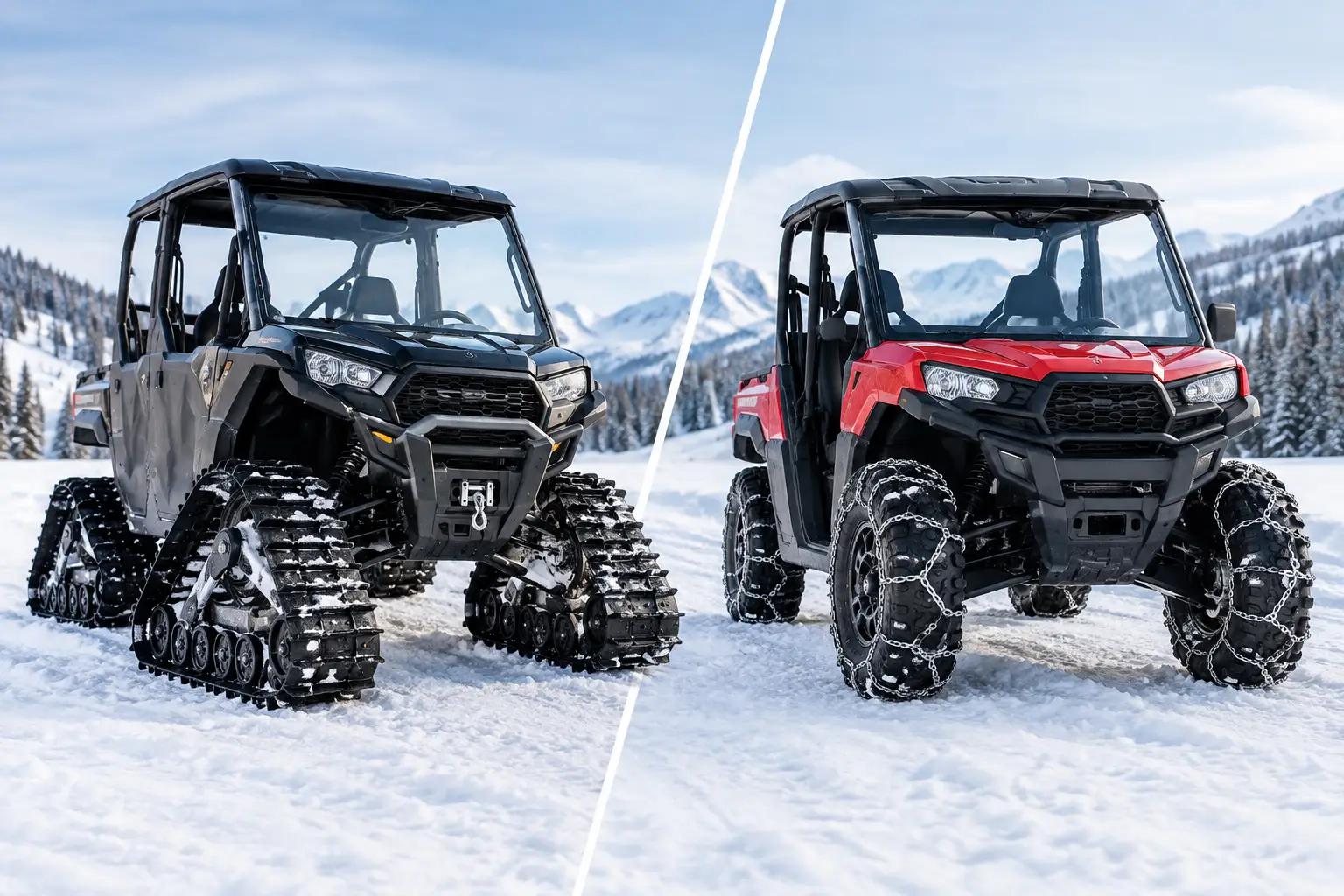
A UTV that hooks up on a packed ranch lane can still bury itself in the first drift across an open field. That is why the UTV tracks vs snow chains decision is not simply about finding more grip. It is about matching your side-by-side to the snow conditions, the work you need done, and the time and money you are willing to put into winter setup.
Snow chains are a practical traction upgrade for many riders. Tracks are a major seasonal conversion that can turn a UTV into a serious snow machine. Both have their place, but they solve different problems.
UTV Tracks vs Snow Chains: The Real Difference
Snow chains improve the traction of your existing tires. Their cross links bite into packed snow and ice, helping the tire resist spinning and sliding. They are usually the right answer when the ground beneath the snow is still firm enough to support the machine.
Tracks replace the wheels with large, track-based modules. Instead of concentrating the vehicle's weight on four tire contact patches, they spread it across a much larger area. That lower ground pressure is what helps a tracked UTV stay on top of deeper snow rather than cutting down through it.
Put simply, chains help tires grip. Tracks help the entire machine float. If your primary problem is ice, hardpack, or slippery hills, chains may be all you need. If your machine routinely encounters deep, loose snow, tracks offer capability that chains cannot duplicate.
When Snow Chains Make the Most Sense
For plowing a driveway, checking fence lines, hauling feed around a property, or making short trips on packed trails, tire chains are hard to beat for value. They cost far less than a track system, take up little storage space, and allow you to keep the same tire-and-wheel setup you run for most of the year.
Chains are especially effective on icy surfaces. A quality set can dramatically improve braking and climbing control where an aggressive all-terrain tire still slides. That matters when you are pushing a plow near buildings, moving equipment on a sloped property, or traveling a frozen access road with a loaded bed.
They also make sense for riders who see occasional winter conditions rather than months of consistent deep snow. If storms leave a few inches at a time and local roads or trails are regularly plowed, spending heavily on tracks may not produce a meaningful return.
There are limits. Chains do not increase flotation, and they can make a UTV dig faster once the tires begin sinking into soft snow. They can also be rough on pavement, concrete, and finished surfaces. Use the correct chain size for your tire, maintain adequate clearance around suspension and brake components, and follow your vehicle manufacturer's guidance on chain use.
Chain selection and installation matter
Not all chains are built for the same job. Ladder-pattern chains are common and affordable, while more closely spaced square-link or diamond-pattern designs can provide a smoother ride and more consistent bite. Aggressive V-bar chains can be highly effective on ice, but they may be too harsh for surfaces you want to protect.
Check clearance before buying, particularly on UTVs with oversized tires, lift kits, aftermarket control arms, or tight front-wheel-well space. A loose chain can strike brake lines, body panels, or suspension parts in a hurry. After installation, drive a short distance, recheck tension, and secure excess chain so it cannot whip around the tire.
Where UTV Tracks Earn Their Keep
Tracks are the stronger choice when winter use is not occasional. Hunters accessing remote camps, landowners covering large properties, and riders traveling ungroomed terrain often need flotation more than they need additional tire bite.
A track system can keep a UTV moving through snow that would stop even a well-equipped, chained tire setup. This makes tracks valuable for hauling supplies, reaching livestock, recovering equipment, or maintaining access where plows do not go. They are also useful in mixed winter terrain, where drifts, powder, slush, and uneven ground show up in the same day.
Tracked UTVs can provide a more controlled feel in deep snow because the machine is less likely to sink abruptly. That does not mean they are unstoppable. Wet spring snow, hidden holes, off-camber drifts, and steep terrain can still create trouble. A winch, recovery points, proper cargo management, and a realistic route plan remain part of any serious winter setup.
The trade-offs of running tracks
The biggest drawback is cost. A quality UTV track kit is a significant investment, and fitment must be correct for your exact make, model, year, and tire or suspension configuration. Gear reduction requirements, track dimensions, steering effort, and clearance all need to be considered before you order.
Tracks also take time to install and remove. Some owners leave them on for the season, but they are not a set-it-and-forget-it accessory. Regular inspections are needed for track tension, bearing condition, fasteners, alignment, and drivetrain wear. You will also need a clean, dry place to store the wheel and tire assemblies during winter.
Expect slower top speeds and different handling characteristics. A UTV on tracks is built for controlled travel and work, not high-speed trail riding. Steering can feel heavier, fuel consumption may increase, and the drivetrain operates under different loads. Riders who need to cover long stretches of plowed road or hard ground may find chains more practical.
Consider Your Snow, Not Just Your Location
Two riders in the same state can need completely different equipment. A wooded property with firm ground and six inches of dense snow calls for a different setup than an open high-elevation area that receives repeated feet of dry powder.
Start with the snow depth you actually travel through. Chains are often enough for shallow to moderate snow when there is a hard base underneath. Once your UTV is consistently dragging its belly, pushing snow with the front bumper, or sinking in untracked powder, flotation becomes the priority and tracks start to make more sense.
Then consider what lies below the snow. Ice, frozen dirt, rocky roads, and packed driveways reward the sharp mechanical bite of chains. Soft fields, marshy ground, deep powder, and drifted two-tracks favor tracks. If your winter route includes both, decide which section is most likely to stop you. Equip for the worst section, not the easy one near the shop.
Match the Setup to the Job
Snow plowing is a common example. For a paved or gravel driveway with normal snowfall, chains on the drive wheels can provide the traction needed to push effectively. Add appropriate weight distribution, a properly mounted plow, and a cab enclosure or heater for comfort during long sessions.
For hunting, tracks make a stronger case when access means breaking trail to a remote stand, cabin, or camp. The ability to cross deep snow without packing a rut can keep the route usable through the season. Still, if you only ride established, groomed paths to your destination, chains may be the better investment.
For ranch and property work, think about frequency. A machine used every day to reach barns, check stock tanks, or carry tools through unplowed fields can justify tracks. A UTV used after a storm to clear a lane and make a few supply runs may be better served by chains, a winch, a plow, and quality winter tires.
Do Not Ignore Tires, Weight, and Recovery Gear
Neither option fixes a poor overall setup. Worn tires, an overloaded cargo bed, low battery performance, or an absent recovery plan can turn a simple trip into a long walk back. Before adding chains or tracks, make sure your tires are in good condition and inflated for the conditions and load.
Keep heavy cargo low and centered. A loaded rear bed can improve rear traction, but too much weight can make steering light and reduce control on hills. If you are operating in remote snow country, carry a tow strap, recovery gear appropriate for your vehicle, a shovel, warm layers, and a reliable communication plan.
Side By Side Sports can help narrow the options by vehicle fitment, so you are not trying to force a universal solution onto a machine with specific clearance and drivetrain needs.
The right winter setup is the one that lets you finish the job without asking more of your UTV than the conditions allow. Buy chains when hardpack and ice are the real challenge. Step up to tracks when deep snow is part of the route, not an occasional surprise.