
UTV Radial Versus Bias Tires: Which Is Right?
Posted by Drew Cummings on Nov 5th 2026
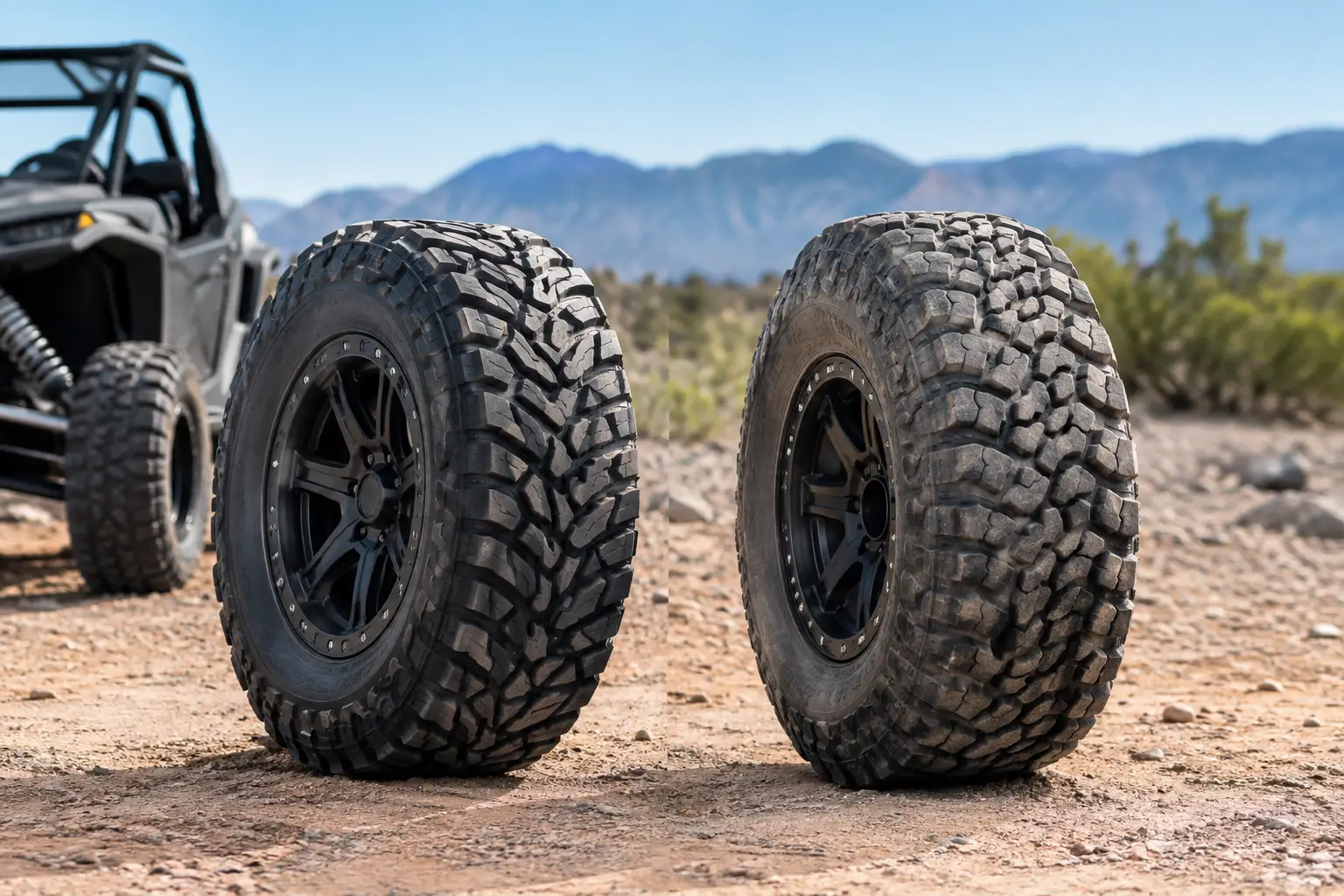
A tire choice can change how your UTV feels before you ever add horsepower or suspension. In the UTV radial versus bias tires debate, the right answer comes down to where you ride, how hard you load the machine, and whether you value a smoother trail ride or tougher sidewall behavior when the work gets rough.
A fast sport machine that spends weekends covering rocky trails has different tire needs than a ranch UTV carrying feed, pulling implements, and crossing rutted ground all week. Radial and bias-ply tires are both proven options. The key is matching the tire construction to the job instead of choosing based on tread appearance alone.
How UTV Radial and Bias Tires Are Built
The difference starts inside the tire carcass. A bias-ply tire uses layers of cord that crisscross diagonally from bead to bead. Those overlapping plies tie the tread and sidewall together, creating a firm, durable structure. When the tire takes a hit from a rock, stump, or sharp rut edge, that construction helps it resist deformation.
A radial tire uses cords that run more directly across the tire from bead to bead, typically with stabilizing belts beneath the tread. This lets the tread area and sidewall work more independently. The result is generally more sidewall flex and a broader, more consistent contact patch over uneven ground.
Neither construction is automatically better. Bias tires are often chosen for hard work and harsh terrain because they feel stout and are commonly available at a lower price point. Radials are popular with trail riders because they tend to track better, ride smoother, and manage heat more effectively during longer, faster runs.
Do not judge one tire strictly by its ply rating. A high ply-rated bias tire and a high ply-rated radial tire can behave very differently, and ply rating is not a direct measurement of puncture resistance. Look at the complete tire design, including carcass construction, tread depth, sidewall protection, load rating, and the terrain it was built to handle.
UTV Radial Versus Bias Tires on the Trail
On hardpack, gravel roads, forest trails, and mixed terrain, radial tires usually deliver the more refined ride. Their flexible sidewalls can absorb small trail chatter that would otherwise travel through the suspension and into the cabin. That matters on all-day rides, especially in machines with firmer sport-oriented suspension setups.
Radials can also provide more predictable steering at speed. Because the tread stays planted more evenly as the tire rolls, the machine may feel less nervous through washboard sections and sweeping turns. For riders who cover distance in a Polaris RZR, Can-Am Maverick, Yamaha YXZ, or similar performance-focused UTV, this can be a meaningful upgrade.
Bias tires feel more planted in a different way. Their stiffer construction can hold up well when the trail is slow, technical, and full of square-edge impacts. They are often a practical fit for rocky hunting trails, wooded property, farm roads, and utility routes where low-speed durability matters more than high-speed comfort.
The trade-off is that a bias tire can transmit more vibration and feel less compliant over repeated bumps. On pavement or long stretches of packed trail, it may also wear differently than a radial. If your UTV sees frequent road transfers, always confirm local regulations and choose a tire with a suitable speed and load rating.
When a Radial Tire Makes Sense
Choose a radial when your priority is ride quality, consistent handling, and longer-distance trail performance. It is often the better match for recreational riders who run mixed terrain, travel at moderate to higher speeds, or want their UTV to feel more controlled across choppy ground.
Radials are especially worth considering if your machine spends most of its time on hardpack, desert trails, gravel, loose-over-hard conditions, or open wooded routes. They can also work well for overlanding-style setups where the UTV carries gear over many miles but still needs stable manners on varied surfaces.
That does not mean radials are delicate. Many modern UTV radial tires use reinforced sidewalls and aggressive tread designs built for rocks, mud, and sharp terrain. Still, a radial's added flex is not always ideal for a machine that is constantly overloaded, driven through deep ruts at low pressure, or exposed to repeated sidewall impacts around job sites.
When a Bias-Ply Tire Is the Better Tool
A bias-ply tire is often the practical choice for utility-first UTVs. If you use a Polaris Ranger, Can-Am Defender, Honda Pioneer, Kawasaki Mule, or Yamaha Viking for property work, hauling, hunting, plowing, or frequent low-speed travel in rough cover, the tougher feel of a bias carcass can be an advantage.
Bias tires are commonly favored in mud and soft-ground applications as well. Many deep-lug mud tires use bias construction because the tire needs to withstand aggressive flexing, rut walls, roots, and debris while turning large paddles through thick terrain. The tire may ride rougher on hard surfaces, but that is not the priority in a dedicated mud setup.
Budget can also factor into the decision. Comparable bias tires are frequently less expensive than radials, which can matter when replacing a full set on a work machine. A less expensive tire is not necessarily a compromise if its construction suits the way you use the UTV.
Match the Tire to Your Real-World Use
Before choosing, think about the terrain your machine sees most often, not the one trip you take each year. A good fit usually follows these patterns:
- Long trail days, hardpack, gravel, desert, and mixed recreation favor radial tires.
- Heavy utility work, farm use, hunting access, and slow technical terrain often favor bias tires.
- Deep mud, roots, ruts, and aggressive low-speed riding commonly point toward a bias-ply mud tire.
- Rock crawling can go either way, depending on the tire's sidewall protection, tread design, load, and the air pressure you plan to run.
For rocky terrain, look beyond radial versus bias. A quality radial with reinforced sidewalls may be an excellent choice for fast, technical trail riding. A heavy-duty bias tire may be the better call for a loaded utility machine creeping through sharp rock and brush. Tread compound, shoulder lugs, and puncture protection matter just as much as carcass type.
Size, Pressure, and Load Still Matter
The best tire construction cannot fix an incorrect size or poor setup. Check your UTV's wheel diameter, stock clearance, suspension travel, gearing tolerance, and brake-line clearance before moving to a taller or wider tire. An oversized tire can reduce low-end power, increase steering effort, and create rubbing at full compression.
Air pressure is equally important. Overinflation reduces traction and makes either tire ride harsher. Underinflation can overwork the carcass, increase heat, and leave the sidewall vulnerable to damage. Start with the tire manufacturer's guidance, then adjust conservatively for your load and terrain. A machine carrying a cab enclosure, tools, cargo, passengers, and a winch setup may need a different pressure than an empty sport UTV.
Also replace tires as a set when possible. Mixing radial and bias tires, or mixing substantially different tread designs, can create inconsistent handling and unpredictable traction. If you must replace a single tire, match the existing tire's size, construction, and tread as closely as possible.
Make the Choice Before You Need It
If your UTV is built around comfortable trail miles and confident handling, start your search with reinforced radial tires. If it earns its keep on rough property, in mud, or under heavy loads, a quality bias tire may give you the durability and value you need. Choose for the terrain you ride every week, keep the fitment specific to your machine, and you will spend more time moving forward instead of dealing with tire trouble.