
Polaris RZR Clutch Tuning Guide for Real Terrain
Posted by Drew Cummings on Nov 2nd 2026
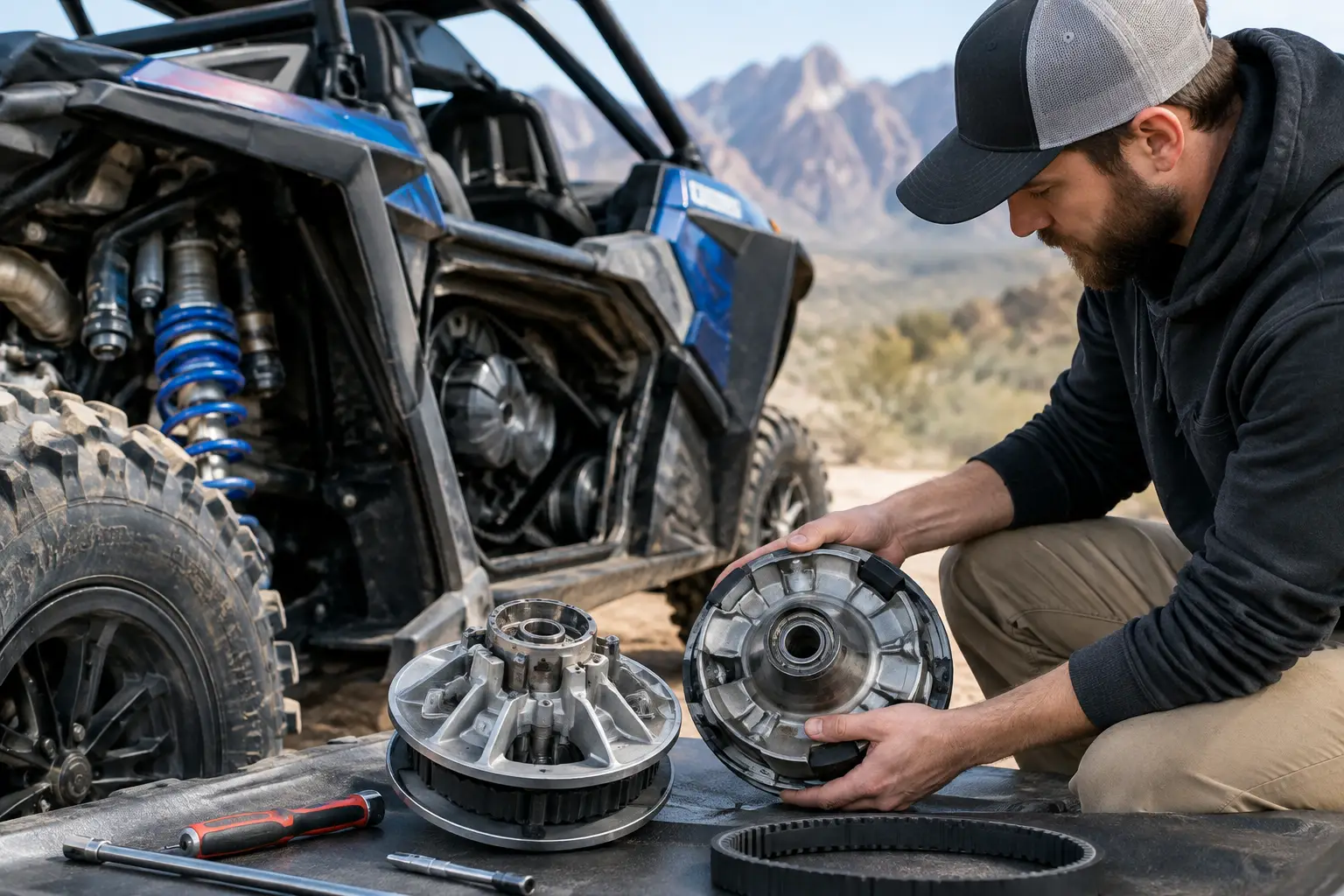
Your RZR can have plenty of horsepower and still feel flat, lazy, or hard on belts if the clutch calibration does not match how you ride. This Polaris RZR clutch tuning guide focuses on the parts that determine real-world performance: engine RPM, belt grip, tire size, elevation, load, and terrain.
Clutch tuning is not about chasing the highest RPM number or installing the stiffest spring available. It is about keeping the engine in its effective power range while allowing the belt to shift smoothly and hold ratio under load. A well-matched setup pulls harder out of corners, responds better in technical terrain, controls heat more effectively, and makes the machine feel like it should from the factory.
Start With the Problem, Not the Parts
Before changing clutch weights, springs, or helix angles, be clear about what the RZR is doing. A machine that feels weak on steep climbs may need a different calibration than one that over-revs in open desert. Belt smell, inconsistent engagement, bogging, high RPM with little forward drive, and poor low-speed control all point to different potential causes.
Also inspect the basics first. A worn belt, glazed clutch sheaves, damaged rollers, loose hardware, or a dirty clutch intake can make a correctly tuned system perform poorly. Check belt width against the service specification for your exact model, inspect both sheaves for heat spotting or grooves, and make sure the clutch housing airflow path is clear. Tuning around worn components wastes time and can shorten the life of new parts.
Know What Each Clutch Component Changes
Most Polaris RZR CVT clutch systems use a primary clutch on the engine and a secondary clutch on the transmission. The primary controls engagement and initial upshift behavior. The secondary manages belt tension, backshift, and how the system responds when load changes.
Primary weights set operating RPM
Clutch weights are one of the most common tuning changes. In general, heavier weights tend to pull engine RPM down because they force the primary clutch to shift sooner. Lighter weights let the engine rev higher before and during upshift.
That makes lighter weights useful when larger tires, higher elevation, deep sand, or added cargo have pulled the engine below its intended power range. Heavier weights can help if the machine consistently over-revs under normal load. The correct choice depends on the engine, clutch kit design, and riding conditions, so do not assume that lighter is always faster.
Adjustable weights give experienced riders more room to fine-tune. They can be especially useful for a RZR that sees different seasons or terrain, such as trail riding at home and high-elevation trips in the mountains. Make one measured change at a time and record the result.
Primary springs affect engagement and shift feel
The primary spring influences engagement RPM and resistance to upshift. A spring with a higher engagement rate can make the RZR feel more responsive off idle, which is useful in technical trails, dunes, or situations where quick throttle response matters.
There is a trade-off. Higher engagement can feel abrupt during slow trail riding, backing trailers, or maneuvering around camp. It may also add unnecessary heat if the machine spends long periods creeping at partial throttle. For ranch work, hunting access, and tight wooded trails, smooth and predictable engagement is often more valuable than a hard launch.
Helix and secondary springs control load handling
The secondary helix and spring have a major effect on backshift. Backshift is the clutch system’s ability to downshift when the RZR hits a hill, enters deep mud, or takes on a sudden load. A setup with stronger backshift helps the engine recover RPM instead of staying in too tall a ratio.
A more aggressive helix profile or secondary spring can improve pulling power on climbs and in soft terrain. It can also raise belt temperature if the calibration is too aggressive for the way the vehicle is used. The goal is not maximum tension. It is enough belt squeeze and backshift to prevent slip without making the system run hot or feel overly busy on the trail.
Match the Tune to Your RZR Setup
The factory clutch calibration is designed around stock tire size, typical elevation, and a general mix of riding. Once those variables change, the factory setup may no longer be the best fit.
Larger and heavier tires are one of the biggest reasons to consider clutch tuning. Moving from a stock-size tire to a 32-inch or 35-inch tire increases rotating mass and effective gearing. The RZR may feel slower leaving corners, lose RPM on hills, and work the belt harder. A properly matched clutch kit can restore response and help maintain the RPM the engine needs to make power.
Elevation matters for the same reason. As elevation increases, air density drops and naturally aspirated engines lose power. Turbo models are less affected, but they are not immune to changes in load, temperature, and calibration. If your RZR runs perfectly at low elevation but feels lazy on mountain trails, weight changes or an elevation-specific clutch setup may be the answer.
Think about how the machine is actually used. A desert RZR built around fast, wide-open runs needs a different feel than a trail machine running 30-inch tires, a roof, doors, recovery gear, and two adults. Mud riding, sand, rock crawling, plowing, and hauling all put their own demand on the belt and clutch system.
How to Tune Without Guessing
A quality clutch kit should be selected by exact RZR model, engine, model year, tire size, elevation range, and riding style. Those details are not marketing filler. Polaris has used different clutch components and calibrations across RZR platforms, and a part that fits physically may not deliver the correct performance.
Start with a baseline ride after confirming belt condition and clutch health. On a repeatable stretch of terrain, pay attention to engagement feel, peak RPM under full throttle, RPM on a sustained climb, and whether the vehicle backshifts when you roll into the throttle from a lower speed. If possible, use a reliable tachometer reading rather than judging solely by sound.
Install the recommended calibration as a complete system when the kit is designed that way. Mixing springs, weights, and helix components from unrelated setups makes troubleshooting harder. After installation, break in a new belt according to the belt manufacturer’s recommendation, then repeat the same test route.
If adjustment is needed, change one variable at a time. For example, adjust weight mass before changing both weights and springs. This makes the result clear and prevents a good change from being hidden by a bad one. Keep notes on temperature, altitude, tire pressure, passenger or cargo load, and the exact hardware installed.
Belt Heat Is a Useful Warning Sign
Belt heat is normal to a point. Excessive heat is not. A hot belt can come from aggressive riding, but it can also reveal clutch slip, poor alignment, incorrect belt deflection, restricted airflow, or a calibration that does not match the machine’s load.
If you notice repeated belt odor, a burned appearance, excessive dust, or rapid wear, stop treating belts as the problem. Inspect the clutch system. A replacement belt may temporarily mask the issue, but the next belt will suffer the same fate if the underlying setup is wrong.
For riders adding big tires, lift-related drivetrain changes, heavy accessories, or extra cargo, clutch ventilation and a dependable belt are practical supporting upgrades. They do not replace proper calibration, but they help the system survive hard use once the tune is right.
When a Clutch Kit Makes Sense
A clutch kit is most worthwhile when the RZR has moved beyond its stock operating conditions. Larger tires, regular high-elevation riding, deep sand, hard towing, and heavily loaded trail machines are all strong candidates. It can also be a smart upgrade for riders who want better throttle response and more controlled backshift without adding engine power.
For a bone-stock RZR that runs at normal elevation and sees casual trail use, service may be more valuable than tuning. A fresh correct-spec belt, clean sheaves, and a proper inspection can restore performance that feels like a clutch problem.
When selecting model-specific clutch components, verify the vehicle year, trim, engine, primary and secondary clutch configuration, tire size, and normal elevation. Side By Side Sports can help narrow the options when your machine has a mix of performance and utility upgrades.
The best clutch tune is the one that makes your RZR predictable under the conditions you actually ride. Build around your terrain and load, watch belt condition closely, and let measured testing guide the final adjustment.