
Best UTV Waterproof Speakers for Real Trail Use
Posted by Drew Cummings on Sep 14th 2026
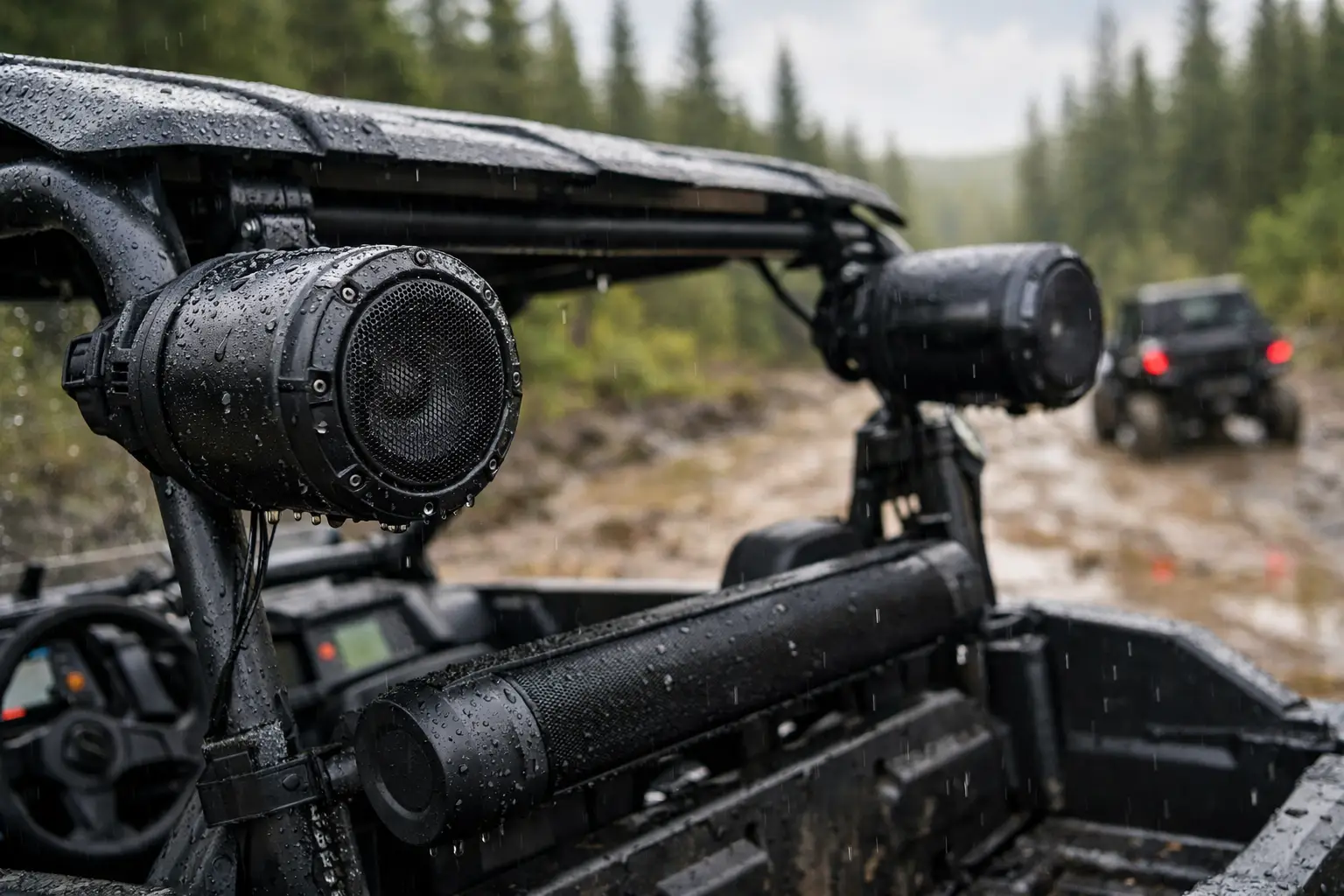
A speaker that sounds great in the garage can become a rattle-filled disappointment after one muddy ride, a creek crossing, and several miles of washboard trail. The best UTV waterproof speakers are built for the conditions your machine actually sees: vibration, dust, rain, direct sun, mud, and engine noise. Choosing the right setup starts with more than wattage. You need the right weather rating, mounting style, power source, and fit for the way you use your side-by-side.
What Makes a UTV Speaker Truly Waterproof?
“Waterproof” gets used loosely in powersports audio. Some speakers can handle a light shower, while others are sealed well enough for repeated exposure to rain, splashing, and washdowns. Look past the marketing language and check the IP rating.
An IPX5-rated speaker is designed to withstand water jets from different directions. That is generally a solid starting point for trail riders who get caught in rain and occasionally hose off their UTV. IPX6 provides stronger protection against powerful water jets. For riders who regularly run mud, cross water, or leave their machine outside, an IP67 rating is the safer target. IP67 equipment is protected from dust and can handle temporary immersion in water under specified conditions.
The rating is only one part of the picture. Marine-grade hardware, sealed connectors, corrosion-resistant terminals, UV-resistant housings, and rubberized controls matter just as much over time. A speaker may survive water but still fail early if its metal hardware rusts or its wiring connections are left exposed.
Best UTV Waterproof Speakers Depend on Your Riding Style
There is no single speaker package that is right for every Polaris RZR, Can-Am Maverick, Yamaha Wolverine, Kawasaki Teryx, Honda Pioneer, or work-focused UTV. The best choice depends on where you ride, how loud you want it, and how much space you can dedicate to audio equipment.
For trail riding and weekend recreation, powered soundbars are often the most practical route. A soundbar mounts high on the roll cage, keeps the cabin clear, and typically combines speakers, an amplifier, Bluetooth control, and weather protection in one unit. This is a clean option for riders who want reliable music without building a multi-component system.
For loud group rides, separate wakeboard-style tower speakers paired with an amplifier provide more output and better projection. These systems can cut through helmet noise and open-cab wind better than compact soundbars. The trade-off is added wiring, more current draw, and more attention needed during installation.
For ranch work, hunting, and utility use, a modest Bluetooth soundbar or compact pair of pod speakers may be all you need. A lower-profile system keeps conversation, radio communication, and awareness of the surroundings from getting buried under unnecessary volume. It also puts less demand on the battery during long days of slow-speed work.
Choose the Right Speaker Style for Your Cage
Mounting is where many audio purchases go wrong. Before ordering, measure your roll cage tubing and identify the open mounting area. Common UTV cage diameters include 1.5, 1.75, and 2 inches, but they vary by machine, trim level, and installed accessories.
A roof, windshield, rear-view mirror, light bar, and rear cargo rack can all compete for the same space. On some machines, an overhead soundbar fits neatly beneath the roof. On others, it may interfere with a rear roof panel or block part of the rearward view. Pod speakers can offer more placement flexibility, but they should be mounted where riders will not hit them with shoulders, helmets, or cargo.
Think about sound direction as well. Speakers pointed straight upward or into the back of the cab waste output. A forward-facing soundbar works well for most two-seat machines. Four-seat UTVs often benefit from rear speakers or a second zone so passengers in the back are not listening to distant music over tire noise.
Power Ratings: Ignore the Biggest Number First
Peak wattage is easy to advertise and not especially helpful when comparing speakers. RMS power is the number that better reflects the system’s continuous power handling and amplifier output. A speaker rated for 100 watts RMS needs an amplifier that can provide clean power in that range. Underpowering a speaker is not automatically safe if the amplifier is pushed into distortion.
For a simple soundbar, built-in amplification keeps the system straightforward. For separate speaker pods, an external amplifier delivers stronger output and usually better control at higher volume. If you are building a larger system with four speakers and a subwoofer, plan the electrical side before buying components.
Consider these practical power requirements before adding high-output audio:
- A dedicated fused power lead should run from the battery to the amplifier or powered audio unit.
- A relay or switched accessory connection helps prevent the system from draining the battery when the key is off.
- A stronger battery may be needed for long listening sessions, especially with lights, winches, heaters, or other accessories installed.
- Dual-battery systems are worthwhile for riders who camp, run extensive lighting, or use audio equipment with the engine off.
An amplifier that works fine during a 30-minute ride may expose weak battery capacity during an all-day hunt camp or an evening ride with lights on. Build for your normal use, not just the first test run in the driveway.
Sound Quality Matters More Than Raw Volume
UTVs are loud environments. Tire hum, drivetrain noise, wind, helmets, and other machines all compete with your audio system. That does not mean you should buy the loudest equipment available. It means you need clean volume, secure mounting, and components designed to perform outside.
Larger speakers generally move more air and produce fuller sound, particularly in the midrange. A 6.5-inch speaker pod often gives a better all-around result than a small compact pod when there is room to mount it. Horn-loaded speakers project well at speed and can be a good fit for group rides, although they may be too aggressive for riders who prefer balanced sound at moderate volume.
If bass is a priority, a dedicated subwoofer is the real solution. Expecting small cage speakers to create deep bass in an open cab leads to disappointment. A compact, weather-resistant subwoofer enclosure can add the low end that speaker pods cannot produce, but it takes cargo space and adds significant power demand.
Also pay attention to controls. Bluetooth is standard on many systems, but physical volume buttons, a wired remote, or a handlebar-mounted controller are valuable when wearing gloves. Phone-only controls look clean until your phone is tucked away, wet, or out of battery.
Protect the Wiring as Carefully as the Speakers
A premium waterproof speaker package can still fail because of poor wiring. Route power and signal wires away from sharp edges, exhaust heat, moving suspension parts, and steering components. Use loom where wiring passes through or near metal brackets, and secure it with clamps or quality zip ties at regular intervals.
Every connection exposed to water deserves attention. Heat-shrink connectors, dielectric grease, and weatherproof fuse holders help prevent corrosion that can create intermittent audio problems weeks after installation. Leave enough service slack for roof removal or future maintenance, but do not leave loose loops that can snag brush or rub against the cage.
Do not rely on a thin factory accessory lead to power a high-output amplifier. A dedicated, properly fused battery connection is the correct approach. If you are uncertain about wire size, fuse selection, or switched-power wiring, get support before installation. The right answer depends on the amplifier draw, cable length, and total system load.
Fitment Comes Before Features
A speaker system can be marine-grade, loud, and loaded with Bluetooth features yet still be the wrong purchase if it does not fit your UTV’s cage or accessory layout. Shop by make, model, and year whenever possible, then verify cage dimensions and mounting clearance before ordering.
Model-specific mounts and audio enclosures make a noticeable difference. They reduce fabrication, improve the finished look, and help keep speakers secure when the trail gets rough. This is especially valuable on machines with factory roofs, windshields, doors, and rear panels that limit universal mounting locations.
At Side By Side Sports, the practical starting point is matching the audio upgrade to your exact machine and use case. A compact waterproof soundbar may be the right answer for a Honda Pioneer used around the property, while a multi-speaker amplified system makes more sense for a Can-Am Maverick or Polaris RZR built for high-speed trail weekends.
The best setup is the one that stays dry, stays mounted, and delivers clear sound after the ride stops being smooth. Choose weather protection you can trust, mount it where it will not interfere with the cab, and give it enough clean power to do its job. Then turn it on, point the UTV toward the trail, and let the machine handle the rest.