
10 UTV Underseat Storage Ideas That Work
Posted by Drew Cummings on Nov 16th 2026
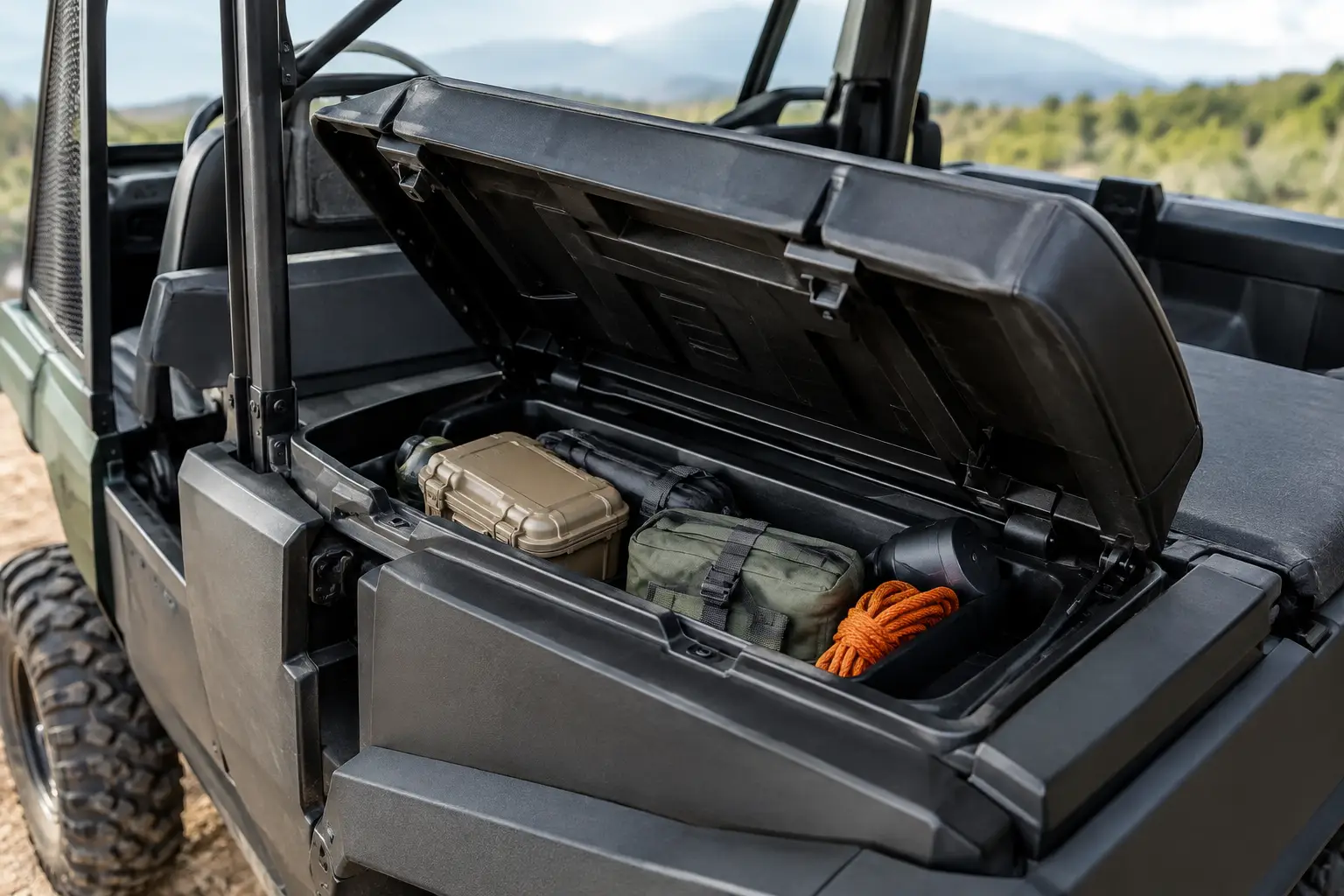
A loose recovery strap under the seat might not seem like a problem until it tangles in a seat latch, holds moisture against wiring, or disappears when you need it most. The best UTV underseat storage ideas turn unused space into secure, accessible cargo room without interfering with the components your machine depends on.
Underseat space varies widely between a Polaris Ranger, Can-Am Defender, Kawasaki Mule, Honda Pioneer, Yamaha Wolverine, and sport-focused side-by-sides. Before buying a box or building a tray, look below the seat and identify what is already there. Batteries, fuse blocks, air ducts, fuel-system components, wiring harnesses, drain channels, and seat-latch hardware all need clearance. A storage setup that looks clean but creates heat, moisture, or service problems is not an upgrade.
Start With the Space Your UTV Actually Has
The first rule is fitment. Some machines have a shallow open cavity that works well for a low-profile tray. Others have factory compartments, removable access panels, or almost no usable volume once essential components are accounted for. Measure width, depth, and height with the seat fully installed, not just removed. Also check whether the seat base flexes or contacts the storage item on rough terrain.
Think about access before capacity. Tools you use regularly should be reachable by lifting one seat or opening a dedicated lid. Spare parts, emergency supplies, and seasonal gear can sit deeper in the compartment. If accessing an item means unloading the cab, removing a seat, and digging through loose gear, it will probably stay there when you need it.
For riders who work their machine hard, a model-specific storage system is usually the cleanest option. It protects usable space, avoids guesswork around mounting points, and makes routine service easier. Universal storage can work, but it requires more careful measuring and secure mounting.
UTV Underseat Storage Ideas for Real-World Use
Use sealed utility boxes for wet and dusty conditions
A compact, gasketed utility box is one of the most dependable solutions for underseat storage. It keeps dust, mud, and splash away from gear that should stay dry, such as a tire repair kit, electrical connectors, a small first-aid kit, gloves, and a compact flashlight. Choose a box with a positive latch and a low enough profile that it cannot rub the bottom of the seat.
A hard box is better than a soft bag when the compartment is exposed to tire spray, wash-down water, or fine trail dust. The trade-off is that rigid boxes consume fixed space. If your underseat area is irregular or shallow, a structured waterproof pouch may use the space more efficiently.
Build a dedicated recovery kit
Recovery gear is heavy, dirty, and often needed without warning, which makes it a good candidate for underseat storage. A compact kit can include a soft shackle, recovery strap, snatch block, gloves, tire plug kit, valve-core tool, and a small air hose if your machine has an onboard compressor.
Keep metal recovery hardware from rattling loose. Wrap it in a heavy pouch or place it in a divided box. Do not store a wet strap in a sealed container for weeks after a muddy ride. Dry it first, then repack it. A mildew-smelling strap is not something you want to discover on a cold hunting morning.
Keep trail tools in a roll, not a loose toolbox
A full-size toolbox rarely makes sense under a UTV seat. It is bulky, noisy, and difficult to open in a tight compartment. A tool roll holds the essentials flat and keeps every wrench, socket, and driver visible when you unfold it.
Build the roll around your specific machine. Include the socket sizes used on wheel lugs and common fasteners, a multi-bit driver, pliers, a compact adjustable wrench, zip ties, electrical tape, fuses, and a small knife. Add a belt or strap around the roll so it cannot spread open over rough terrain.
Create a hunting and ranch-work compartment
Utility riders often need small items close by but out of sight: game bags, field dressing gloves, flagging tape, a headlamp, gate-chain hardware, fence repair supplies, or spare hitch pins. Underseat storage keeps those items out of the weather without using valuable bed space.
Separate clean supplies from greasy shop supplies. A simple two-pouch arrangement works well: one pouch for medical, hunting, or personal items and another for repair gear. Brightly colored pouches help distinguish them in low light, especially when several people use the same side-by-side.
Add a removable divider tray
If your underseat cavity is open and reasonably square, a removable divider tray can prevent small gear from becoming a pile. Use a tray that lifts out easily so you can inspect the area below it. This matters if the compartment gives access to wiring, the battery, or service points.
Avoid permanent installations that block inspection covers. A tray should organize gear, not turn basic maintenance into a project. If you have to remove screws and brackets just to check a fuse, the design needs work.
Store a compact emergency kit
An emergency kit under the seat should be protected, labeled, and easy to remove. This is the right place for a first-aid kit, emergency blanket, fire extinguisher rated for vehicle use, signal light, basic medication, and a laminated contact card for your riding group or property.
A fire extinguisher deserves special attention. It must be mounted so it cannot become a projectile in a rollover or hard impact, and it must remain accessible. If your underseat location requires removing the seat before you can reach it, consider placing the extinguisher elsewhere and reserving underseat storage for the rest of the emergency gear.
Use soft pouches for odd-shaped cavities
Many UTV underseat areas are not clean rectangles. There may be braces, wiring looms, or contours that make a hard case waste space. A tough zippered pouch with internal pockets can fit around those shapes while keeping supplies organized.
Choose abrasion-resistant material and heavy zipper pulls you can use with gloves on. Soft storage is quieter than plastic boxes and less likely to squeak, but it offers less crush protection. Put fragile items in a smaller hard case inside the pouch if needed.
What Not to Store Under the Seat
Underseat storage is not the right place for every item. Avoid storing loose fuel containers, aerosol cans, propane cylinders, wet clothing, or anything that can leak, corrode, or create fumes. Electronics and batteries also need thought. A power bank or radio battery may be fine in a dry, insulated compartment, but not next to high heat, bare terminals, or a battery that vents gas.
Be cautious around factory wiring. Do not pinch harnesses under a storage box, drill into unknown areas, or use zip ties so tightly that they chafe insulation. Leave room around cooling paths and do not block drain holes. On machines with underseat batteries, keep conductive tools and metal parts in insulated containers.
Weight matters too. A few pounds of tools and emergency gear will not change much, but a packed steel box full of hardware can. Keep the heaviest items low and centered when possible, and secure everything so it cannot shift on off-camber trails.
Secure the Storage Before You Ride
A storage solution is only useful if it stays put. Test it on the roughest terrain you normally ride, not just around the driveway. Lift the seat repeatedly, operate all latches, check for rubbing, and listen for rattles. After the first few rides, inspect mounting straps, fasteners, and contact points for wear.
For permanent installs, use corrosion-resistant hardware and avoid self-tapping screws near critical components. Rubber isolators or foam edging can stop noise and protect plastic panels. For removable bags and boxes, use existing tie-down points or purpose-built straps instead of relying on friction alone.
Fitment-specific underseat storage accessories are worth considering when you want a cleaner installation and dependable access. Side By Side Sports can help narrow options by make, model, and intended use, whether the priority is ranch tools, recovery equipment, hunting supplies, or all-day trail essentials.
Set up the compartment for the job your UTV does most, then leave a little room for the job you did not plan for. That spare fuse, dry pair of gloves, or properly packed recovery strap can be the difference between a quick fix and a long walk back.