
UTV Storage Solutions That Actually Work
Posted by Drew Cummings on Jun 16th 2026
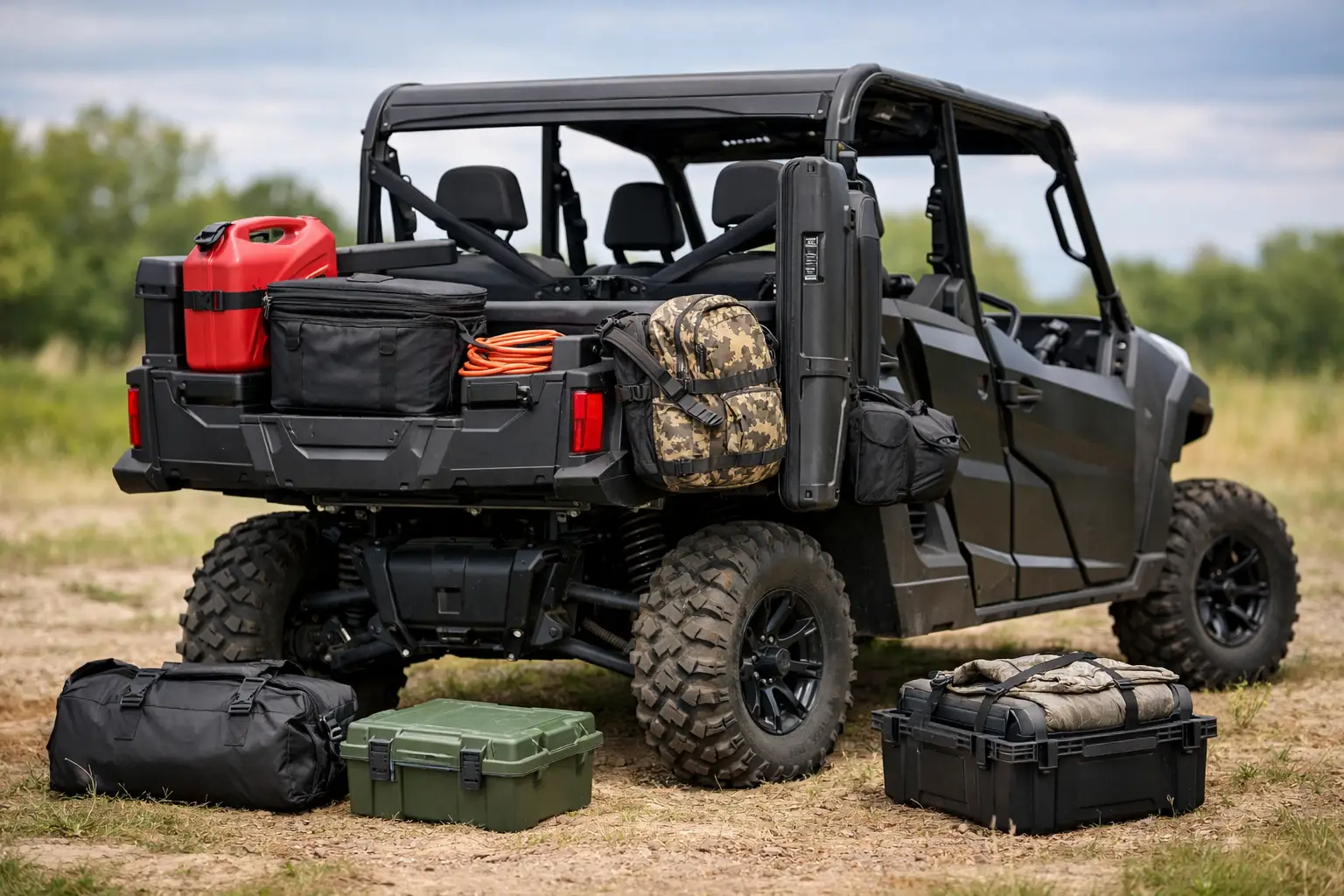
You notice bad storage the first time a tool bag slides across the bed, a rifle case won’t sit where it should, or your rain gear comes out soaked after an easy trail day. Good utv storage solutions fix that fast, but the right setup depends on how you use the machine, how much weather protection you have, and what your bed and cab layout will actually support.
A hunting rig, a ranch machine, and a weekend trail build do not need the same cargo plan. That is where a lot of buyers waste money. They buy generic bags or universal boxes, then fight fitment, rattling mounts, blocked access to the dump bed, or storage that eats up passenger space. The smarter move is to build storage around your UTV’s platform and the jobs it handles most often.
How to choose UTV storage solutions
The best place to start is with cargo type, not just cargo volume. Loose recovery gear, hand tools, chains, tow straps, first aid kits, and spare clothes all behave differently on the trail. Some items need fast access. Some need weather resistance. Some need to stay locked down and out of sight.
If you mostly carry work gear, rigid toolboxes and bed-mounted cargo boxes usually make more sense than soft bags. They protect contents better, keep sharp or heavy items from shifting, and hold up well to repeated loading. The trade-off is space efficiency. Hard storage is less forgiving when you need to haul feed, fencing supplies, firewood, or larger cargo.
If your machine sees mixed use, soft storage can be the better fit. Bed bags, overhead bags, and cab organizers use dead space well and are easier to live with on recreation-focused builds. They also weigh less and are easier to remove when you want the bed clear. The downside is security and long-term abuse. A quality bag can be highly durable, but it is still not the right answer for every worksite or every season.
Weather matters too. If your UTV has a full cab, windshield, and roof, cab storage becomes much more useful. Without that protection, anything mounted in the cab area still needs to handle dust, mud, and sudden rain. Even “water-resistant” storage should not be treated like a sealed dry box unless the product is built for that purpose.
Bed storage vs cab storage
Most riders end up using a mix of both. Bed storage is best for heavier cargo, larger tools, recovery gear, and items you do not need every few minutes. Cab storage is best for smaller essentials you want within reach, such as gloves, phones, maps, flashlights, tags, snacks, and communication gear.
Bed-mounted boxes are a strong choice for utility riders because they keep the load low and secure. On many machines, they can be matched to the contours of the cargo bed so they do not waste odd-shaped space. The key question is whether the box still allows easy access to the bed and whether it interferes with dump-bed function. That is not a small detail. A storage box that looks right in a product photo can become a daily annoyance if it blocks the way you actually use the machine.
Cab storage works best when it is vehicle-specific and mounted with intent. Under-seat bags, center console organizers, door bags, and overhead storage can clean up a cluttered interior fast. They also help keep high-use gear from getting buried under larger bed cargo. But cab storage needs restraint. Overloading the cabin with pouches and bags can cut into legroom, visibility, and passenger comfort, especially on narrower sport models.
When bed bags make more sense
Bed bags are one of the most practical utv storage solutions for riders who need flexibility. They work well for extra layers, tow straps, hand tools, boots, and trail supplies. They are especially useful if you alternate between cargo-hauling and recreation because you can often remove them without much hassle.
What matters most is attachment design and shape retention. A bag that sags into the bed or shifts under load becomes frustrating quickly. Look for reinforced panels, strong zippers, and mounting points that match the bed layout of your machine. Dust resistance is just as important as water resistance for many riders, particularly in dry climates or on long trail systems.
When hard boxes are the better call
Hard boxes are usually the right move for ranch work, hunting setups, and machines that carry expensive or sensitive gear. They provide structure, better protection from impact, and usually better long-term organization. They are also easier to clean out after a muddy weekend or a full season of hard use.
The trade-off is that hard boxes lock you into a footprint. If your machine regularly carries awkward cargo, cooler-sized loads, or bulky equipment, make sure the box does not consume the exact space you need most. A good hard box should improve cargo management, not turn your bed into a puzzle.
Storage by use case
A lot of storage decisions get easier when you stop shopping by category and start shopping by use. That is how experienced owners usually build a machine.
For trail riding, the priority is secure access to essentials without overloading the vehicle. A combination of cab organizers and one rear bag or compact bed box often covers the basics. You want tools, a tow strap, water, and first-aid gear on board, but you also want the machine to stay balanced and easy to clean.
For hunting, protection and quiet matter more. Soft storage that flaps, rattles, or collects moisture can become a problem quickly. Bed boxes, rear cargo bags with solid mounting, and purpose-built gun or bow storage tend to work better when the machine is part transport and part gear platform.
For ranch and farm work, speed and repetition matter. You are getting in and out all day, grabbing tools constantly, and often carrying mixed loads. That usually favors hard storage in the bed, plus a smaller organizer in the cab for gloves, hardware, and handheld items. Easy access beats elaborate organization every time.
For overlanding or long-distance rides, layered storage is usually best. Recovery gear, tools, spare belts, and repair supplies need dedicated space. Personal items and food need separation. In that case, combining a fitted cargo box with interior storage and possibly a rack system gives you better load management than one oversized container.
Fitment matters more than capacity numbers
Storage dimensions on a spec sheet only tell part of the story. Bed shape, roll cage design, seat layout, and accessory interference all matter. A storage solution may technically fit your machine but still conflict with a spare tire mount, cooler rack, rear windshield, speaker pods, or seat travel.
That is why model-specific storage usually pays off. It uses available space better, mounts more securely, and tends to look and function like part of the machine rather than an afterthought. It also reduces the guesswork around installation. For buyers who want the right part the first time, that matters as much as cargo capacity.
This is especially true on popular platforms from Polaris, Can-Am, Yamaha, Kawasaki, and Honda, where bed design and cab layout can vary a lot between sport, utility, and crew models. A two-seat trail machine and a six-seat utility build may share a brand name, but they do not shop the same way.
Materials, mounts, and real durability
Not all storage fails in obvious ways. Sometimes the fabric is fine, but the zipper gives out. Sometimes the box is sturdy, but the latch fills with dust. Sometimes the mount works loose after repeated vibration. When you are comparing options, focus on the hardware as much as the container itself.
For soft storage, pay attention to zipper quality, seam construction, reinforced corners, and whether the bag keeps its shape under load. For hard storage, check latch design, wall thickness, hinge quality, and whether the mounting hardware is built for repeated off-road vibration.
Also think about how often you remove the storage. Some riders want a permanent setup. Others want to strip the machine down for a different season or task. Quick removal sounds great until you realize the mounts are less secure than a fixed system. Again, it depends on use.
A smarter way to build your setup
The best storage system usually is not one big product. It is a combination that matches your riding pattern. A bed box for heavy gear, a cab organizer for daily essentials, and one weather-resistant bag for overflow often works better than trying to force everything into a single compartment.
Start with the gear that must always stay on the machine. Recovery equipment, tools, medical supplies, and weather layers usually belong there first. Then add storage for mission-specific gear like hunting equipment, fencing tools, lunch, or overnight supplies. That approach keeps the machine useful day to day instead of optimized for one trip a month.
If you are shopping for fitment-specific upgrades, Side By Side Sports makes this process easier by organizing storage the way real owners shop - by make, model, and use case. That matters when you want less trial and error and more confidence that the setup will work once it is mounted.
A good storage setup should make your UTV feel more capable, not more crowded. If every item has a place, the cab stays cleaner, the bed works harder, and your gear is ready when the trail, jobsite, or property tells you it is time to use it.