
UTV Front Bumper With Winch Mount Guide
Posted by Drew Cummings on Jun 12th 2026
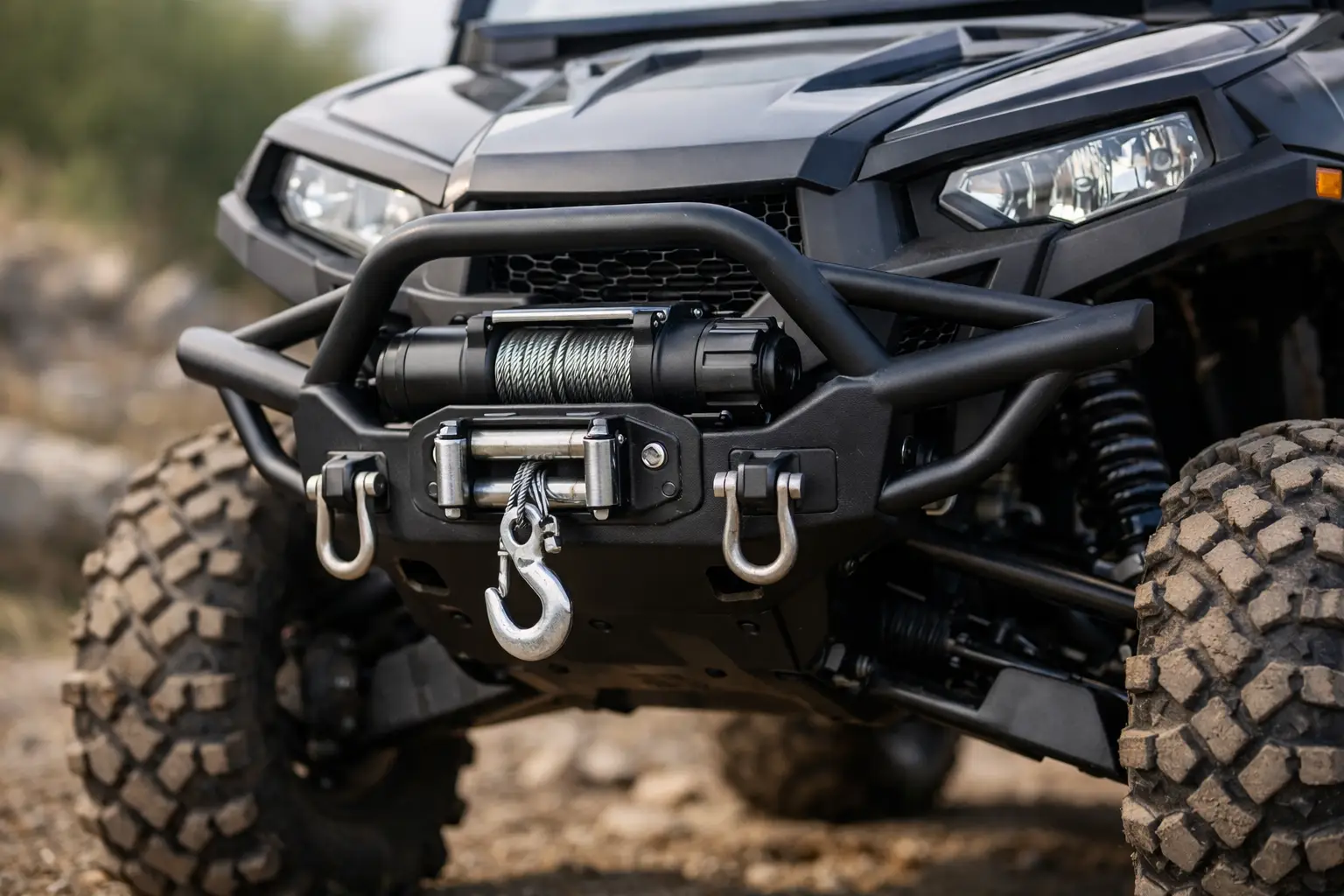
A bent factory nose and a winch hanging on a flimsy plate usually tell the same story - the machine was asked to do more than the stock front end was built for. A UTV front bumper with winch mount fixes that weak point in one upgrade, giving you better front-end protection and a more secure place to install recovery gear that actually gets used.
For a lot of riders, this upgrade is not about looks first. It is about protecting the grille, headlights, and bodywork when the trail gets tight, the ranch gate gets crowded, or the worksite turns rough. It is also about making sure your winch is mounted where it can handle real pulling force without twisting brackets, interfering with body panels, or creating a headache the next time you need to service the machine.
Why a UTV front bumper with winch mount matters
The best reason to add a front bumper with an integrated winch mount is simple: it puts protection and recovery in the same place, built around the way a UTV is actually used. You are reinforcing the front of the machine while creating a solid mounting point for one of the most practical accessories you can own.
That matters on trail rides when you drop into a washout and need to pull out cleanly. It matters during hunting season when the ground is slick and the trail is rutted. It matters on a farm or property when you are dragging brush, moving equipment, or clearing a path after a storm. In all of those situations, a properly designed front bumper does more than absorb contact. It supports the loads created by winching and helps keep the front end of your UTV working the way it should.
There is also a fitment advantage. A bumper engineered for a specific Polaris, Can-Am, Yamaha, Kawasaki, or Honda model is usually designed around frame mounting points, body lines, and winch access. That is a big step up from trying to mix a universal mount with a separate bumper and hoping everything lines up.
What to look for before you buy
Not every bumper-and-winch setup is built for the same kind of riding. The right choice depends on how you use your machine, how much front-end protection you need, and whether you want a clean integrated look or maximum coverage.
Fitment comes first
Fitment is where smart buyers start. A UTV front bumper with winch mount should match your exact make and model, and ideally your year range and trim if there are front-end differences. The right fit affects more than installation. It determines whether the bumper clears the bodywork, works with factory or aftermarket skid plates, and keeps the winch fairlead in the correct position.
A model-specific part also reduces surprises with grille access, radiator airflow, and headlight clearance. If you use your UTV hard, those details matter. The cleaner the fit, the less likely you are to deal with rubbing, rattling, or awkward winch cable angles.
Mounting strength matters more than style
Some bumpers look aggressive but do not add much structural value. Others are built with stronger tubing, better plate thickness, and mounting systems that spread impact and pulling forces into the chassis more effectively. If you plan to use your winch regularly, pay close attention to how the winch mount is integrated into the bumper and how the bumper itself attaches to the machine.
A good setup should feel like part of the vehicle, not an accessory hanging off the front. Recovery loads are real loads. If the bumper flexes too much or the winch plate is underbuilt, you are creating a weak link right where you need confidence.
Coverage should match your riding
There is always a trade-off between compact design and full protection. A low-profile bumper can preserve a sporty look, keep weight down, and still guard the center front end. A larger bumper may protect more of the grille, headlights, and corners, which is a better fit for woods riding, property work, and machines that regularly see brush, stumps, or livestock areas.
Neither approach is automatically better. If your UTV spends most of its life on open trails, moderate protection may be enough. If you are squeezing through timber or working around obstacles, more coverage is often worth the added bulk.
Winch compatibility is where buyers get tripped up
A bumper may say it has a winch mount, but that does not mean it works with every winch size or every fairlead setup. This is one of the most common places where shoppers lose time.
Check winch capacity and bolt pattern
Most UTV owners are looking at common winch sizes in the 3,000 to 6,000-pound range, depending on machine size and use. The bumper needs to support the bolt pattern and physical dimensions of the winch you plan to run. It also needs to position the fairlead properly so the rope or cable feeds straight without chafing the bumper.
If you already own a winch, confirm compatibility before you order. If you are buying both at the same time, it is easier to build a matched setup from the start.
Think about access after installation
A clean install is great, but not if it blocks access to the clutch lever, electrical connections, or mounting hardware. Some integrated designs tuck the winch up high and protected, which is excellent for ground clearance and front-end appearance. The trade-off is that service access can get tighter.
If you ride in mud, water, snow, or heavy dust, that access matters even more. Maintenance is easier when you can reach key components without removing half the front end.
Material, finish, and long-term durability
Most quality bumpers in this category are built from steel, and for good reason. Steel delivers the strength needed for impact resistance and winch support. The details that separate one bumper from another are usually tubing design, weld quality, plate thickness, and finish.
Powder coating is standard, but the quality of prep and coating makes a big difference over time. Off-road machines get blasted by mud, rocks, road salt, and wash chemicals. A bumper with a poor finish may start showing wear quickly, especially around mounting points and high-contact areas.
That does not mean the heaviest bumper is always the right one. Added protection usually adds weight, and weight on the nose can affect steering feel and suspension behavior. On a work-focused machine, that may be a small concern. On a sportier trail setup, it is worth considering. The goal is enough protection and mounting strength without turning the front end into dead weight.
Installation: simple in theory, easier with the right expectations
A model-specific front bumper with winch mount is usually a straightforward install, but straightforward does not always mean fast. Front fascia pieces, factory hardware, skid plate alignment, and wiring routes can all affect the job.
If you are installing the bumper and winch together, plan the wiring before everything is bolted tight. It is much easier to route leads, mount a contactor, and check cable clearance while the front end is still open. You should also test fairlead alignment before final torque. Small positioning issues are easier to correct early than after the machine is buttoned back up.
For buyers who want to save time, this is where expert support really counts. Working with a UTV-focused retailer like Side By Side Sports can help you sort out fitment, winch compatibility, and model-specific questions before the boxes show up.
Which riders benefit most from this upgrade
This setup makes sense for more owners than people think. Trail riders benefit because front-end contact and recovery situations are common, even on casual rides. Hunters and overland-style riders benefit because self-recovery matters when you are far from the trailer. Property owners and ranch users benefit because a winch is one of the most practical tools on the machine, and protecting the front end at the same time is just smart.
If your UTV is mostly a light-use machine that stays on groomed paths and rarely sees recovery work, a separate bumper or even a lighter-duty setup may be enough. But once your machine starts seeing brush, mud, rocks, snow, towing tasks, or regular utility use, a combined bumper and winch mount becomes a very practical upgrade.
How to choose the right one for your machine
The fastest way to narrow it down is to shop by make and model first, then by use case. Start with exact vehicle fitment. After that, decide how much front-end coverage you want, what winch you plan to run, and whether you need room for other accessories like lights or plow mounts.
Then look closely at the build. Focus on mounting design, material quality, finish, and how the fairlead is positioned. If two options look similar, the better choice is usually the one that gives you cleaner fitment and stronger integration with the chassis, not just the one with the more aggressive shape.
The best upgrades are the ones you stop thinking about after installation because they just work. A well-chosen UTV front bumper with winch mount does exactly that - it protects the front of your machine, supports real recovery use, and gives you one less thing to worry about when the terrain stops being polite.