
How to Fix a Flat Tire Off-Road (UTV Guide to Avoid Getting Stranded)
Posted by Drew Cummings on Mar 18th 2026
In the grand tradition of off-roading, there’s one universal truth: you’re going to get a flat tire. Not “maybe,” not “someday,” but definitely—and usually at the worst possible moment.
Picture this: you’re miles from the trailer, your phone has one bar of “emergency calls only,” and the sky suddenly decides it’s monsoon season. Classic.
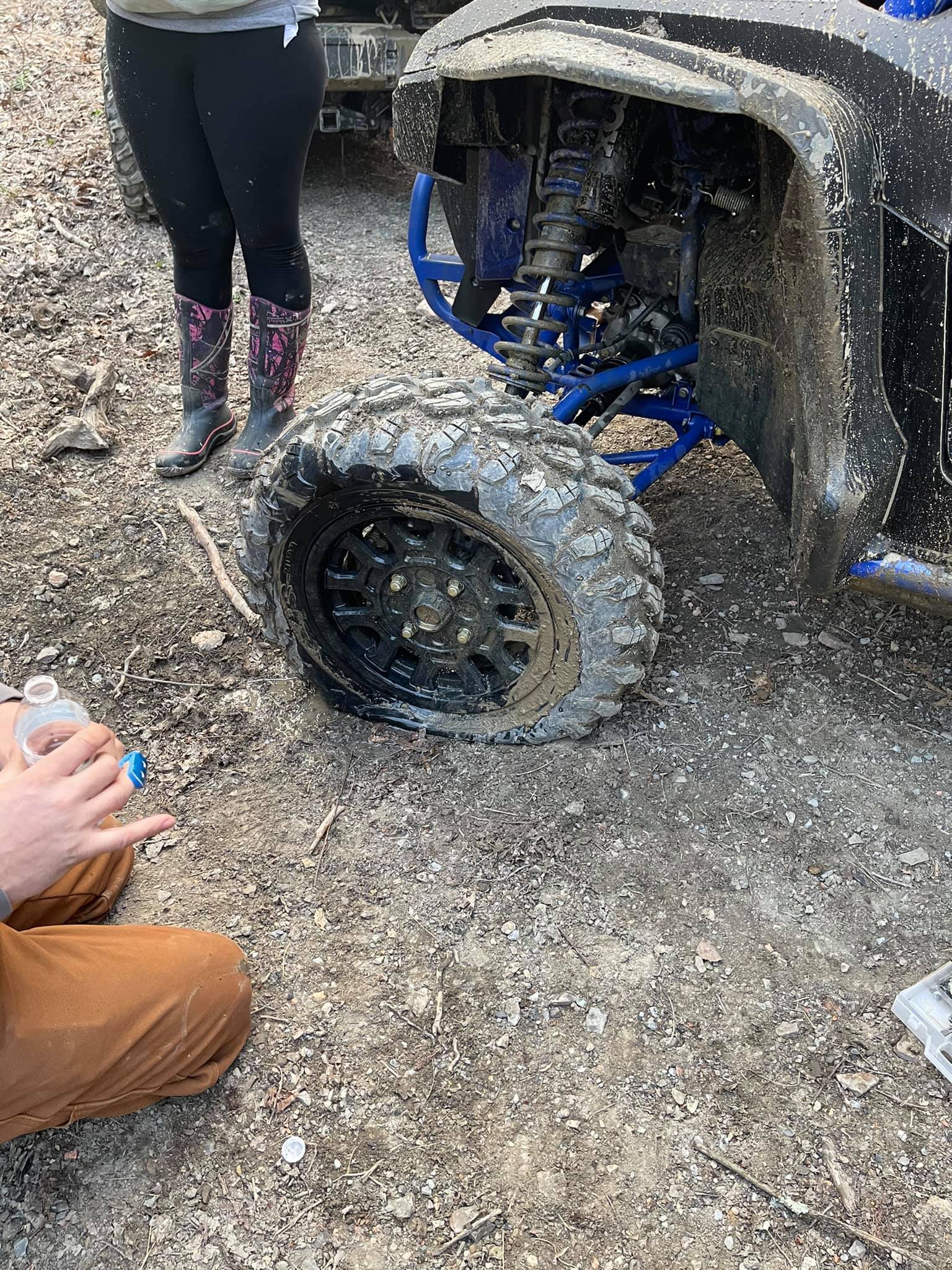
A flat tire can ruin the vibe faster than your buddy saying, “I think we missed the turn,” but it doesn’t have to end your adventure. With the right gear, a little know-how, and some patience, you can be back on the trail before your friends finish arguing about whose fault it was.
Let’s break down exactly how to handle a flat tire off-road—and how to be prepared before it ever happens.
Step 0: The “Why Does My Steering Feel Like a Shopping Cart?” Phase
Catching a flat early can be the difference between a quick $10 fix and a $1,000 mistake.
Warning Signs You Shouldn’t Ignore
-
Your UTV starts drifting to one side
-
Steering wheel vibration gets aggressive
-
Acceleration feels sluggish
-
You smell burning rubber
-
Your passenger suddenly becomes very alert
Golden Rule:
If you think you have a flat—stop immediately.
Driving on a flat can destroy your tire, bend your wheel, and damage suspension components fast.
Step 1: Don’t Be a Hero — Find Flat Ground
Trying to jack up a UTV on uneven terrain is asking for trouble.
-
Move slowly to a flat, stable area
-
Set your parking brake
-
Put the machine in gear if needed
-
Use rocks to block wheels if necessary
-
Have passengers step out
If flat ground isn’t available:
-
Use a winch to reposition
-
Carefully roll to a safer spot
Gravity always wins. Don’t fight it.
Step 2: Your Flat Tire Survival Kit
If you ride without tools, you’re not minimalist—you’re unprepared.
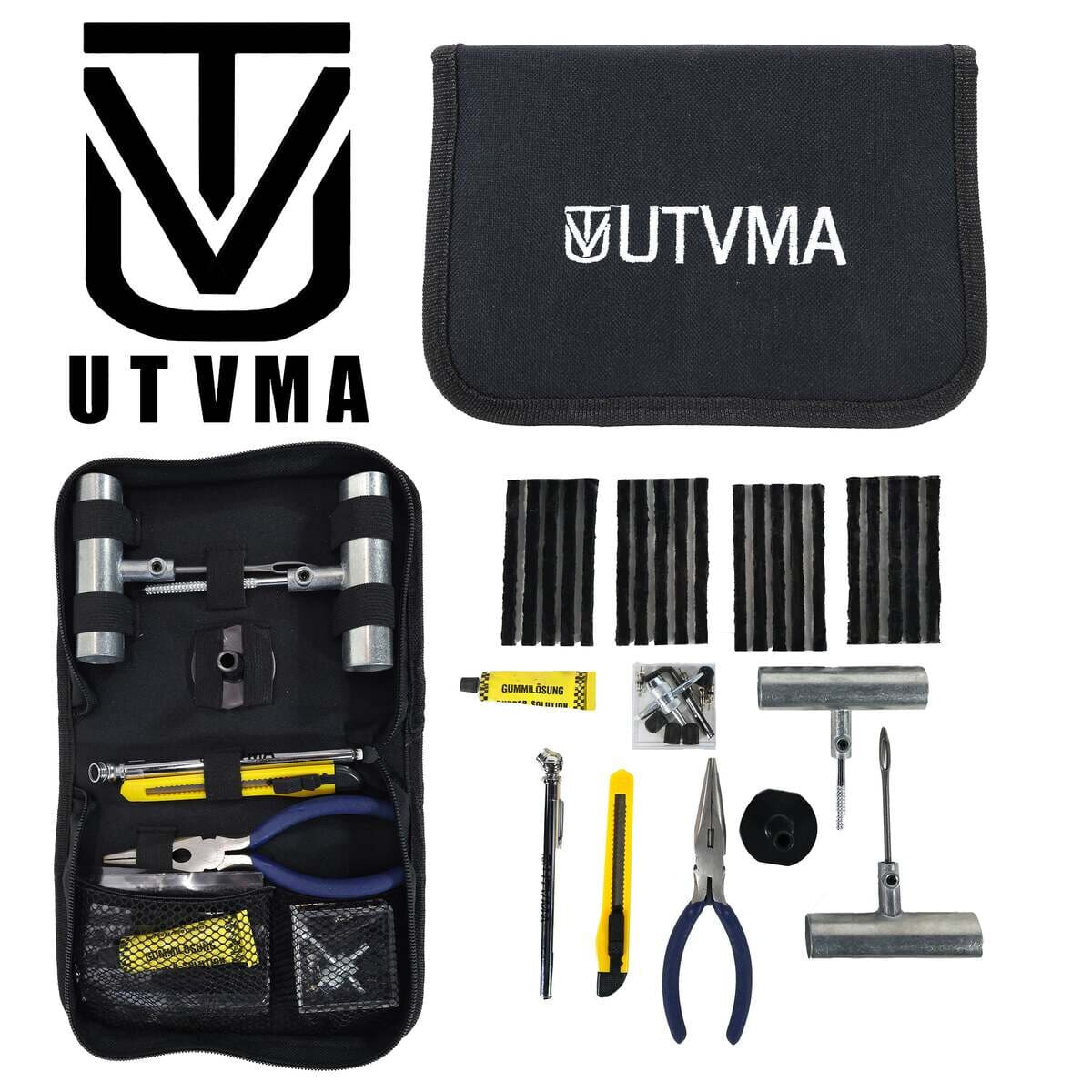
Must-Have Tire Repair Gear
-
Lug wrench or socket set
-
Tire irons (for tube tires)
Smart Add-Ons
-
Gloves
-
Extra drive belt
Reality check: Most trail fixes come down to what you brought with you.
Step 3: Plugging a Tire (The Fastest Trail Fix)
For most UTV and ATV tires (tubeless), plugging is your best option.
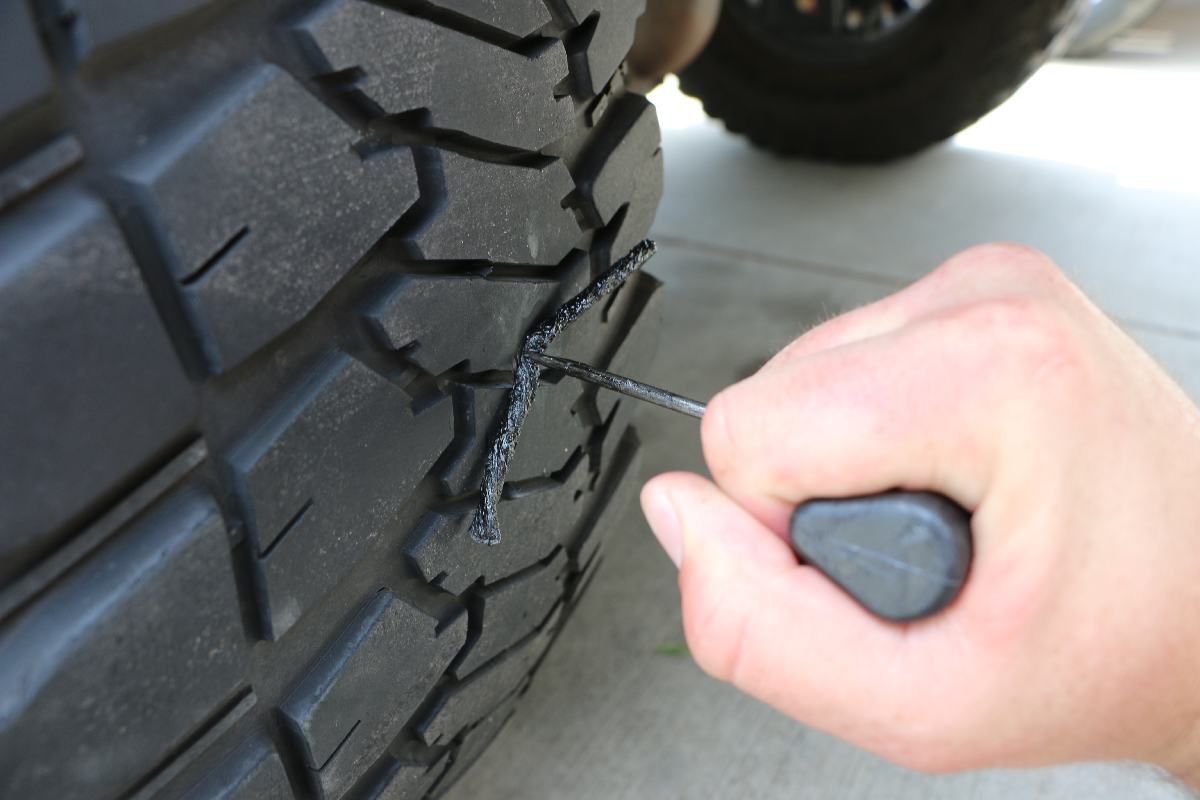
How to Plug a UTV Tire
-
Find the puncture (look and listen)
-
Remove debris (nail, screw, etc.)
-
Use the reaming tool to clean the hole
-
Insert plug with rubber cement
-
Leave about ¼–½ inch sticking out
-
Pull tool out quickly
-
Inflate tire and check for leaks
If you don’t hear air escaping—you’re back in business.
Tire plugs are one of the most effective off-road tire repair methods.
Important:
-
This is a temporary repair
-
Avoid high speeds after plugging
-
Repair properly once home
Step 4: When a Plug Won’t Cut It
If your tire has:
-
A large puncture
-
Sidewall damage
-
A tear or gash
…it’s time for Plan B.
Step 5: Changing to a Spare Tire
If you’re carrying a spare, now’s your moment.
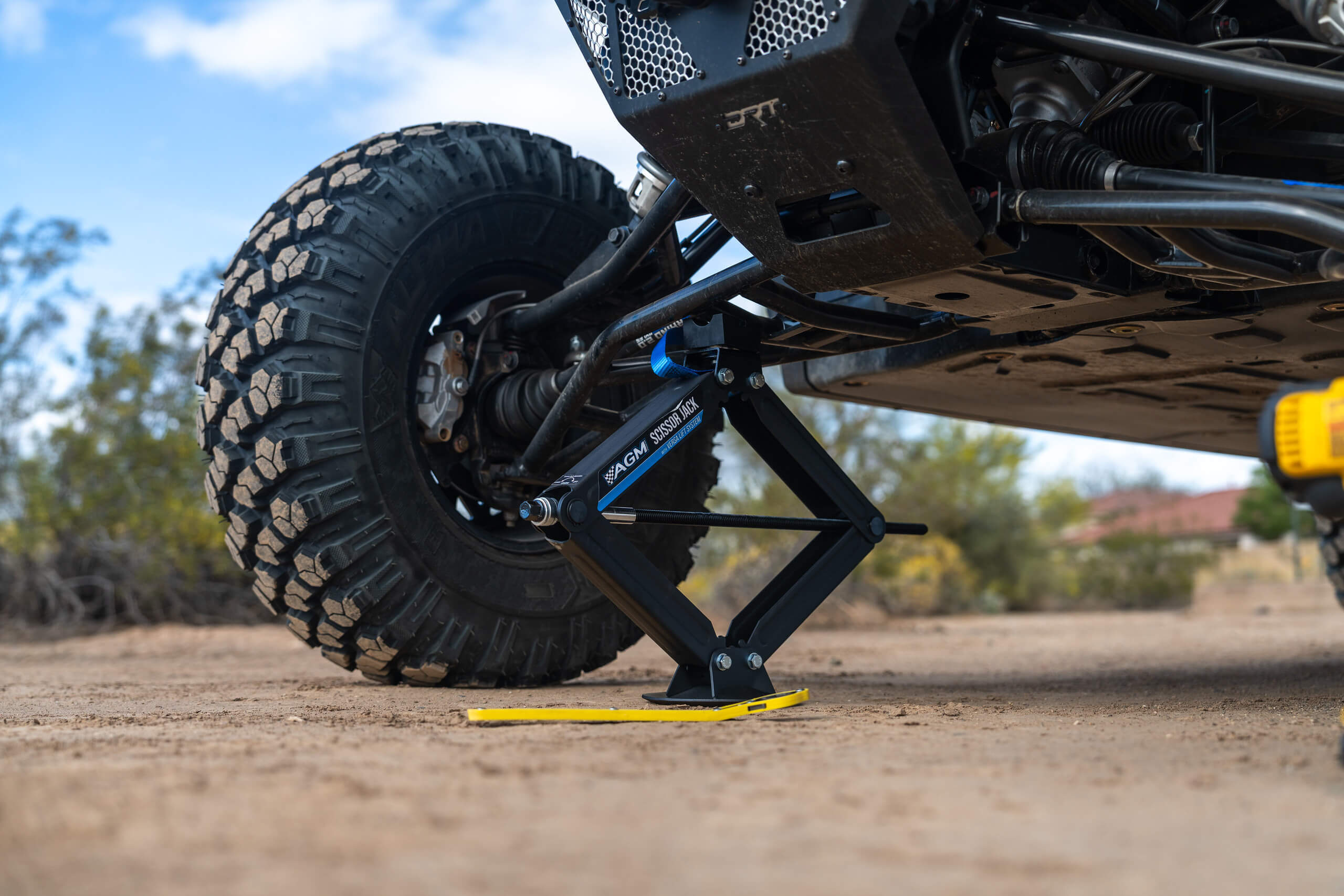
Basic Steps:
-
Loosen lug nuts before lifting
-
Jack up the vehicle safely
-
Remove the damaged wheel
-
Install the spare
-
Tighten lug nuts in a star pattern
Pro tip: Practice this at home once. It’s a lot easier without mud, heat, or pressure.
Step 6: No Spare? No Problem (Kind Of)
If you didn’t bring a spare, you still have options.
Option 1: Reinflate the Tire
-
Works for slow leaks
-
Use a compressor or CO2
-
May require repeated fills
This can buy you enough time to get back safely.
Option 2: Tire Sealants
Sealants can help in certain situations:
-
Good for small punctures
-
Fast and easy to use
-
Temporary solution
Common options include:
-
Slime (long-lasting, generally safe)
-
TireJect (stronger sealing capability)
-
Fix-a-Flat (quick but messy and short-term)
Note:
Sealants can make future repairs messy and should not be considered permanent.
Step 7: Tube Tires (Dirt Bikes & Some ATVs)
If your setup uses an inner tube:
Option 1: Replace the Tube
-
Remove tire
-
Replace with spare tube
-
Inspect tire for debris
Option 2: Patch the Tube
-
Locate puncture
-
Apply patch kit
-
Reinstall
A patched tube will get you home—but replace it ASAP.
Step 8: Extreme Trail Fixes (Last Resort Only)
Sometimes you’re deep enough that creativity becomes survival.
Real-world fixes have included:
-
Multiple plugs stacked in one hole
-
Sewing a tire sidewall with heavy thread
-
Using internal patches with sealant
These methods can work—but:
Drive slowly and only as far as necessary
Sidewall Damage: The Worst Case Scenario
Sidewall punctures are the hardest to deal with.
-
Not safely repairable long-term
-
Can sometimes be temporarily patched
-
High risk of blowout
If you must drive, go slow—walking speed.
Winch vs Jack: What Should You Carry?
Winch
Pros:
-
Works in nearly any terrain
-
Can reposition vehicle safely
Cons:
-
Heavy
-
Requires anchor point
Jack
Pros:
-
Fast and simple
-
No anchor needed
Cons:
-
Needs flat ground
-
Can be unstable
Best answer: carry both if possible.
Recovery Gear: Your Backup Plan
Sometimes the issue isn’t the tire—it’s where you ended up.
Minimum Recovery Kit:
-
Kinetic recovery strap (15'+, 4500+ lb rating)
-
2 soft shackles
-
Tree saver strap
These tools can turn a bad situation into a quick recovery.
Pro Tips to Prevent Flat Tires
You can’t eliminate flats—but you can reduce them.
-
Run proper tire pressure for terrain
-
Avoid sharp rocks and debris when possible
-
Inspect tires before every ride
-
Replace worn or dry-rotted tires
-
Upgrade to stronger off-road tires if needed
Prevention is always easier than repair.
Real-World Lesson: Preparation Wins
During a search-and-rescue mission, a team experienced a flat deep in the woods.
No spare. Limited tools.
What worked?
-
A small air compressor
-
Repeated inflation
-
A backup plan
They made it out safely—not because they had everything—but because they knew their options.
Knowledge + preparation = success.
Frequently Asked Questions (FAQ)
Can you plug a UTV tire sidewall?
Not recommended. Sidewalls flex too much, and plugs can fail. Only use as a temporary emergency fix at low speeds.
How long will a tire plug last?
A properly installed plug can last a long time, but it should always be considered temporary until professionally repaired.
Is it safe to drive after plugging a tire?
Yes, at moderate speeds and for short distances. Avoid aggressive riding until the tire is properly repaired or replaced.
What’s better: tire plug or sealant?
Plugs are more reliable for punctures. Sealants are quicker but messier and less durable.
What PSI should I run after a repair?
Return to your normal operating PSI and monitor the tire closely for leaks.
Should I carry a spare tire or plug kit?
Both. A plug kit handles most situations, while a spare is your backup for major damage.
Final Thoughts
Flat tires are part of off-roading—it’s not a matter of if, but when.
But getting stranded? That’s optional.
If you:
-
Carry the right tools
-
Know how to use them
-
Have a backup plan
You’ll turn a trail problem into a quick pit stop.
Spend a little time preparing now, and you’ll save yourself a lot of time later—probably in the middle of nowhere, with your friends watching.
Stay ready, keep rolling, and we’ll see you out on the trail.